

Maddy summaryThe Stronger Communities through Better Transit Act establishes a new federal grant program to improve public transportation service. It provides funding to urban areas, states, and Indian tribes to cover up to 50% of public transit operating costs (up to 80% in persistent poverty areas and 100% for Indian tribes), with requirements to report on service frequency, access to jobs, and conduct community surveys. The program mandates that a majority of funds must benefit underserved communities and areas of persistent poverty, defined as census tracts with high poverty rates or minority populations. Recipients must maintain their transit funding levels and report on improvements in access to essential services. The bill authorizes $20 billion annually for fiscal years 2024-2027.
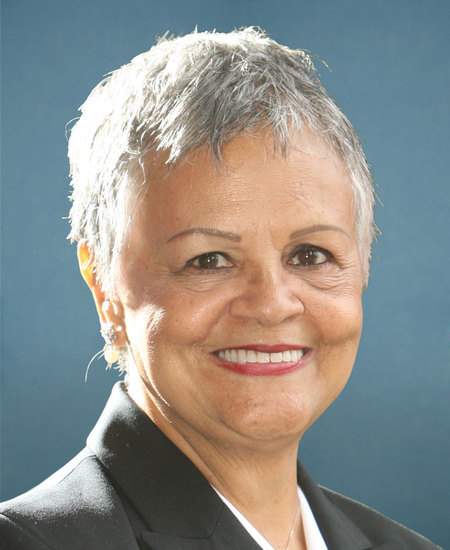
Rep. Bonnie Watson Coleman
Sponsored bills
Maddy summaryThis resolution commemorates the 60th anniversary of President Johnson's 1964 War on Poverty declaration and acknowledges its historical achievements, such as creating Medicare, Medicaid, and SNAP, alongside its shortcomings. It specifically notes the War on Poverty's failure to adequately address fair employment, workforce preparation, and racial disparities in poverty, while recognizing that current antipoverty policies have not adapted to today's challenges. The resolution is purely symbolic, with no new policy requirements, and urges continued efforts to address poverty through existing frameworks.
Maddy summaryThis bill restores visa eligibility for immigrants who had diversity visas allocated for fiscal years 2017-2022 but were denied entry due to specific travel restrictions (like Executive Orders 13769/13780 or related proclamations) or pandemic-related delays. The State Department must notify affected individuals within 90 days of the bill’s enactment, giving them one year to confirm they wish to proceed with their visa applications. Unused visas from those years can be reallocated without counting against current annual limits, and applicants who fail to respond or are denied for standard reasons (like education requirements) lose eligibility. The policy directly affects individuals impacted by these specific past barriers to immigration.
Maddy summaryHRES 962 is a ceremonial resolution honoring Reverend Dr. Martin Luther King, Jr.'s legacy, specifically celebrating his 95th birthday on January 15, 2024. It symbolically affirms his teachings by condemning hate, discrimination, and prejudice against Black Americans, Indigenous people, Jewish, Asian-American/Pacific Islander, Muslim, Hispanic/Latino communities, and LGBTQ+ individuals. The resolution does not create new laws or affect any policies - it solely expresses the House's support for Dr. King's values of diversity, tolerance, and equality through non-binding statements. As a symbolic gesture, it has no legal effect or direct impact on any group or individual.
Maddy summaryHRES 963 is a symbolic resolution honoring Korean American Day, which commemorates the January 13, 1903 arrival of the first large wave of Korean immigrants to the U.S. It recognizes Korean Americans' contributions to U.S. society, including their economic, cultural, and military impacts, and marks the 121st anniversary of this historic migration. The resolution urges all Americans to observe Korean American Day to appreciate these contributions. As a commemorative measure, it does not create new policies or affect specific groups beyond this ceremonial recognition.
Maddy summaryHRES 960, the RESPECT Resolution, is a non-binding congressional resolution urging states and localities to adopt equity-focused cannabis policies. It outlines 15 specific best practices, including eliminating criminal penalties for cannabis possession, reforming licensing fees to be cost-based, prioritizing licenses for communities disproportionately impacted by cannabis enforcement (such as formerly incarcerated individuals and low-income residents), and creating automatic expungement for cannabis offenses. The resolution also calls for reinvesting cannabis tax revenue into communities harmed by prohibition and urges the U.S. to advocate for global descheduling of cannabis at the United Nations. It directly addresses racial disparities in enforcement and market access, particularly for people of color who face barriers to entering the legal cannabis industry.
CONtinuity in Necessary Evaluative Crisis Treatment Act of 2024 or the CONNECT Act of 2024 This bill requires the Substance Abuse and Mental Health Services Administration to award grants to certain crisis centers for providing follow-up care to individuals who receive suicide prevention and crisis intervention services.
Maddy summaryThe BOP Release Card ID Act of 2024 requires the Bureau of Prisons to issue a photo identification card meeting federal standards to U.S. citizen prisoners released from federal custody. The card must be valid for at least 18 months and accepted by federal programs like Social Security, Medicaid, Medicare, and SNAP, as well as for entry into federal buildings. The bill also directs the Attorney General to provide guidance to states on issuing similar cards for state prisoners, with annual reports to Congress on progress.
Maddy summaryThe INSURE Act creates a federal reinsurance program to replace the National Flood Insurance Program, requiring property insurers to offer "all-perils" policies covering specific catastrophe risks like flood, wind, hurricane, wildfire, and eventually earthquake. Insurers participating in the program must implement loss prevention partnerships that encourage investments to reduce catastrophe losses, and will pay quarterly premiums to a Federal Catastrophe Reinsurance Fund. The program will phase in coverage for different perils over eight years, starting with flood coverage (beginning four years after enactment), followed by wind/hurricane (five years), severe storms/wildfire (six years), and earthquake (eight years or when feasibility reports are submitted). The bill also establishes grant programs for states to promote loss prevention investments and provide financial assistance to low-income homeowners struggling with insurance costs.
Maddy summaryThe Affordable Connectivity Program Extension Act of 2024 allocates $7 billion in funding for the Affordable Connectivity Program (ACP) during fiscal year 2024. The ACP provides subsidies to low-income households to help cover the cost of internet service and connected devices like laptops or tablets. This funding ensures the program can continue supporting eligible households throughout the year, with the money remaining available until fully spent. The bill extends existing program funding without changing eligibility criteria or service requirements.