

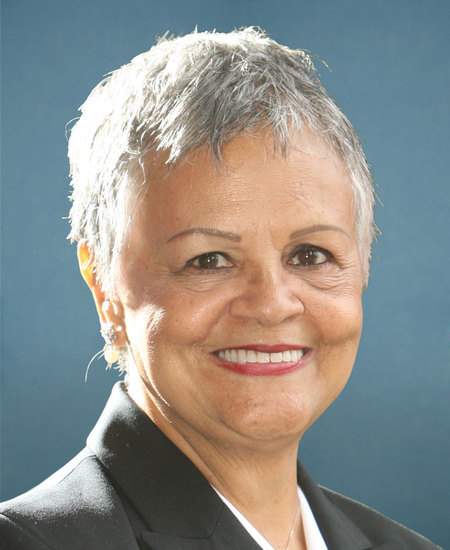
Photo of Bonnie Watson Coleman
D United States House · District 12 · New Jersey

Rep. Bonnie Watson Coleman

Compare
Total votes
2,837
all sessions
Attendance
95%
147 missed
Near the chamber average
With party
97%
of cast votes
Near the chamber average
Bipartisan score
1%
crosses aisle rarely
Near the chamber average
Sponsored
2,464
bills & resolutions
Higher than 96% of chamber peers
Committees
4
assignments
2,464 bills and resolutions

Sponsored bills

Total
2,464
Primary
131
Co-sponsor
2,333
This page
2,464
matching current filters
Co-sponsor HRES 988
In committee · United States House · Co-sponsor
Supporting the values of the Equity or Else quality-of-life platform and acknowledging the need for the House of Representatives to use the platform as a holistic framework for drafting and implementing policy that promotes racial and economic equity for all across various social issues.

Maddy summaryHRES 988 is a non-binding resolution supporting the "Equity or Else" quality-of-life platform, which focuses on racial and economic equity across areas like education, health care, housing, and economic development. It urges the House of Representatives to adopt this framework as a guide for drafting and implementing policy that addresses systemic inequities. The resolution emphasizes the need for the House to change its practices to prioritize input from impacted communities in policy-making. This resolution does not create new laws but expresses the House’s commitment to using the Equity or Else framework as a reference for future legislative efforts.

In committee Jan 31, 2024 1 co-sponsor
Co-sponsor HRES 990
In committee · United States House · Co-sponsor
Expressing the sense of the House of Representatives that paraprofessionals and education support staff should have fair compensation, benefits, and working conditions.

Maddy summaryHRES 990 is a non-binding resolution expressing the House of Representatives' support for fair treatment of paraprofessionals (like instructional assistants) and education support staff (such as clerical, custodial, and food service workers) in schools. It states these over 3 million frontline workers deserve livable wages, affordable health care, job security, paid leave, professional development, and safe working conditions. The resolution lists specific recommendations, including eligibility for family medical leave and protections against retaliation for reporting workplace issues. It does not create new laws but formally recognizes these staff as essential to school success and calls for policies addressing their current challenges.

In committee Jan 31, 2024 1 co-sponsor
Co-sponsor HR 7096
In committee · United States House · Co-sponsor
CAP Act

Maddy summaryHR 7096 (the CAP Act) increases civil penalties for consumer product safety violations under the Consumer Product Safety Act. It raises the maximum penalty per violation from $100,000 to $250,000 and removes the previous $15 million cap for related violations. The bill requires annual inflation adjustments to penalties using the Consumer Price Index, rounding to the nearest $1, to maintain enforcement value over time. These changes directly affect manufacturers and sellers of consumer products by increasing potential enforcement costs for safety violations.

In committee Jan 26, 2024 1 co-sponsor
Co-sponsor HR 7059
In committee · United States House · Co-sponsor
ACCESS Act of 2024

Maddy summaryThe ACCESS Act of 2024 creates a federal grant program to help clinics and health care providers expand abortion and reproductive health services in states where abortion is legal (outside of life or health exceptions). It authorizes $200 million annually for fiscal years 2024-2028 to fund specific capacity-building activities, including facility expansions, hiring clinical staff, telehealth services, and culturally appropriate patient resources. Priority is given to providers in states experiencing the highest increases in out-of-state patients seeking abortion care. The bill directly supports health care entities serving patients who travel across state lines for services, aiming to reduce wait times and improve access for vulnerable communities.

In committee Jan 26, 2024 1 co-sponsor
Co-sponsor HR 7082
In committee · United States House · Co-sponsor
Complete Streets Act of 2024

Maddy summaryThe Complete Streets Act of 2024 requires states to establish programs that help local governments, transit agencies, and other eligible entities design and build transportation infrastructure accommodating all users, including pedestrians, cyclists, and public transit riders. States must provide technical assistance and grants for complete streets projects, with 5% of certain transportation funds allocated to these programs. The bill establishes design standards requiring features like protected bike lanes, accessible sidewalks, and appropriate lighting for all transportation projects, applying to new projects on Federal-aid highways within metropolitan areas. It mandates that states develop complete streets policies and prioritization plans to improve safety and accessibility, particularly in underserved communities, with compliance required by 2026 or 2029 for different project types.

In committee Jan 25, 2024 1 co-sponsor
Co-sponsor HR 7075
In committee · United States House · Co-sponsor
HOME Investment Partnerships Reauthorization and Improvement Act of 2024

Maddy summaryThe HOME Investment Partnerships Reauthorization and Improvement Act of 2024 reauthorizes and updates the HOME Investment Partnerships Program, which provides federal funds to states and local governments to develop affordable housing. The bill increases annual funding from $5 billion in 2024 to $6.08 billion in 2028, modifies eligibility requirements for participating jurisdictions, and eliminates a deadline for committing funds. It reforms homeownership resale restrictions, establishes a home loan guarantee program with $2 billion in initial funding (increasing with inflation), and enhances protections for tenants in small-scale affordable housing (defined as housing with no more than 4 rental units). These changes aim to make the program more flexible and effective in creating and preserving affordable housing options for low- and moderate-income households.

In committee Jan 25, 2024 1 co-sponsor
Co-sponsor HR 6569
In committee · United States House · Co-sponsor
EFFECTIVE Food Procurement Act

Maddy summaryHR 6569, the EFFECTIVE Food Procurement Act, requires the U.S. Department of Agriculture (USDA) to prioritize specific food purchases in its procurement programs. The bill mandates that USDA spending must include a minimum percentage of foods supporting: equity (from beginning, veteran, or socially disadvantaged farmers/fishermen/ranchers), resilient supply chains (small/mid-sized farms, organic, animal welfare certified), worker well-being (unionized or certified vendors), and climate-friendly practices (low emissions, deforestation policies). It establishes annual reporting requirements on procurement spending, greenhouse gas emissions, and targets to increase these categories by 2032. The bill also creates a pilot program for "best value" procurement (20% of spending) and provides $25 million in grants to help small and underrepresented producers meet USDA vendor requirements.

In committee Jan 25, 2024 1 co-sponsor
Co-sponsor HR 7056
In committee · United States House · Co-sponsor
Access to Family Building Act

Maddy summaryHR 7056, the Access to Family Building Act, establishes federal rights for individuals to access assisted reproductive technology (ART) like IVF without unreasonable restrictions, directly affecting patients seeking fertility treatments and health care providers offering ART services. The bill prohibits states from imposing limitations on ART that are more burdensome than those for comparable medical procedures, fail to advance safety, or unduly restrict access, while allowing health and safety regulations that are necessary and least restrictive. It creates federal enforcement mechanisms, including lawsuits by the Attorney General or affected individuals to challenge violating state laws, and preempts conflicting state regulations. The bill explicitly preserves state authority over health/safety regulations and does not alter existing state insurance coverage laws for ART.

In committee Jan 19, 2024 1 co-sponsor
Co-sponsor HRES 882
In committee · United States House · Co-sponsor
Declaring support and gratitude by the House of Representatives to food banks, food pantries, and other community-based organizations working to end food insecurity and providing other essential services in the United States.

Maddy summaryHRES 882 is a non-binding resolution passed by the U.S. House of Representatives on November 21, 2023, declaring support and gratitude to food banks, food pantries, and community-based organizations addressing food insecurity. It recognizes these groups' work in serving over 5 billion meals annually, rescuing wasted food (nearly 118 billion pounds yearly), and supporting vulnerable populations including 44.2 million people in food-insecure households in 2022. The resolution specifically acknowledges their role in providing emergency aid, nutrition education, and disaster response, while highlighting that 55% of food-insecure households did not access federal nutrition programs. It does not create new policies or funding but formally commends these organizations' contributions to reducing food insecurity and improving community health.

In committee Jan 18, 2024 1 co-sponsor
Co-sponsor HR 7041
In committee · United States House · Co-sponsor
Tax Excessive CEO Pay Act of 2024

Maddy summaryHR 7041, the Tax Excessive CEO Pay Act of 2024, imposes a corporate tax penalty on large companies where the CEO's pay exceeds 50 times the average worker's pay. The penalty adds 0.5% to 5% to the corporate tax rate, depending on how much higher the CEO's pay is relative to workers (e.g., 50-100:1 ratio adds 0.5%, over 500:1 adds 5%). It applies only to corporations with over $100 million in average annual revenue, exempting smaller businesses. The law aims to address extreme pay disparities by increasing taxes on companies with the highest CEO-to-worker pay ratios, effective for tax years after 2024.

In committee Jan 18, 2024 1 co-sponsor
Showing 1,031 to 1,040 of 2,464 bills