

Maddy summaryHR 3601, the Student Veteran Work Study Modernization Act, expands eligibility for a Veterans Affairs work-study allowance to veterans enrolled at least half-time in rehabilitation, education, or training programs - lowering the previous requirement from three-quarter-time. The bill establishes a five-year pilot program to test this change, requiring the VA to apply the same allowance rules to these veterans as to other participants, except for the enrollment threshold. It also mandates annual reports to Congress tracking participation numbers, four-year degree completion rates, and full-time VA employment outcomes for participants. The policy directly affects veterans seeking education benefits while balancing academic and personal responsibilities.
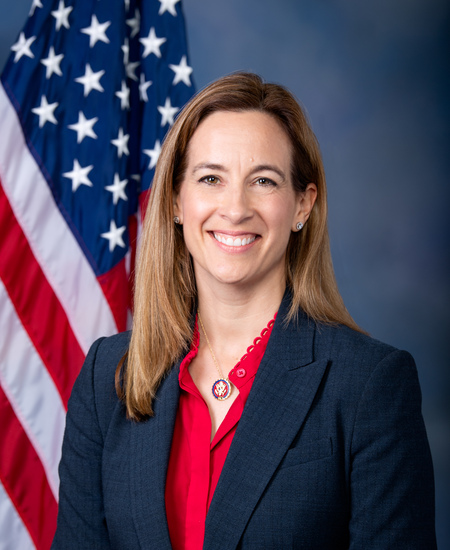
Rep. Mikie Sherrill
Sponsored bills
Maddy summaryThis bill closes loopholes that allow domestic violence abusers to keep or buy firearms while under restraining orders. It requires courts to issue "firearm surrender orders" when domestic violence restraining orders are issued, mandating that abusers surrender all firearms within 24 hours. The law expands the definition of "intimate partner" to include dating partners and requires law enforcement to remove firearms if abusers don't comply. It also creates a federal grant program to help states implement these policies, directly affecting domestic violence survivors and abusers subject to restraining orders.
Maddy summaryThis bill establishes a competitive grant program to improve recycling access in underserved communities - defined as areas lacking full recycling services due to cost, distance, or insufficient processing capacity. It allocates $30 million annually (2023-2027) for grants to eligible entities like states, local governments, tribes, or public-private partnerships to fund projects such as expanding transfer stations, adding curbside collection, or creating hub-and-spoke infrastructure networks. Grants range from $500,000 to $15 million per project, with 70% of funds reserved for single or multiple underserved communities, and require 90% federal cost coverage (with possible waivers for financial hardship). The program prohibits grant use for education and mandates a congressional report on implementation and outcomes within two years.
Maddy summaryThis bill requires military commanders to approve leave for active-duty service members and their dependents seeking abortion care without needing to disclose the specific procedure. It mandates reimbursement for travel costs to clinics providing abortion services when local access is unavailable and protects the privacy of those using this leave. The bill explicitly prohibits any negative consequences for service members who request or take such leave. It directly affects military personnel and their families by ensuring timely, private, and accessible abortion care without command interference.
Maddy summaryHR 5883, the "Honoring Civil Servants Killed in the Line of Duty Act," increases death gratuity payments for federal employees who die while performing their duties. The bill establishes a $100,000 base payment (adjusted annually for inflation) to be paid to designated beneficiaries, spouses, children, or parents in a specific order of precedence. It also raises funeral expense payments from $800 to $8,800, with annual inflation adjustments, and ensures death gratuity payments are not taxable. The bill applies to various federal employees including those in the Foreign Service, Transportation Security Administration, and Veterans Health Administration.
Maddy summaryThe CLARITY Act of 2023 prohibits U.S. federal agencies from acquiring or contracting for equipment, systems, or services that use specific foreign adversarial blockchain networks (including China's Blockchain-based Services Network, Spartan Network, and others) as a substantial or essential component. It requires a two-year transition period for agencies to switch to alternative technologies, with limited waivers allowed only for compelling national security reasons and requiring detailed phase-out plans. The bill also mandates annual reports to Congress assessing risks to U.S. national security, economic interests, sanctions enforcement, and global financial systems from these technologies. This directly affects federal agencies and companies providing the banned blockchain services, focusing on mitigating threats from foreign adversaries' infrastructure.
Maddy summaryHRES 806 is a symbolic resolution designating October 2023 as "World Menopause Awareness Month" and expressing the House's support for improved global awareness and access to care during menopause. It highlights that menopause affects millions of women, with symptoms like hot flashes (experienced by 75% of U.S. women) and potential impacts on work productivity and health risks like heart disease. The resolution encourages the Health and Human Services, Defense, and Veterans Affairs secretaries to share menopause information, fund research, and update treatment tools to support women's health. It does not create new laws or funding but aims to raise awareness and guide existing agency efforts.
Maddy summaryThis bill excludes veterans' disability and dependency payments from income calculations for HUD housing assistance programs. It directly affects veterans and their families receiving disability compensation under Title 38, U.S. Code, by ensuring these benefits don't reduce their eligibility or housing assistance amounts. Specifically, it prevents HUD from counting these payments when determining eligibility, benefit amounts, or rent calculations for assisted housing. The policy change applies solely to HUD-administered housing programs, not other federal benefits.
Maddy summaryThe BAD APPS Act requires the Secretary of Defense to create a risk framework assessing foreign mobile applications (like social media or shopping apps) that could threaten Department of Defense personnel or operations. It mandates defining categories of "foreign mobile applications of concern" based on factors like data collection practices, foreign ownership, malicious software, and ties to countries deemed security threats. The framework must be updated annually, and the Secretary must issue guidance to DoD personnel on mitigating risks from these apps on government devices or during official activities. The bill directly affects DoD personnel, operations, and contractors by establishing standardized security assessments for foreign apps.
Maddy summaryHRES 778 is a House resolution demanding Senator Tommy Tuberville end his hold on military promotions affecting personnel critical to U.S. support for Israel. It specifically references blocked nominations for key Middle East roles, including Admiral Lisa Franchetti (Chief of Naval Operations), General David Allvin (Chief of Staff, Air Force), and Rear Admiral George Wikoff (5th Fleet commander). The resolution states these delays hinder the U.S. military’s ability to provide security, intelligence, and humanitarian support to Israel and stranded American citizens following the October 7 Hamas attacks. It urges Tuberville to lift the holds to ensure readiness for ongoing operations in the region. The resolution does not create new law but formally requests action on pending military confirmations.