

Maddy summaryThe Stop Campus Hazing Act requires colleges and universities to publicly report hazing incidents involving student organizations. It defines hazing as intentional acts causing physical or psychological harm during initiation or membership in student groups, including activities like forced substance consumption, sleep deprivation, or sexual acts. Institutions must include hazing statistics in annual security reports and publish a "Campus Hazing Transparency Report" on their websites by July 1, 2025, detailing findings about organizations violating hazing policies. The reports must include organization names, violation descriptions, and key dates while excluding personally identifiable student information. This applies to all colleges participating in federal student aid programs.
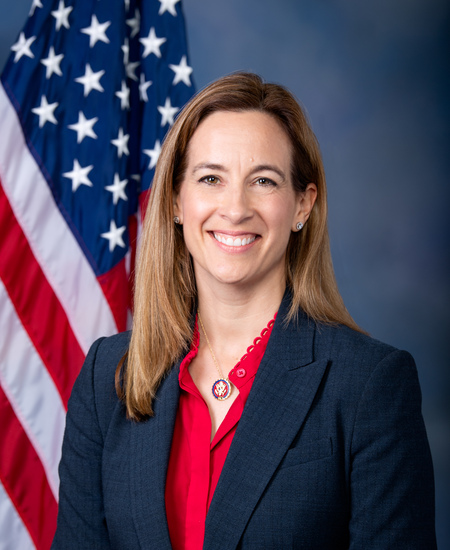
Rep. Mikie Sherrill
Sponsored bills
Maddy summaryThis bill, HR 1097 (Everett Alvarez, Jr. Congressional Gold Medal Act of 2023), authorizes the award of a Congressional Gold Medal to Everett Alvarez, Jr., in recognition of his service as a U.S. Navy pilot and Vietnam War prisoner of war. It directly honors Alvarez, who was the first U.S. pilot shot down in the Vietnam War, spent over 8.5 years in captivity, and later served in the Peace Corps and Veterans Administration. The bill’s key mechanism is directing the U.S. Mint to strike a gold medal bearing his name and image, with bronze duplicates available for sale to cover costs. It does not create new policies or affect any group beyond the honoree.
Maddy summaryThis bill allows Medicaid programs to enter into value-based purchasing (VBP) arrangements with drug manufacturers for innovative treatments like gene therapies. It codifies these arrangements by requiring states to report pricing structures based on patient outcomes and best prices for drugs sold under these agreements. The bill enables payments to be tied to treatment effectiveness, potentially reducing long-term healthcare costs by decreasing hospitalizations and other medical expenses. It also creates a requirement for a GAO study to evaluate how these arrangements impact patient access, outcomes, and healthcare system costs. The bill will sunset after 5 years, though existing VBP arrangements will continue beyond that date.
Maddy summaryHR 8796, the "Stop Comstock Act," removes outdated restrictions from federal law that previously banned the distribution of materials related to contraception and abortion as "obscene" or "indecent." The bill amends Title 18 and the Tariff Act by deleting references to "indecent," "immoral," "unlawful abortion," and "procuring abortion" from provisions governing obscene materials. It clarifies that the law only prohibits "obscene materials" in commerce, eliminating broad restrictions on reproductive health information. This directly affects internet platforms, healthcare providers, and individuals sharing reproductive health resources by removing legal barriers to their distribution.
Maddy summaryThis bill requires Medicare Advantage plans to implement electronic prior authorization systems by 2027 and publish detailed data on their approval and denial rates for medical services by 2026. It directly affects Medicare Advantage plans (private insurers offering Medicare coverage) and their enrollees (seniors 65+), mandating transparency about prior authorization decisions, processing times, and appeal outcomes. Key provisions include requiring plans to report annual statistics on request approvals/denials, average processing times, and use of technology, with this data published publicly by the Centers for Medicare & Medicaid Services. The bill also sets timelines for plan responses to prior authorization requests and mandates reports to Congress on implementation and impacts.
Maddy summaryThe Nutrition CARE Act of 2024 expands Medicare Part B coverage to include medical nutrition therapy services for beneficiaries diagnosed with eating disorders. It directly affects Medicare beneficiaries with eating disorders - particularly an estimated 420,500-560,700 Black, Indigenous, and People of Color seniors - by requiring coverage for 13 hours of initial care (including assessment) and 4 hours annually for ongoing management. The bill amends Medicare law to specify that these services must be provided by registered dietitians or nutrition professionals following referrals from physicians or psychologists. Coverage applies to all eating disorders as defined by the DSM-5, addressing a gap where Medicare previously excluded this critical treatment component. This policy change aims to improve access to evidence-based care for a condition linked to high mortality and significant healthcare costs.
Maddy summaryThe Healthy MOM Act (HR 6716) would require health insurance plans to provide a special enrollment period for pregnant individuals beginning when pregnancy is reported to the insurer. It would mandate that group health plans cover maternity care for all dependents, including young women who might otherwise lack coverage due to plan exclusions. The bill would extend Medicaid coverage for pregnant individuals and infants to a full 12 months postpartum, rather than the current 60-day period. These provisions aim to improve access to comprehensive maternity care, which the bill states could prevent 3 in 5 pregnancy-related deaths by addressing coverage gaps that disproportionately affect women of color.
Maddy summaryThis bill adds audiology services to Medicare's covered benefits under Section 1861(s)(2)(KK), effective January 1, 2025. It allows qualified audiologists to provide hearing and balance assessments and diagnostic/treatment services without requiring a physician referral or supervision, directly affecting Medicare beneficiaries seeking these services and audiologists practicing under state law. Payment will be 80% of the lower of actual charge or the Medicare fee schedule. The bill does not expand the types of audiology services covered but changes how they are accessed and paid for under Medicare.
Maddy summaryThe ARCC Act provides $100 million in federal funding to help apprentices and pre-apprentices in job training programs cover childcare costs. It authorizes competitive grants to 10 states, which must distribute monthly stipends of at least $500 per dependent child directly to eligible childcare providers on behalf of participants in these programs. The bill prioritizes individuals from historically underrepresented groups (based on race, ethnicity, or gender) and ensures stipends are tax-free while not affecting eligibility for other federal benefits. States must report on participation, program completion rates, and demographic data, with the Secretary later summarizing program impacts for Congress.
Maddy summaryThis bill directs the Architect of the Capitol to create a time capsule for the U.S. Semiquincentennial (250th anniversary of independence). Congressional leadership will determine its contents, including representative materials about the Semiquincentennial, copies of key legislative milestones, and a message to future Congress. The capsule will be sealed on the Capitol's West Lawn by July 4, 2026, and remain unopened until July 4, 2276, when it will be presented to the 244th Congress for their consideration. The bill is procedural and does not affect citizens or change existing laws.