

Maddy summaryThe Richard L. Trumka Protecting the Right to Organize Act of 2023 strengthens workers' rights to organize unions by making it harder for employers to interfere with organizing efforts. Key provisions include changing the definition of "employee" to make it more difficult to classify workers as independent contractors, prohibiting employers from threatening to permanently replace striking workers, and requiring employers to provide voter lists for union elections. The bill also creates a new electronic voting system for union elections, strengthens whistleblower protections for workers reporting labor violations, and increases penalties for unfair labor practices. These changes directly affect workers seeking to form unions, employers who may interfere with organizing, and labor organizations. The bill aims to make it easier for workers to exercise their right to collective bargaining under the National Labor Relations Act.
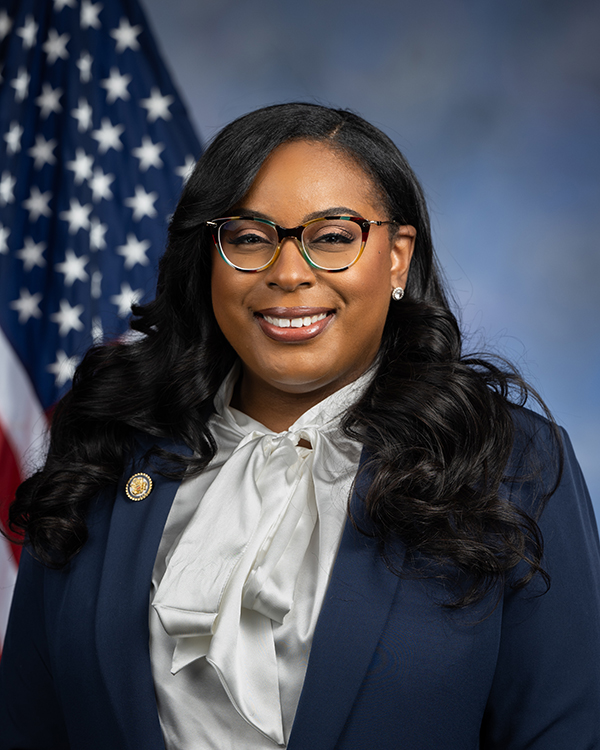
Rep. LaMonica McIver
Sponsored bills
Maddy summaryHR 1088, the Shirley Chisholm Congressional Gold Medal Act, authorizes a posthumous Congressional Gold Medal to honor Congresswoman Shirley Chisholm, the first African-American woman elected to Congress (1968) and the first Black candidate for a major party's presidential nomination (1972). The bill directs the Treasury Secretary to design and strike a gold medal featuring Chisholm's image, which will be presented by Congress and then permanently displayed at the Smithsonian Institution. Duplicate bronze medals may be sold to the public to cover production costs, with proceeds deposited into the U.S. Mint fund. This bill commemorates Chisholm's legacy and achievements without creating new laws or affecting any current policies.
Maddy summaryHR 971, the Black History Matters Act, directs the Director of the National Museum of African American History and Culture to study Black history education in public elementary and secondary schools. The 3-year study will identify which schools require Black history curriculum, assess teaching quality through discussions and materials, and analyze how schools measure student understanding. It does not change school requirements but will produce a report for Congress on the current state of Black history education, including coverage of topics like slavery, Reconstruction, and systemic racism. The bill specifically defines "Black history education" as teaching the history of African Americans, including struggles against racism and discrimination. This is a procedural study bill, not a policy requiring new educational mandates.
Maddy summaryHR 827, the Home Internet Accessibility Act, requires a study of broadband access in federally assisted housing (like public housing and HUD-subsidized units) and a plan to improve it. The Comptroller General must report within one year on where broadband access exists or is lacking, including demographic breakdowns by location, and analyze retrofitting costs and challenges. The Department of Housing and Urban Development (HUD) must then develop and submit a specific plan to retrofit housing for broadband service within 18 months of the bill's enactment. This bill directly affects residents of federally assisted housing nationwide by focusing on infrastructure gaps, not by providing immediate internet service.
Maddy summaryHR 51, the Washington, D.C. Admission Act, would admit Washington, D.C. as the 51st state, named "Washington, Douglass Commonwealth," granting its residents full representation in Congress with two Senators and one Representative. The bill establishes procedures for admission, including elections for state officials, with the state initially having one Representative until the next congressional apportionment. It would create a "Capital" area (including the White House, Capitol, and other key federal buildings) that remains under federal jurisdiction as the seat of the U.S. government, while the rest of the District becomes the new state. The bill also includes provisions to ensure continuity of federal services, property management, and legal procedures during the transition to statehood.