

Semiquincentennial Commemorative Coin Act This bill directs the Department of the Treasury to mint and issue $25.00 gold coins, $2.50 silver coins, 25 cent clad coins, and proof silver $2.50 coins in commemoration of the 250th anniversary of the establishment of the United States. The designs of the coins shall be emblematic of the semiquincentennial anniversary of the establishment of the United States of America and celebrate 250 years of our nation. On each coin there shall be a designation of the value of the coin; an inscription of the years 1776-2026; and inscriptions of the words Liberty , In God We Trust , United States of America , and E Pluribus Unum . Treasury may issue coins under this bill only during the period beginning on January 1, 2026, and ending on December 31, 2026. All sales of coins issued shall include a surcharge as prescribed by this bill. All surcharges received by Treasury from the sale of such coins shall be paid to the America 250 Foundation to fund the restoration, rehabilitation, and interpretation of units of the U.S. National Park System and its related areas, as a legacy of the semiquincentennial commemoration.
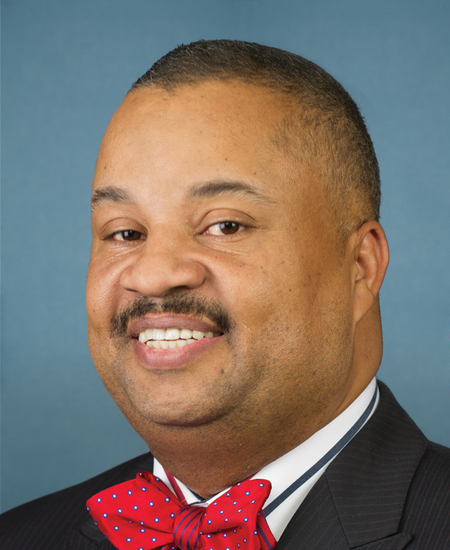
Rep. Donald M. Payne, Jr.
Sponsored bills
Assuring Regular Consultation to Have Indigenous Voices Effectively Solicited Act This bill establishes requirements for tribal consultation prior to the sale or transfer of certain federal civilian real property. Federal civilian real property generally refers to federal real property assets, including public buildings, occupied and improved grounds, leased space, or other physical structures under the custody and control of a federal agency. Specifically, a federal agency must consult with tribal governments prior to the sale or transfer of certain federal civilian real property if the proposed sale or transfer would affect a tribe's access to federal agency services. Further, the bill prohibits the property from being sold or transferred if the sale or transfer would substantially reduce or eliminate a tribe's access to these services.
LGBTQ Business Equal Credit Enforcement and Investment Act This bill requires financial institutions to report certain credit application data to the Consumer Financial Protection Bureau for the purposes of enforcing fair lending laws. Specifically, financial institutions must report this data regarding lesbian-, gay-, bisexual-, transgender-, or queer-owned businesses. Currently, this data is reported regarding women-owned, minority-owned, and small businesses.
Safe Schools Improvement Act of 2021 This bill requires states to direct their local educational agencies (LEAs) to establish policies that prevent and prohibit bullying and harassment of elementary and secondary school students. In particular, these policies must prohibit bullying and harassment based on race, color, national origin, sex, sexual orientation, gender identity, disability, or religion. Further, LEAs must provide (1) students, parents, and educational professionals with annual notice of the conduct prohibited in their disciplinary policies; (2) students and parents with grievance procedures that target such conduct; and (3) the public with annual data on the incidence and frequency of that conduct at the school and LEA level. The Department of Education must conduct and report on an independent biennial evaluation of programs and policies to combat bullying and harassment in elementary and secondary schools. The National Center for Education Statistics must collect state data to determine the incidence and frequency of the conduct prohibited by LEA disciplinary policies.
Department of Homeland Security Reform Act of 2021 or the DHS Reform Act of 2021 This bill makes extensive changes to the structure of the Department of Homeland Security (DHS) and to the responsibilities of DHS components. Specifically, the bill, among other things creates a new Associate Secretary responsible for overseeing DHS's law enforcement functions; modifies the responsibilities of the Office for Civil Rights and Civil Liberties, including to require engagement with individuals and communities whose civil rights and liberties may be affected by DHS programs and activities; establishes within DHS's Office of Intelligence and Analysis an analytic unit to serve as a focal point for intelligence and analysis of domestic terrorism threats; directs DHS to establish an employee engagement steering committee to identify factors that have a negative impact on employee engagement, morale, and communications within DHS; establishes within DHS a school security coordinating council; directs DHS to develop and disseminate a strategy with respect to biometric technology and identity management enterprise pilot programs and programs; requires DHS to develop, disseminate, and implement a DHS-wide directive to update or replace the strategic framework relating to countering terrorism and targeted violence; requires that DHS's use-of-force policy be updated to emphasize de-escalation; and requires DHS to issue a DHS-wide strategy to enhance partnerships with historically Black colleges and universities and minority-serving institutes that includes yearly goals.
Medicare Dental, Vision, and Hearing Benefit Act of 2021 This bill provides for Medicare coverage of dental, vision, and hearing care. Coverage includes (1) routine dental cleanings and exams, basic and major dental services, emergency dental care, and dentures; (2) routine eye exams, eyeglasses, and contact lenses; and (3) routine hearing exams, hearing aids, and exams for hearing aids. With respect to such care, the bill establishes special payment rules, limitations, and coinsurance requirements.
Expanding Pathways to Employment Act This bill directs the Department of the Treasury to provide long-term grant funding for workforce development programs that have demonstrated a positive impact on worker earnings and for postsecondary education programs that have demonstrated a positive impact on student graduation.
Federal Retirement Fairness Act This bill modifies the federal civilian service that is creditable service under the Federal Employees Retirement System (FERS). Specifically, it expands the nondeduction service that may be creditable under FERS. Nondeduction service is federal service where an employee's pay is not subject to retirement deductions (e.g., service under a temporary appointment). Currently, nondeduction service performed before January 1, 1989, is creditable under FERS so long as a deposit is made into the retirement fund to cover the period of nondeduction service. This bill allows nondeduction service performed on or after January 1, 1989, to be creditable under FERS so long as a deposit is made into the retirement fund.
Food and Nutrition Education in Schools Act of 202 1 This bill directs the Department of Agriculture (USDA) to establish a Food and Nutrition Education in Schools Pilot Program to award grants to local educational agencies for (1) projects that hire qualified, full-time food and nutrition educators to carry out programs in schools that have the goal of improving student health and nutrition; and (2) projects that fund school gardens or other evidence-based interventions relating to student health and nutrition, aligned with the latest school nutrition standards, to create hands-on learning opportunities for students. In awarding grants under the program, USDA must prioritize projects that serve schools or districts (1) in which not less than 40% of students qualify for free or reduced-price meals, or (2) that include neighborhoods with high rates of childhood obesity or other diet-related diseases. Additionally, it must give priority to projects that provide programming in summer months and those that are joint partnership projects.
Tax-Free Pell Grant Act This bill excludes from gross income, for income tax purposes, any amount received as a federal Pell Grant. It also expands the definition of qualified tuition and related expenses under the American Opportunity and Lifetime Learning tax credit to include computer or peripheral equipment (up to a maximum of $1,000), child and dependent care expenses, and course materials.