Medicare Dental Coverage Act of 2021 This bill expands Medicare coverage to include dentures and dental and oral health services, in accordance with specified limitations. Covered services include basic and major treatments (as determined by the Centers for Medicare & Medicaid Services) as well as specified preventive and screening services.
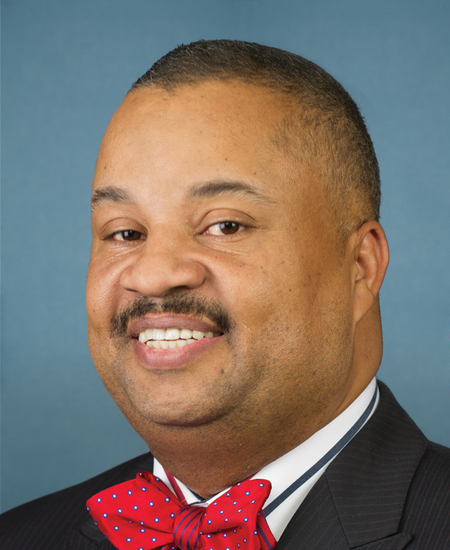
Rep. Donald M. Payne, Jr.
Sponsored bills
Cargo Flight Deck Security Act of 202 1 This bill requires all-cargo aircraft to be equipped with intrusion-resistant cockpit doors that remain locked while such aircraft is in flight. The requirement takes effect on January 1, 2023, regardless of whether the Federal Aviation Administration has issued regulations to implement such requirement.
This resolution reaffirms the House of Representatives' commitment to media diversity and expresses its pledge to eliminate barriers to such diversity.
Medicaid Dental Benefit Act This bill requires state Medicaid programs to cover dental and oral health services for adults. It also increases the Federal Medical Assistance Percentage (i.e., federal matching rate) for such services. The Centers for Medicare & Medicaid Services must develop oral health quality and equity measures and conduct outreach relating to such coverage. Additionally, the Medicaid and Children's Health Insurance Program (CHIP) Payment and Access Commission must report on specified information relating to adult oral health care.
Facilitating Innovative Nuclear Diagnostics Act of 2021 This bill establishes separate payment requirements for diagnostic radiopharmaceuticals under the Medicare prospective payment system for hospital outpatient department services. The bill's requirements apply to diagnostic radiopharmaceuticals that have an average daily cost of $500 or more in 2022 and as adjusted based on a specified fee schedule factor in each year thereafter.
Zero Food Waste Act This bill directs the Environmental Protection Agency to establish a grant program to study and reduce food waste.
End Double Taxation of Successful Consumer Claims Act This bill allows a deduction from gross income (above-the-line deduction) for attorney fees and court costs in connection with a claim of a consumer protection violation.
Green New Deal for Public Schools Act of 2021 This bill provides environmental and educational resources to public elementary and secondary schools and Bureau of Indian Education (BIE) schools. Specifically, the bill requires the Department of Energy's (DOE's) Office of Energy Efficiency and Renewable Energy to provide climate capital facilities grants to eligible entities (e.g., public schools and BIE schools). Grant recipients must use these funds to construct new, or convert existing facilities into, healthy zero-carbon schools. Healthy zero-carbon school refers to a school with highly energy-efficient facilities that produce or procure sufficient carbon-free and pollution-free renewable energy to meet the school's needs. Next, the bill directs the Department of Education (ED) to award resource block grants to qualified local educational agencies (LEAs) to hire and retain educators and support staff in high-need schools. ED must award grants to eligible consortia of LEAs for educational equity planning and implementation. In addition, ED must establish the Climate Change Resiliency Program to increase the resiliency of public and BIE schools during climate change-related events, natural disasters, and public health crises. Further, ED must establish a related grant program for state educational agencies. Grant recipients must use these funds for certain activities (e.g., green infrastructure projects). The bill establishes the Office of Sustainable Schools within ED to (1) administer the resource block grant and educational equity grant programs, and (2) coordinate with DOE and the White House Office of Domestic Climate Policy on climate capital facilities grants and the Climate Change Resiliency Program.
Data to Save Moms Act This bill expands data collection and research on maternal morbidity and mortality among minority populations. Specifically, the bill adds requirements to a program within the Centers for Disease Control and Prevention (CDC) that supports maternal mortality review committees. To the extent practicable, the committees must use the most up-to-date indicators of severe maternal morbidity; review deaths caused by suicide, overdose, or other behavioral health conditions attributed to or aggravated by pregnancy or childbirth; and consult with representatives of communities about nonclinical factors that may contribute to adverse maternal outcomes. The CDC may also award grants to committees to increase their engagement with local communities, such as by bringing on community representatives as committee members. Additionally, the Centers for Medicare & Medicaid Services and the Agency for Healthcare Research and Quality must consult with diverse stakeholders to review maternal health data collection processes and quality measures and make recommendations to improve them. The Indian Health Service and the Department of Health and Human Services must also arrange for studies on adverse maternal health outcomes among tribal and minority populations, respectively.
Fort McClellan Health Registry Act This bill requires the Department of Veterans Affairs (VA) to establish and maintain the Fort McClellan Health Registry, which must include a list of names of those who were stationed at Fort McClellan, Alabama, between January 1, 1935, and May 20, 1999, and are seeking specified health care or benefits from the VA. Specifically, the registry must include those who apply for hospital, nursing home, domiciliary, or medical care from the VA; file a claim for compensation for service-connected disability; die and are survived by a spouse, child, or parent who files a claim for dependency and indemnity compensation; request a VA health examination; or receive a VA health examination and request to be included in the registry. The registry must also include relevant medical data of the listed individuals if they grant permission or are deceased at the time they are listed. Individuals who have submitted applications, requests, or claims prior to the enactment of this bill must be included in the registry to the extent feasible. The VA must periodically notify individuals listed in the registry of significant research developments on the health consequences of potential exposure to toxic substances or environmental hazards related to service at Fort McClellan. Additionally, the VA must reach out to individuals regarding the provision of health examinations and consultation and counseling services. In establishing and maintaining the registry, the VA must consult with the Department of Defense to acquire necessary information.