

United States Innovation and Competition Act of 2021 This bill addresses U.S. technology and communications, foreign relations and national security, domestic manufacturing, education, trade, and other matters. Among other provisions, the bill provides funding for FY2022-FY2026 to support U.S. semiconductor manufacturing, research and development, and supply chain security; provides funding for wireless supply chain innovation; establishes a Directorate for Technology and Innovation in the National Science Foundation; extends through 2025 the authority of the National Aeronautics and Space Administration (NASA) to lease its non-excess real property and related personal property; authorizes various programs and policies related to space exploration; authorizes various international affairs programs and activities, including foreign assistance for the Indo-Pacific region; requires federal infrastructure programs to provide for the use of materials produced in the United States; imposes sanctions on China for cybersecurity and human rights abuses; requires the Department of Health and Human Services to consider national security risks associated with sensitive genetic information; includes initiatives related to elementary and secondary education, including those to increase computer science education; contains provisions related to higher education, including those reauthorizing through FY2027 international education programs and addressing China's influence on institutions of higher education; modifies and expands the schedule for graduated merger filing fees; prohibits federal funding for the Wuhan Institute of Virology; requires the U.S. Trade Representative to take certain actions related to digital trade and censorship practices; and extends through 2027 the Generalized System of Preferences.
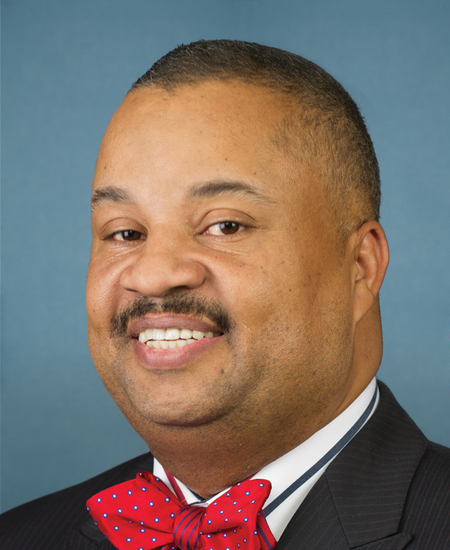
Rep. Donald M. Payne, Jr.
Sponsored bills
Pride in Mental Health Act This bill expands programs that prevent and treat child abuse and neglect to address issues facing youth who are lesbian, gay, bisexual, transgender, queer or questioning, nonbinary, or gender-variant members of indigenous communities (e.g., Two Spirit). Specifically, these programs include (1) research and reporting requirements, (2) providing technical assistance, (3) grants to states and local agencies to train child-welfare personnel, and (4) community-based prevention-service grants. The bill also establishes a grant program to provide mental and behavioral health resources for such youth, including trauma-informed care.
Countering Malign Russian Activities in Africa Act This bill requires the Department of State to report to Congress a strategy and implementation plan outlining U.S. efforts to counter Russia's malign influence and activities in Africa. The State Department must also report to Congress annual updates on the strategy and implementation plan.
Highlands Conservation Reauthorization Act of 2022 This bill extends through FY2029 the Highlands Conservation Act, which provides for land conservation in Highlands states (i.e., Connecticut, New Jersey, New York, and Pennsylvania). The bill authorizes the Fish and Wildlife Service to add a municipality to the Highlands region upon the request of a Highlands state, with the concurrence of the municipality. The bill revises the way in which land is identified for conservation to require using the best available science and geographic information systems. The bill allows political subdivisions of states to enter into agreements with the Department of the Interior for land conservation projects. A Highland state that receives funds for a land conservation partnership project may not use more than 5% of the funds to administer that project. The bill extends through FY2029 Forest Service and other Department of Agriculture programs to conserve land and natural resources in the Highlands region. With respect to an appraisal related to a land acquisition carried out under this bill, a Highlands state shall use an appraisal methodology approved by the Department of the Interior.
Armenian Genocide Education Act This bill requires the Library of Congress to maintain a public website and otherwise support educational initiatives to promote understanding about the Armenian Genocide.
This resolution recognizes that Black women are experiencing high, disproportionate rates of maternal mortality and morbidity in the United States and that Black Maternal Health Week is an opportunity to deepen the national conversation about Black maternal health.
Get the Lead Out of Assisted Housing Act of 2022 This bill addresses the removal of lead from drinking water in federally assisted housing. Specifically, the bill requires the Department of Housing and Urban Development (HUD) to require specified testing and remediation with respect to water service lines containing lead; authorizes HUD to inspect all sources of lead contamination in federally assisted housing and to mitigate sources of lead exposure; establishes a grant program for states and local governments to create inventories of water service lines containing lead and to test for lead in the drinking water at child care facilities, schools, and public water fountains; and allows recipients of certain HUD assistance to use such assistance to replace water fixtures and service lines containing lead.
Energy Security and Independence Act of 2022 This bill addresses domestic industrial base and manufacturing capabilities for specified energy-efficiency and renewable energy systems and technologies (e.g., electric transportation systems), including by establishing a program to provide financial assistance for the construction of new facilities that manufacture components of specified energy-efficiency and renewable energy systems and technologies (or to retool, retrofit, or expand such facilities).
Maddy summaryHR 7477, the CERTS Tax Exemption Act, ensures that grants provided under the Coronavirus Economic Relief for Transportation Services Act are tax-free for eligible transportation service providers. The bill directly affects companies and organizations providing transportation services that receive these specific federal grants. Key provisions state that grant amounts cannot be counted as taxable income, deductions related to grant-funded costs cannot be denied, and tax attributes (like basis increases) must be treated as tax-free for partnerships and S corporations. This change simplifies tax treatment for recipients by preventing unintended tax liabilities on relief funds.
School and Daycare Protection Act This bill establishes in the Department of Homeland Security (DHS) a council to ensure the coordination of activities, plans, and policies to enhance the security of early childhood education programs and schools against acts of terrorism and other homeland security threats. DHS must participate in federal efforts to maintain and publicize a clearinghouse of resources available to early childhood education programs, elementary schools, and secondary schools to enhance security against such threats. Further, DHS must report by January 30, 2023, and annually thereafter, to the congressional homeland security committees on (1) DHS activities, plans, and policies aimed at enhancing security; (2) the council's activities and contributions of DHS to federal efforts to maintain and publicize the clearinghouse; and (3) any metrics regarding the efficacy of such activities and contributions, and any engagement with stakeholders outside of the federal government.