

Maddy summaryThis bill establishes a new workplace violence prevention standard for healthcare and social service workers. It requires employers in covered facilities - including hospitals, nursing homes, mental health clinics, and social service settings - to develop and implement comprehensive prevention plans with specific requirements. These plans must include risk assessments, hazard prevention measures, employee training on violence prevention, and procedures for reporting and investigating violent incidents. The bill also amends Medicare regulations to require compliance with these standards for hospitals and skilled nursing facilities receiving Medicare funds.
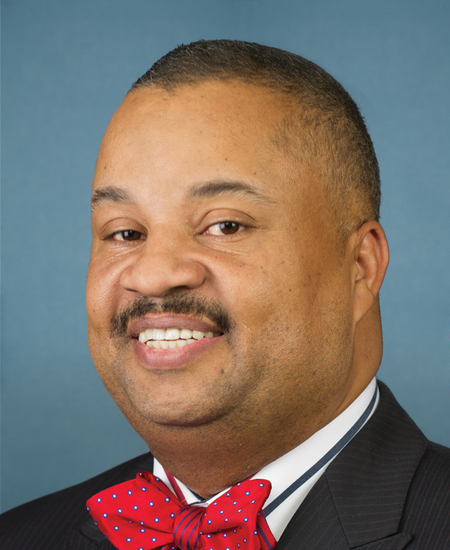
Rep. Donald M. Payne, Jr.
Sponsored bills
Maddy summaryThe Working Families Task Force Act of 2023 establishes a federal task force led by the Secretary of Labor, including representatives from eight departments (including Health, Education, Housing, and Treasury), to examine challenges facing working families. The task force will identify key issues like affordable childcare, housing access, livable wages, and tax credit effectiveness, then develop policy recommendations to improve their standard of living. It must meet quarterly, submit an initial report within 180 days, and provide annual updates to relevant congressional committees. The bill directly affects working families by creating a coordinated federal effort to address their economic challenges through agency collaboration. It does not create new programs but mandates a review of existing policies to inform future legislative action.
Maddy summaryThis bill would require Medicare to cover FDA-approved blood tests that screen for multiple cancers simultaneously (like breast, lung, or colorectal cancer) for beneficiaries. It directly affects Medicare recipients aged 65+ who could access these new screenings once per year, without prior authorization. The key provision adds "multi-cancer early detection screening tests" to Medicare's covered services under Part B, defining them as blood tests analyzing cell-free DNA, while maintaining existing coverage for standard screenings like mammograms. The bill does not change current coverage for individual cancer screenings but ensures Medicare keeps pace with new medical technology.
Maddy summaryThis bill modifies Medicare's rules for clinical laboratory testing to reduce administrative burdens. It requires the use of statistically valid sampling (instead of full reporting) for "widely available" tests - defined as tests costing under $1,000 per test with over 100 labs performing them - to determine payment rates starting in 2026. The bill also delays reporting deadlines until 2027, updates how labs are defined for payment purposes, and adds annual payment increase caps (2.5% for common tests in 2024-2025, rising to 5% by 2028). These changes directly affect Medicare-participating labs, particularly independent and hospital-based labs conducting common tests.
Maddy summaryThe Food and Farm Act caps agricultural subsidies at $125,000 per entity, requires conservation plans for farms, and increases funding for beginning farmers and ranchers. It establishes an Office of Food Waste to coordinate nationwide food waste reduction efforts and creates tax incentives for animal welfare certification programs. The bill expands nutrition assistance programs to improve access to healthy foods and includes new conservation requirements for farms. These provisions directly affect farmers, ranchers, food assistance recipients, and food industry stakeholders across the United States. The changes aim to improve agricultural sustainability, increase access to healthy food, and support a more resilient agricultural sector.
Maddy summaryThis bill requires private health insurance plans and Medicaid to cover selected insulin products for individuals under 26 years old without deductibles and with cost-sharing capped at $35 per 30-day supply or 25% of the negotiated price (whichever is lower). It defines "selected insulin products" as at least one of each type (e.g., rapid-acting, long-acting) and form (e.g., vial, pump) of insulin that plans select. The cost-sharing for these products counts toward the plan’s annual out-of-pocket maximum, and the requirement applies to all private plans and Medicaid starting January 1, 2024. Plans are not required to cover insulin from out-of-network providers at the same cost-sharing level.
Maddy summaryThe Affordable Insulin Now Act (HR 1488) requires health insurance plans and issuers to cover specific insulin products with cost-sharing capped at $35 per 30-day supply or 25% of the negotiated price, whichever is lower, starting in 2024. It directly affects people with diabetes who rely on insulin by limiting out-of-pocket costs for covered products. The bill mandates coverage of all insulin types (rapid-acting, long-acting, etc.) and dosage forms (vials, pumps, etc.) as selected by the plan. This applies to both group and individual health insurance plans under the Public Health Service Act, Internal Revenue Code, and ERISA, with cost-sharing counting toward annual deductibles.
Maddy summaryThe Social Security Expansion Act would increase benefits for many Social Security recipients, extend eligibility for certain groups, and introduce new tax provisions. It raises the calculation method for benefits (increasing the first bend point from 90% to 95%), increases minimum benefits for low earners based on years worked (with higher minimums for those with more work history), and extends benefit eligibility for children who are full-time students until age 22. The bill also introduces a new tax on income between the Social Security wage base and $250,000, and increases the tax on investment income from 3.8% to 16.2%. These changes would primarily affect Social Security beneficiaries, high-income earners, and those with investment income, with the new tax revenues funding the Social Security Trust Fund.
Maddy summaryThe Stop the Wait Act of 2023 eliminates the current 5-month waiting period for Social Security Disability Insurance (SSDI) benefits by phasing it out: applications filed in 2023-2025 would face a 3-month wait, 2026 a 2-month wait, and 2027 a 1-month wait, with full elimination by January 2028. It also changes Medicare rules to allow individuals without minimum essential health coverage to receive Medicare benefits retroactively from the first month of SSDI eligibility, rather than waiting 24 months. This directly affects people under 65 applying for SSDI who lack other health insurance, ensuring they have coverage during the waiting period. The bill amends the Social Security Act to implement these changes, effective January 1, 2028.
Maddy summary# Summary of Proposed Election Reform Legislation This document outlines a comprehensive federal election reform bill with multiple titles addressing various aspects of voting rights, election administration, and election integrity. ## Key Provisions: ### 1. Democracy Restoration (Title I) - Restores voting rights to citizens with felony convictions who are not serving a felony sentence in a correctional institution - Requires states to notify individuals of restored voting rights upon release from prison, completion of probation, or sentencing - Prohibits states from conditioning voting rights on payment of fines or fees - Requires states to provide notification of voting rights to citizens with criminal convictions ### 2. Voter Identification Requirements (Title II) - Establishes a broad definition of acceptable identification documents (including utility bills, bank statements, student IDs, etc.) - Requires states to provide free identification to voters who lack one - Authorizes $5 million annually for 5 years to cover costs of providing identification - Sets procedures for provisional voting when identification is not presented ### 3. Voter List Maintenance (Title III) - Prohibits "voter caging" (using undeliverable mail to challenge voter registration) - Bans use of unverified match lists to remove voters from registration lists - Sets strict conditions for removing voters from registration lists - Requires states to provide notice to voters removed from registration lists ### 4. Election Integrity Measures (Title V) - Prohibits hindering or interfering with voter registration (Section 2001) - Restricts removal of local election administrators (Section 3001) - Prohibits harassment of election workers (Section 3101) - Bans deceptive practices in elections (Section 3201), including false statements about voting locations, eligibility, or endorsements ### 5. Additional Provisions - Requires states to provide notice of voting rights restoration to citizens - Establishes private rights of action for violations of the law - Sets criminal penalties for violations (up to $100,000 fines and 5 years imprisonment) - Includes provisions for federal funding to be contingent on compliance with voting rights restoration This legislation represents a significant overhaul of voting rights and election administration procedures across the United States, with a focus on expanding voting access, protecting voter rights, and ensuring fair election administration.