

Maddy summaryThis bill directs the U.S. Department of Agriculture to prioritize urban forestry assistance for communities with the lowest tree equity scores - measured by how tree canopy coverage aligns with community factors like income, race, health, and employment. It also creates a $30 million pilot program for public elementary and secondary schools to establish rooftop gardens, requiring at least 20% native plants, organic methods, and curriculum integration on urban agriculture or pollinator habitats. Schools in areas with high population density, respiratory illness rates, or low existing garden access receive priority for funding. The program mandates annual inspections of funded gardens and defines "tree equity score" using tools like American Forests' methodology.
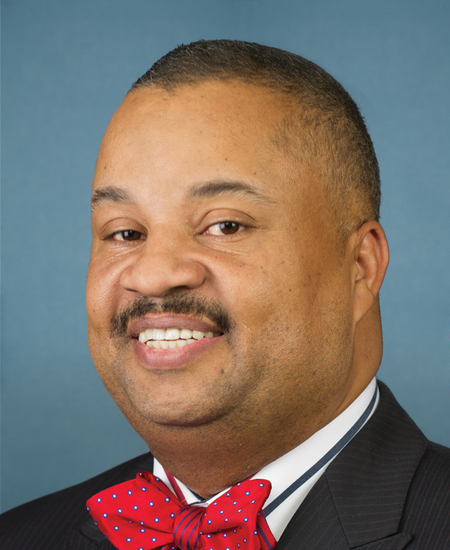
Rep. Donald M. Payne, Jr.
Sponsored bills
Maddy summaryHRES 375 is a ceremonial resolution supporting National Nurses Week (May 6-12, 2023), recognizing nurses' contributions to healthcare. It does not create new laws or policies but formally acknowledges nurses' roles as frontline caregivers, patient advocates, and key contributors to public health. The resolution encourages the public to observe the week through recognition and activities, highlighting nurses' impact across all healthcare settings. It directly affects the nursing profession by affirming their value, though it has no binding effect on legislation or funding.
Maddy summaryHRES 372 is a non-binding House resolution expressing support for designating May 2023 as "Mental Health Awareness Month." It does not create new laws or allocate funds but formally urges the nation to recognize mental health as a priority. The resolution supports reducing stigma around mental illness, expanding access to mental health services, and emphasizing that mental well-being is as important as physical health. It highlights the need for greater awareness and resources, particularly for youth, veterans, and communities of color facing mental health disparities, but does not mandate any specific policy changes.
Maddy summaryHR 3255, the Freight Rail Workforce Health and Safety Act, requires major freight railroads (Class I carriers) to provide employees with at least 7 days of paid sick leave annually. This includes leave for personal illness, family care, preventive medical visits, and situations related to domestic violence, sexual assault, or stalking. Employees can carry over unused days to the next year, and railroads cannot require workers to find replacements before taking leave or penalize them for using it. The law prohibits retaliation, such as termination or demotion, for requesting or using sick leave, and ensures paid sick leave is separate from existing vacation or holiday time.
Maddy summaryThe PAST Act of 2023 amends the Horse Protection Act to ban specific devices used to cause pain (soring) in horses at shows, particularly affecting Tennessee Walking Horses, Racking Horses, and Spotted Saddle Horses. It defines prohibited "action devices" (like boots or chains causing friction) and requires licensed, conflict-free inspectors at events to enforce rules. The bill increases penalties for violations to up to $5,000 fines or 3 years in jail, and mandates longer disqualifications for repeat offenses (180 days → 1 year → 3 years). Horse show organizers, exhibitors, and participants must comply with these new inspection and penalty requirements.
Maddy summaryThe Firearm Safety Act of 2023 amends the Consumer Product Safety Act to remove firearms from an existing exclusion, reclassifying them as consumer products under federal law. This change would subject firearms to safety standards, testing, and oversight by the Consumer Product Safety Commission (CPSC), which currently does not regulate firearms under this framework. The bill specifically targets Section 3(a)(5) of the Consumer Product Safety Act, eliminating the exemption that previously kept firearms outside the definition of "consumer product." As a result, firearm manufacturers and sellers would now face CPSC requirements, such as safety testing, labeling, and reporting, similar to other consumer products.
Aaron Salter, Jr., Responsible Body Armor Possession Act This bill establishes a federal statutory framework to restrict the purchase, ownership, or possession of enhanced body armor by civilians. The term enhanced body armor means body armor, including a helmet or shield, with a ballistic resistance that meets or exceeds the ballistic performance standard of Type III armor, as determined using the National Institute of Justice standard in effect at the time the person purchases, owns, or possesses the armor.
Maddy summaryThe HELPER Act of 2023 creates a new FHA mortgage insurance program specifically for first responders and K-12 teachers. It allows eligible first-time homebuyers in these professions to secure mortgages with 100% financing (no down payment required) for purchasing or repairing a primary residence. To qualify, applicants must be employed as law enforcement, firefighters, paramedics, or K-12 teachers, have completed housing counseling, and meet specific employment history requirements (e.g., 4 years in the role or disability-related release). The program authorizes $660,000 for fiscal year 2024 and $160,000 annually through 2030, with authority expiring after 5 years.
Maddy summaryHRES 376 is a non-binding resolution expressing the House of Representatives' view that the U.S. Postal Service (USPS) must maintain door-to-door delivery for all residential and business customers. It cites concerns that ending this service would disproportionately affect elderly and disabled individuals who rely on secure, convenient mail access for essential items like medications. The resolution notes that voluntary shifts to centralized pickup in 2013 affected only 0.8% of businesses, highlighting dependence on in-person delivery for security and revenue. It urges USPS to avoid reducing door delivery or requiring customers to pay for it.
Maddy summaryHR 2757, the Puerto Rico Status Act, establishes a process for Puerto Rico to determine its political status through a plebiscite on November 2, 2025, offering three options: independence, sovereignty in free association with the United States, or statehood. If no option receives a majority in the initial vote, a runoff plebiscite would be held on March 8, 2026. The bill outlines transition processes for each option, including constitutional conventions, implementation steps, and provisions for citizenship, immigration, and economic benefits. It mandates bilingual voter education materials and requires oversight by the Elections Commission and the Attorney General to ensure fair representation of all options. This legislation directly affects Puerto Rico's residents by providing a structured process to choose their permanent political relationship with the United States.