

Maddy summaryThe Fund the TSA Act sets a new aviation security fee of $7.60 per one-way air trip (capping round trips at $15.20) and requires annual inflation adjustments starting in 2026. It creates three dedicated funds from these fees: $250 million yearly (2024-2028) for airport security technology development (including $12.5 million for small businesses), $1.14 billion in 2024 for TSA worker salaries and benefits, and $130 million in 2024 for airport security programs like law enforcement reimbursements and exit lane security grants. These funds replace diverted revenues and directly support TSA operations, technology upgrades, and workforce needs. The bill affects air travelers (via the fee), TSA employees (through funding), and small businesses (through technology development opportunities).
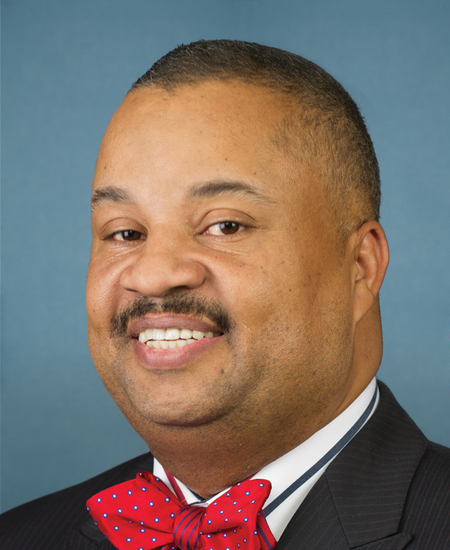
Rep. Donald M. Payne, Jr.
Sponsored bills
Maddy summaryHR 3409, the Healthy Families Act, requires most employers to provide employees with paid sick leave. Employees earn 1 hour of paid sick time for every 30 hours worked, up to a maximum of 56 hours per year, which can be used for their own illness, caring for family members, or addressing domestic violence, sexual assault, or stalking situations. Smaller employers with fewer than 15 employees can provide unpaid sick leave instead of paid leave. The bill includes protections against retaliation for using sick leave and requires employers to inform employees about their rights under this law.
Maddy summaryThe Higher Education Mental Health Act of 2023 establishes an Advisory Commission to study mental health challenges faced by students in higher education. The Commission, composed of 20 members including students with mental health disabilities, campus leaders, advocates, and government representatives, will analyze current services, policies, and data over a two-year period. It will develop recommendations to improve mental health support, retention, and graduation rates for students with mental health disabilities. The bill directly affects all institutions of higher education by requiring them to consider the Commission’s findings and recommendations.
Maddy summaryHR 3422, the Judiciary Act of 2023, would amend the structure of the U.S. Supreme Court by increasing the number of associate justices from eight to twelve. It would also raise the required quorum for court proceedings from six to eight justices. This bill directly affects the Supreme Court's operational structure and composition. The change is purely procedural, altering the Court's size and voting requirements without impacting other legal processes or specific groups of people.
Safe Access to Cash Act of 2023 This bill establishes a new federal statutory framework to govern robbery offenses involving ATMs and related conduct. Currently, the federal bank robbery statute makes it a federal crime to take or attempt to take by force and violence or by intimidation, money or other property from any bank, credit union, or savings and loan association. A violation is punishable by a statutory maximum prison term of 20 years (or 25 years, if the offense includes assault or use of a dangerous weapon). However, federal circuit courts have split on whether forcing someone to withdraw money from an ATM qualifies as an offense under the federal bank robbery statute. In United States v. Chavez, the Fifth Circuit Court of Appeals held that the bank customer, rather than the bank, had possession of the funds when the robbery occurred, so a necessary element of the federal bank robbery statute--that the money belonged to the bank--was not satisfied. In contrast, the Tenth, Seventh, and Fourth Circuits have held that directly forcing a bank customer to withdraw money from an ATM constitutes a federal bank robbery because the funds belonged to the bank when the withdrawal occurred. This bill establishes new statutory criminal offenses for ATM robbery and related offenses such as ATM theft. A violation is subject to the same criminal penalties as an offense under the federal bank robbery statute--a statutory maximum prison term of 20 years (or 25 years, if the offense includes assault or use of a dangerous weapon).
This resolution commends U.S. Capitol Police Officer Caroline Edwards for protecting Members of Congress, staff, and others during the events of January 6, 2021.
Maddy summaryHRES 289 is a resolution recognizing the week of April 11-17, 2023, as the sixth annual "Black Maternal Health Week" to raise awareness about maternal health disparities. It highlights that Black women in the U.S. face disproportionately high rates of pregnancy-related deaths (2.6 times more likely than White women) and complications, driven by systemic inequities. The resolution urges national attention on these issues and supports policy solutions like the Black Maternal Health Momnibus Act to address racial gaps in maternal care. As a non-binding recognition, it does not enact new laws but aims to amplify community-driven efforts to improve outcomes.
Maddy summaryThis bill extends eligibility for the WIC nutrition program to new mothers for 24 months after childbirth (up from six months) and extends breastfeeding support periods to 24 months (up from one year). It directly affects new mothers and infants who rely on WIC for nutrition assistance, breastfeeding support, and health services. Key provisions include amending the Child Nutrition Act to lengthen these benefit periods and requiring a report within two years evaluating health outcomes, breastfeeding rates, and family experiences. The report must assess impacts on maternal/infant health, racial disparities, and program effectiveness. This is a substantive policy change focused on improving access to critical postpartum support.
Maddy summaryHR 3336, the Diwali Day Act, would add "Diwali Day" to the list of federal holidays recognized in Title 5 of the U.S. Code, specifically placing it after Columbus Day. This bill does not create new government programs or change existing laws; it solely recognizes Diwali as a day for federal employees to observe. The bill's "sense of Congress" section describes Diwali as a significant cultural celebration for millions of Americans across multiple religious communities. As a procedural measure, it directly affects federal government operations by adding a recognized holiday for federal employees.
Justice for Incarcerated Moms Act This bill establishes new requirements related to grants, programs, and reports to improve the treatment and care of pregnant and postpartum women who are incarcerated. Specifically, the bill requires the following: states must restrict the use of restraints on pregnant women in prison in order to receive full funding under the Edward Byrne Memorial Justice Assistance Grant program; the Bureau of Prisons must establish programs to optimize maternal health outcomes for pregnant and postpartum women in federal prisons; the Bureau of Justice Assistance must award state grants for programs to support pregnant and postpartum women in state and local prisons and jails; and the Government Accountability Office must report on adverse maternal and infant health outcomes among incarcerated individuals and infants born to such individuals, with a particular focus on racial and ethnic disparities.