This resolution requires the House Committee on Ethics to investigate and report on whether (1) actions taken by Members of the 117th Congress seeking to overturn the 2020 Presidential election violated their oath of office; and (2) these Members should face sanction, including removal from the House of Representatives. It also condemns all targeted and malicious efforts to disenfranchise Black, Brown, and Indigenous voters.
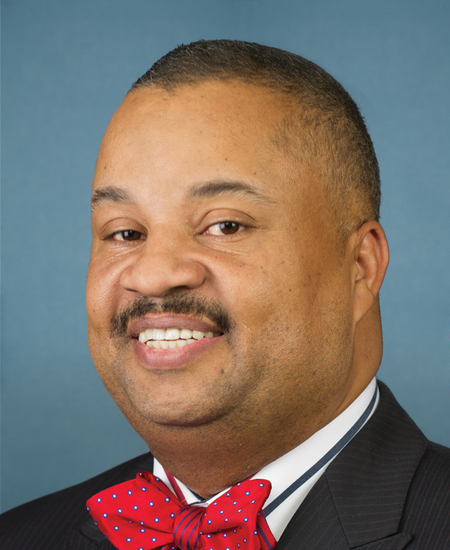
Rep. Donald M. Payne, Jr.
Sponsored bills
This resolution impeaches President Donald John Trump for high crimes and misdemeanors. Specifically, the resolution sets forth two articles of impeachment. The first article states that President Trump abused the powers of the presidency by attempting to unlawfully overturn the results of Georgia's presidential election. The article specifies that President Trump, on a recorded call, repeatedly asked the Secretary of State of Georgia to overturn the verified results of the election and threatened consequences for a failure to do so. The second article states that President Trump abused the powers of the presidency by inciting violence and orchestrating an attempted coup. The article specifies that, on January 6, 2021, President Trump incited a crowd of supporters to attack the Capitol while Congress was in session to certify the results of the election. The article further specifies that, after those supporters had violently breached the Capitol, President Trump made a statement repeating his false claims of election fraud and expressing affection for the supporters. Both articles state that, by such conduct, President Trump warrants impeachment and trial, removal from office, and disqualification from holding U.S. office.

This resolution impeaches President Donald John Trump for high crimes and misdemeanors. Specifically, the resolution sets forth four articles of impeachment. The first article states that President Trump abused the powers of the presidency by inciting an insurrection against the U.S. government. The article specifies a pattern of conduct by President Trump, including the following: spreading disinformation and unsupported allegations of voter fraud; appealing to and defending white supremacists; and encouraging his supporters to descend on the Capitol on January 6, 2021, while Congress certified the results of the presidential election, leading to destruction and death. The second article states that President Trump abused the powers of the presidency by corrupting the electoral process. The article specifies the following conduct by President Trump: soliciting a foreign government (Ukraine) to intervene in the 2020 presidential election; soliciting the Secretary of State of Georgia to overturn election results in Georgia; and during the 2016 presidential election, making unlawful payments to silence persons with unfavorable information about him. The third article states that President Trump has accepted emoluments, including from foreign states, and, in doing so, has violated anti-corruption provisions of the Constitution and used the power of the presidency for improper personal gain. The fourth article states that President Trump has obstructed justice by, for example, directing the firing of the Special Counsel who was investigating him in 2017 and later ordering federal officials to lie about this directive. Each article states that, by such conduct, President Trump warrants impeachment and trial, removal from office, and disqualification from holding U.S. office.

This resolution censures and condemns President Donald J. Trump for asking the Georgia Secretary of State on January 2, 2021, to overturn the Georgia results of the November 2020 presidential election. It further calls on President Trump to (1) retract and disavow this behavior, and (2) acknowledge President-elect Joseph R. Biden as the victor of the November 2020 presidential election.
Providing Rational Options Toward the Elimination of Catastrophic Terrorism Act of 2021 or the PROTECT Act This bill directs (1) the Department of Homeland Security (DHS) to develop and provide guidance on terrorism preparedness and response to assist in the development of plans for addressing active shooter and mass casualty incidents, including in facilities identified by DHS as vulnerable targets; and (2) the Federal Emergency Management Agency (FEMA) to consider the threat from active shooters in allocating grant funds under the Urban Area Security Initiative and the State Homeland Security Grant Program.
Preventing Radical Extremist's Violent Endeavors Now and Tomorrow Act of 2021 or the PREVENT Act of 2021 This bill expands the duties of the Office for State and Local Government Coordination in the Department of Homeland Security to include, for purposes of countering violent extremist threats (1) providing training from specially trained clinical social workers, psychologists, religious and community leaders, and law enforcement personnel to assist local efforts in securing the homeland; and (2) in coordination with the Federal Bureau of Investigation, providing to state and local governments specialists, analysts, and agents trained to counter terrorism and white nationalism to assist local efforts at responding to such threats.
Treat and Reduce Obesity Act of 2021 This bill expands Medicare coverage of intensive behavioral therapy for obesity. Specifically, the bill allows coverage for therapy that is provided by (1) a physician who is not a primary care physician; or (2) other health care providers (e.g., physician assistants and nurse practitioners) and approved counseling programs, if provided upon a referral from, and in coordination with, a physician or primary care practitioner. Currently, such therapy is covered only if provided by a primary care practitioner. The bill also allows coverage under Medicare's prescription drug benefit of drugs used for the treatment of obesity or for weight loss management for individuals who are overweight.
Federal Death Penalty Prohibition Act This bill prohibits the imposition of a death penalty sentence for a violation of federal law. A person sentenced to death before enactment of this bill must be resentenced.
Baseball Diplomacy Act This bill waives various embargo and immigration restrictions in order to allow Cuban nationals to enter the United States to play organized professional baseball. U.S. embargo authority may not regulate or prohibit various transactions by or on behalf of a Cuban national entering to play baseball, nor may the individual be prohibited from returning to Cuba with the earnings made from playing professional baseball. The President's authority to bar an alien whose entry is deemed to be detrimental to U.S. interests may not be used to deny a visa to a Cuban national entering to play baseball. An individual entering to play baseball may obtain a visa to remain in the United States only for the duration of the baseball season. The visa need not be renewed for reentry into the United States during the term of a contract between the individual and the team for which the individual played in the preceding season.
Venezuela TPS Act of 2021 This bill permits nationals of Venezuela to qualify for temporary protected status, which prevents their removal from the United States and allows them to obtain employment and travel authorization. Such status shall be available to qualifying nationals of Venezuela for 18 months starting from this bill's enactment.