

Maddy summaryThe College Financial Aid Clarity Act of 2025 requires colleges and universities that receive federal financial aid to provide clearer, more standardized financial aid offers to students starting July 1, 2029. Institutions must include specific information such as total cost of attendance, grant and scholarship amounts, loan terms with interest rates, renewal requirements, and clear distinctions between required costs and other costs. The bill mandates plain language, consistent formatting, and requires institutions to provide links to resources like the College Financing Plan website and College Scorecard. This directly affects students receiving financial aid offers from participating institutions, aiming to make financial aid offers more transparent and easier to understand.
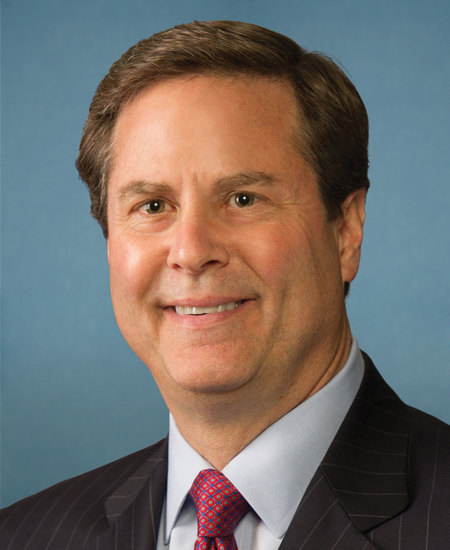
Rep. Donald Norcross
Sponsored bills
Maddy summaryThe Student Financial Clarity Act of 2025 requires colleges and the Department of Education to provide more transparent financial information about college costs and aid to prospective students. It establishes standardized definitions for terms like "net price required for completion" and mandates that the College Scorecard website include detailed, disaggregated data on costs, financial aid, time to completion, and student earnings by program of study and student characteristics such as income, race, and enrollment status. The bill also creates a Universal Net Price Calculator to help students estimate their costs based on their specific circumstances and requires colleges to make their own net price calculators available on their websites. This information aims to help students and families make more informed decisions about college affordability and financial aid. The changes will take effect for the 2027-2028 academic year.
Maddy summaryHR 3307, the Eastern Mediterranean Gateway Act, directs the U.S. government to prioritize diplomatic and security cooperation with Egypt, Greece, Cyprus, and Israel to support their role as a strategic gateway for the India-Middle East-Europe Economic Corridor (IMEC). The bill requires the Secretary of State to institutionalize strategic dialogues with these countries, prioritize energy and defense cooperation in the region, and submit annual reports on implementation and multilateral initiatives. It also mandates studies on expanding U.S. bilateral programs (like those with Israel) to include Eastern Mediterranean partners and analyzing the Cyprus security center as a model. The bill does not create new funding but guides existing U.S. policy and coordination efforts.
Maddy summaryThe SEPSIS Act (HR 7116) establishes a dedicated sepsis program within the CDC to improve national sepsis response. It requires the CDC Director to lead education campaigns on hospital sepsis best practices, enhance pediatric sepsis data collection, and coordinate with Medicare/Medicaid to develop quality measures. Hospitals would be asked to report on sepsis protocol adoption, with a voluntary "honor roll" recognizing top performers in early detection and treatment. The bill authorizes $20 million annually (2026-2030) for these efforts and mandates annual congressional briefings on sepsis data and hospital progress. This directly affects hospitals, CDC operations, and federal health agencies working to reduce sepsis-related deaths and costs.
Maddy summaryHR 7095 bans the importation of energy products (like refined oil) classified under chapter 27 of the U.S. tariff system if they were produced using crude oil originating from Russia, even if processed outside Russia. This directly affects U.S. importers and companies handling such energy products. The bill amends existing law to prohibit these imports by requiring customs to block shipments tied to Russian crude oil, regardless of where refining occurred. It targets "laundered" Russian oil that might otherwise enter the U.S. market through third-country refineries. The policy change focuses on restricting the flow of Russian energy revenue through import channels.
Maddy summaryThis bill amends the Social Security Act to provide work incentives for Purple Heart recipients receiving disability benefits. It removes the standard earnings penalty that would reduce benefits when veterans earn above the "substantial gainful activity" (SGA) threshold, instead allowing benefits to continue with a reduced rate ($1 reduction for every $4 earned above the threshold, but not below $0). It also specifically applies a higher SGA earnings limit to Purple Heart recipients under Social Security disability rules. The changes affect veterans who received a Purple Heart for a service-connected injury and are currently receiving Social Security disability benefits. The bill takes effect six months after enactment.
Maddy summaryHR 7100 establishes a Department of Justice Task Force on Anti-Sikh Hate and Discrimination to address systemic bias against Sikhs. The Task Force must draft a formal definition of anti-Sikh hate for DOJ use, develop educational programs for law enforcement and schools, and produce annual reports on hate crimes and trends. It requires quarterly collaboration with Sikh organizations and translation of materials into Punjabi. The bill directly affects Sikhs in the U.S. (who face disproportionate targeting as noted in FBI data) and mandates federal agencies to improve hate crime data collection and response. This is a policy-focused measure to standardize definitions, enhance reporting, and support community safety through DOJ action.
Maddy summaryHR 7125, the Stop Body Camera Paywalls Act, requires states and local governments seeking certain federal law enforcement grants to certify they do not charge fees for public access to body camera footage, dash camera footage, or prison surveillance recordings. To qualify for Byrne or COPS grant programs, applicants must confirm no financial barriers exist for the public requesting these specific video recordings. The bill makes certification mandatory for grant eligibility, directly affecting law enforcement agencies receiving federal funds under these programs.
Maddy summaryHRES 996 is a resolution introduced by multiple House members to impeach Kristi Lynn Arnold Noem, the Secretary of Homeland Security, for alleged violations of law and the Constitution. It outlines three articles of impeachment: obstructing congressional oversight by denying access to detention facilities and withholding funds, violating public trust through warrantless arrests and excessive force (including tear gas on children), and self-dealing by awarding federal contracts to associates without competitive bidding. If approved by the House, this resolution would formally charge Noem, triggering a Senate trial to determine her removal from office. The resolution itself does not enact new policy but initiates the constitutional impeachment process against a sitting Cabinet official.
Maddy summaryThis bill would increase the base pay for Federal Bureau of Prisons correctional officers by 35 percent, replacing their current base rate for all pay calculations (including retirement and locality adjustments). It applies to officers whose duties involve inmate custody, control, or direct custodial contact, including certain supervisory staff and lower-grade Bureau of Prisons employees with similar duties. The pay increase is capped at the Executive Schedule level V rate and would expire after five years unless a Department of Justice Inspector General review finds progress in reducing non-custodial staff use for custodial duties and excessive overtime. The review, required 180 days before expiration, would assess impacts on recruitment, retention, and institutional safety.