

Maddy summaryThe Give America a Raise Act raises the federal minimum wage in a phased schedule: starting at $10.00 per hour, increasing to $13.00 after one year, $16.50 after two years, and $20.00 after three years. After the fourth year, the wage would automatically adjust annually based on the higher of inflation (CPI) or GDP growth. It eliminates the separate lower minimum wage for tipped workers (currently $2.13/hour) by phasing it to match the standard minimum wage by year six, and ends the sub-minimum wage for workers under 20 years old by year six. The bill also phases out special certificates allowing sub-minimum wages for workers with disabilities, requiring full minimum wage by year six while providing transition support. This directly affects all covered hourly workers, employers, and current recipients of sub-minimum wage arrangements under existing law.
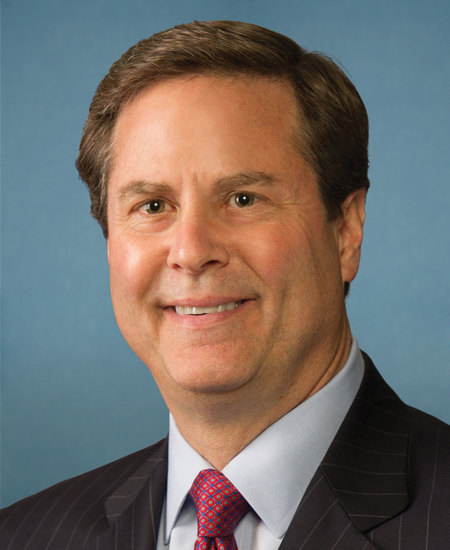
Rep. Donald Norcross
Sponsored bills
Maddy summaryThe PART Act requires new vehicles to have catalytic converters marked with a unique identification number that links directly to the vehicle's identification number, stored in a law enforcement-accessible database. It establishes a $7 million grant program to help repair shops, dealers, law enforcement, and fleet owners purchase equipment for marking converters with visible, durable identifiers (using die or pin stamping and high-visibility paint). The bill also mandates that businesses buying catalytic converters keep detailed seller records (including vehicle information) for two years and use traceable payments, banning cash or cryptocurrency transactions. Additionally, it creates new federal criminal penalties for stealing or trafficking in catalytic converters, with potential sentences of up to five years in prison.
Safe Vehicle Access for Survivors Act This bill requires providers of connected vehicle services, upon the request of a domestic violence survivor, to terminate or disable an identified domestic abuser’s access to a vehicle’s connected capabilities and data. Specifically, within two business days of receiving a request from a survivor, a covered provider must, if technically feasible (1) terminate or disable the connected vehicle account associated with the identified abuser or the relevant vehicle, or the vehicle’s connected capabilities; or (2) instruct the survivor on how to terminate or disable connected services directly. Covered providers may not make the termination of connected vehicle services or accounts contingent on any requirement other than the provision of specified information by the survivor. For example, a provider may not require a survivor to pay a fee or extend their contract with the provider. Under the bill, an abuser is an individual identified by a survivor who committed or allegedly committed certain acts against the survivor, including domestic violence, sexual assault, stalking, and sex trafficking. A survivor is an adult against whom such an act was committed. Further, a covered provider is a vehicle manufacturer, affiliate, or entity acting on behalf of a manufacturer that provides a connected vehicle service. Connected vehicle service is any capability that enables a person to remotely access data from or send commands to a vehicle. Finally, the Federal Communications Commission must prescribe regulations governing how covered providers address survivors’ requests related to connected vehicles.
Maddy summaryThe Rebuild America's Schools Act of 2026 authorizes $20 billion annually from 2027 to 2031 to improve public school facilities nationwide. The bill provides grants to states to fund school construction, renovation, and modernization projects that focus on safety, energy efficiency, and accessibility, with priority given to schools serving high percentages of students eligible for free or reduced-price lunch. Funds cannot be used for routine maintenance, athletic facilities, or vehicles, and must meet specific environmental, safety, and energy efficiency standards. The bill also includes specific provisions for repairing school foundations affected by pyrrhotite, a mineral that causes concrete deterioration, and requires use of American-made materials for construction projects.
Maddy summaryHR 7335 establishes comprehensive humanitarian standards for individuals held in U.S. Immigration and Customs Enforcement (ICE) and U.S. Customs and Border Protection (CBP) custody. The bill requires facilities to provide immediate health screenings within 12 hours (6 hours for high-risk individuals like children, pregnant people, or those with medical conditions), ensure access to adequate water, sanitation, food (with 2,000+ calories daily for adults), and age-appropriate shelter. It mandates specific facility standards including separate housing for males and females, accessible accommodations for people with disabilities, daily outdoor access for those detained over 48 hours, and proper medical equipment and personnel on-site. The bill also requires regular inspections, staff training on humanitarian protocols, and public reporting of sexual abuse complaints. These standards directly affect all individuals detained by ICE or CBP, with special protections for vulnerable groups like children, pregnant people, and those with medical needs.
Maddy summaryHR 5658, the Child Care for Every Community Act, establishes a federal framework to create universal, high-quality child care and early learning programs available to all young children not yet required to attend school. The bill requires that covered children (children below compulsory school age) be entitled to participate in these programs, with no fees for low-income families and sliding-scale fees for others based on family income. Key provisions include requiring full-working-day, full-calendar-year care; setting national quality standards for staff qualifications and facilities; mandating comprehensive services including health, nutrition, and family support; and requiring coordination with schools to support children's transitions to kindergarten. The bill directly affects families seeking child care, child care providers, and local communities that would administer these programs through designated "prime sponsors."
Maddy summaryThis bill (HR 6803) is a commemorative resolution that renames Newark Penn Station in Newark, New Jersey, as the "Donald M. Payne, Jr. Transit Center at Newark Penn Station." It does not create new policies or affect funding; it solely changes the official name of the transit station and all federal references to it. The designation honors Congressman Donald M. Payne, Jr., who represented New Jersey's 10th District and advocated for transit infrastructure during his service. The bill has no direct impact on transportation operations, riders, or policy - it is purely a ceremonial renaming.
Maddy summaryHR 6635, the Bus Operator Safety and Security Act, requires new fixed-route buses over 30 feet long (with a 10+ year lifespan) purchased using federal transit funds to have physical barriers at the driver's workstation. These barriers must extend from floor to ceiling, fully enclose the workstation to block entry of people or objects, and not obstruct the driver's view. Transit agencies must install these barriers within two years of the law's enactment, unless the labor union representing bus drivers agrees to waive the requirement. The rule applies only to new buses bought with federal funds (excluding those from rural transportation programs) and directly affects transit agencies and bus drivers operating large fixed-route vehicles.
Maddy summaryThe Brownfields Reauthorization Act of 2025 increases federal funding for cleaning up contaminated properties (brownfields) in communities. It raises the per-site remediation grant from $500,000 to $1,000,000 and boosts annual funding from $200 million to $250 million, covering fiscal years 2026 through 2030 instead of 2019-2023. The bill also updates state programs to allow them to implement new revitalization strategies beyond just enhancing existing efforts. This directly affects communities with abandoned industrial sites and state environmental agencies managing cleanup projects. The changes aim to accelerate redevelopment of underutilized properties by providing more stable, long-term funding.
Maddy summaryThis bill requires the Social Security Administration to maintain at least the 2025 level of field office personnel and prevent closures without strict review. It mandates 180 days' public notice, two local hearings, and input from Congress and local governments before closing or reducing services at any office, with a 30-day moratorium pending Inspector General approval. The law directly affects Social Security beneficiaries, particularly vulnerable groups like seniors, people with disabilities, and those with language barriers who rely on in-person services. It also requires a detailed report to Congress on past closures, GSA's role in relocation decisions, and a 10-year plan to maintain service levels.