

Maddy summaryThis bill expands eligibility for workers' compensation medical care under the Federal Employees' Compensation Act by adding nurse practitioners and physician assistants as covered providers. It directly affects injured federal workers who can now receive care from these professionals within their state-authorized scope of practice. Key provisions redefine "other eligible provider" in the law and update related sections to replace "physician" with "physician or other eligible provider" throughout the statute. The bill requires the Secretary of Labor to issue final regulations within six months of enactment to implement these changes.
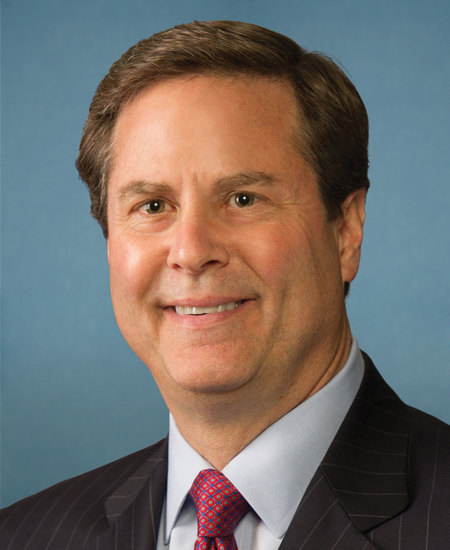
Rep. Donald Norcross
Sponsored bills
Maddy summaryThis bill would remove restrictions on U.S. military exports to the Republic of Cyprus, allowing the Cypriot government to purchase U.S. defense equipment and services. It directly affects Cyprus by enabling access to U.S. defense articles and services, which were previously subject to a policy of denial. The key mechanism eliminates the denial policy for such exports, with exceptions if credible human rights concerns exist, and requires annual congressional certifications to maintain the policy beyond a 5-year period (based on Cyprus's cooperation with U.S. anti-money laundering efforts and denying Russian military vessels port access). The bill does not create new programs but changes existing export restrictions.
Maddy summaryThis bill renames a U.S. Postal Service facility at 514 Frelinghuysen Avenue in Newark, New Jersey, as the "Mildred Joyce Coleman Crump Post Office Building." All official references in federal documents, maps, or records to this specific post office location will now use the new name. The bill directly affects the Newark postal facility and its official documentation. (Procedural naming resolution; no policy changes.)
Give Kids a Chance Act of 2025 This bill expands the Food and Drug Administration’s (FDA’s) authority with respect to research on rare pediatric diseases, including by permitting the FDA to take enforcement action against drug sponsors that fail to satisfy pediatric study requirements and by reauthorizing programs that support pediatric research. Specifically, the bill modifies requirements relating to molecularly targeted pediatric cancer investigations to permit research on new drugs in combination with active ingredients that have already been approved, provided certain conditions are met; permits the FDA to take enforcement action against drug sponsors that fail to comply with pediatric study requirements, if such sponsors demonstrated a lack of due diligence in satisfying the requirement; renews the FDA’s authority to award priority review vouchers to sponsors of new products intended to treat rare pediatric diseases through September 30, 2029; and reauthorizes through FY2027 certain funding for the National Institutes of Health to support priority pediatric research. The bill also provides statutory authority for the FDA’s interpretation of the orphan drug exclusivity period. The bill specifies, consistent with FDA regulations, that the seven-year market exclusivity period for drugs for rare diseases or conditions (i.e., orphan drugs) prohibits the approval of the same drug for the same approved use or indication with respect to the disease or condition. (In Catalyst Pharmaceuticals, Inc. v. Becerra , a court rejected the FDA’s interpretation and held that orphan drug exclusivity extends to all uses or indications for the disease or condition.)
Maddy summaryThis bill establishes a federal program to help low-income households pay for drinking water and wastewater services. It provides $500 million annually (2026-2030) in grants to states and tribes that already administer energy assistance programs, allowing them to cover past-due bills or other costs for households meeting specific income criteria (e.g., receiving certain federal benefits or earning ≤150% of the poverty level). The program prohibits using these funds to replace existing assistance and requires technical help to streamline eligibility. It directly affects low-income households in participating states and tribes, particularly those facing water affordability challenges.
Maddy summaryThis bill allows workers aged 50 or older to directly roll over employer retirement contributions (from 401(k) plans) into an individual retirement annuity without triggering immediate taxes or penalties. It requires retirement plan administrators to provide clear, plain-language written explanations about rollover rules, including a 30-day review period, tax implications (like the 10% early withdrawal penalty), and what types of distributions cannot be rolled over (such as required minimum distributions). The rules apply to taxable years starting after December 31, 2025, and aim to simplify the process for older workers changing jobs or managing retirement funds. It directly affects workers aged 50+ and retirement plan administrators who must comply with the new disclosure standards.
Maddy summaryThis bill updates securities laws to expand exemptions for retirement plans used by charities and educational institutions. It specifically modifies definitions in the Investment Company Act, Securities Act, and Securities Exchange Act to include 403(b) plans meeting certain conditions - such as being subject to ERISA, having employer fiduciary oversight, or being governmental plans. These changes reduce regulatory hurdles for organizations offering these plans, making it easier to administer retirement benefits for their employees. The bill directly affects charities, schools, and other non-profits that sponsor 403(b) retirement plans.
Maddy summaryThis bill establishes fairer pay and retirement benefits for federal firefighters. It requires that overtime hours worked during a firefighter's regular schedule be included in retirement calculations, improving retirement payouts. The bill also sets a maximum 60-hour regular workweek for federal firefighters, to be defined by the Office of Personnel Management within one year. These changes directly affect federal firefighters by addressing pay disparities with municipal firefighters and enhancing recruitment and retention.
Maddy summaryThe Global Respect Act (HR 6151) requires the U.S. President to publicly list foreign officials responsible for severe human rights violations against LGBTQI individuals, including torture, prolonged detention, or violence based on sexual orientation or gender identity. It mandates denying visas and entry to listed individuals and requires annual reports on the list's updates and impacts. The bill also directs the State Department to track global violence against LGBTQI people and update annual human rights reports to include discrimination based on sexual orientation or gender identity. These provisions directly affect foreign government officials and entities implicated in such abuses, aiming to increase accountability through U.S. visa restrictions.
Maddy summaryHR 6056, the International Human Rights Defense Act of 2025, establishes a permanent Special Envoy at the State Department to lead U.S. foreign policy efforts addressing discrimination and violence against LGBTQI+ people globally. The bill requires the U.S. government to develop and update a biannual global strategy to prevent criminalization and violence against LGBTQI+ individuals, mandate detailed reporting on such abuses in annual country reports, and ensure all U.S. foreign assistance programs include inclusive nondiscrimination policies. This legislation directly affects U.S. foreign policy implementation, federal agencies receiving funding, and LGBTQI+ communities facing persecution worldwide. The bill aims to coordinate U.S. government efforts across departments and with international partners to advance LGBTQI+ rights globally through concrete policy mechanisms.