

Workforce Development Investment Act of 2022 This bill allows employers new tax credits for (1) partnering with qualified educational institutions (i.e., any community college, any other institution of higher education, and any area career and technical education school) to improve workforce development and job training for students; and (2) certain job training program expenses.
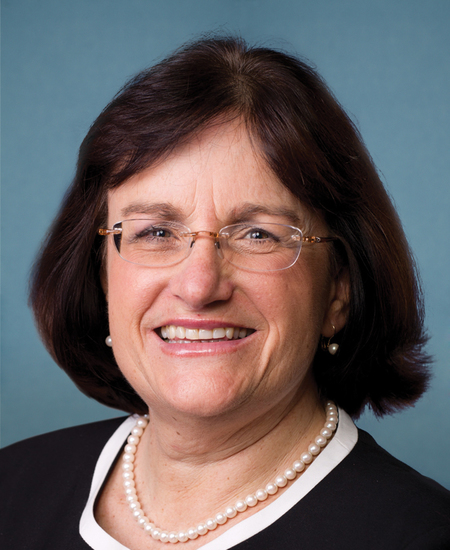
Rep. Ann M. Kuster
Sponsored bills
Gas Prices Relief Act of 2022 This bill provides for a temporary exemption through 2022 from the excise tax on gasoline (other than aviation gasoline) and from the Leaking Underground Storage Tank Trust Fund financing rate. The Department of the Treasury must transfer from the general fund to the Highway Trust Fund and the Leaking Underground Storage Tank Trust Fund amounts resulting from the exemption provided by this bill. The bill also expresses congressional policy that consumers immediately receive the benefit of this exemption.
Stop Unfair Medicaid Recoveries Act of 2022 This bill prohibits state Medicaid programs from using estate recovery to recoup the costs of benefits. States must withdraw property liens within 90 days of the bill's enactment.
This resolution supports the designation of Career and Technical Education Month to celebrate career and technical education across the United States.
Due Process Continuity of Care Act This bill allows an otherwise eligible individual who is in custody pending disposition of charges (i.e., pretrial detainees) to receive Medicaid benefits at the option of the state. The bill also provides funds for state planning grants to support the provision of such benefits.
Keeping School Meals Flexible Act This bill extends authority through June 30, 2023, for the Department of Agriculture (USDA) to waive certain requirements for the school meal programs to address COVID-19. The bill extends the authority for USDA to issue a single waiver of child nutrition program requirements to all states under the National School Lunch Program for purposes of providing meals and snacks with appropriate safety measures with respect to COVID-19; grant waivers of requirements to allow non-congregate feeding in the Child and Adult Care Food Program for purposes of providing meals and snacks with appropriate safety measures with respect to COVID-19; and grant waivers related to the nutritional content of meals served in child nutrition programs if it determines the waiver is necessary to provide meals and snacks, and there is a food supply chain disruption due to COVID-19.
Right to Equitable and Professional Auto Industry Repair Act or the REPAIR Act This bill requires a motor vehicle manufacturer to provide to a vehicle's owner certain direct, real-time, in-vehicle data generated by the operation of the vehicle that is related to diagnostics, repair, service, wear, and calibration or recalibration of parts and systems of the vehicle. Specifically, a vehicle manufacturer may not impair an owner's access to such vehicle-generated data or impair an aftermarket parts manufacturer from producing or offering compatible aftermarket parts. A manufacturer also must make available to the vehicle's owner, and designees, vehicle-generated data through a standardized access platform. Outside of a recall, a manufacturer may not mandate or recommend the use of a particular brand or manufacturer of parts, tools, or equipment. The National Highway Traffic Safety Administration must issue standards for access to vehicle data through the standardized access platform. The Federal Trade Commission must establish an advisory committee to assess and report on existing and emerging barriers to vehicle repair and vehicle owners' control over their vehicle-generated data. This bill provides authority for the commission to enforce these requirements.
Electric Vehicle Charging Infrastructure for Farmers Act This bill authorizes the Department of Agriculture to provide financial assistance under the Rural Energy for America Program for electric vehicle supply equipment (e.g., power outlets) for light, medium, and heavy-duty vehicles.
National Climate Adaptation and Resilience Strategy Act This bill requires the President to identify or appoint a Chief Resilience Officer that must (1) direct a government-wide effort to build resilience to climate change vulnerabilities in the United States in collaboration with existing federal initiatives and interagency adaptation efforts, and (2) create working groups. The officer and the working groups must jointly submit to the President and Congress a strategy for the government to address such vulnerabilities in partnership with nonfederal partners, a plan to implement the strategy, and updates by specified deadlines.
Leading Infrastructure For Tomorrow’s America Act or the LIFT America Act This bill establishes several programs and incentives to modernize the nation's communications, drinking water, energy, transportation, health care, and other related infrastructure. For example, the bill provides incentives to make broadband internet more accessible and affordable. It also establishes grants to implement next generation 9-1-1 services. In addition, it supports drinking water programs, including the drinking water state revolving fund program. Further, it provides grants to treat perfluoroalkyl or polyfluoroalkyl substances (commonly referred to as PFAS) in drinking water and to replace lead service lines. The bill establishes a variety of programs to support clean energy infrastructure and address climate change, including efforts to (1) modernize the electric grid and make it more resilient, efficient, and secure; (2) increase energy efficiency in buildings; and (3) support renewable energy infrastructure. Further, it provides incentives for vehicle infrastructure, such as incentives to develop infrastructure for electric vehicles and grants to reduce air pollution at ports by electrifying port infrastructure. Additionally, the bill establishes grants and programs for health care infrastructure, including by providing support for the Centers for Disease Control and Prevention, laboratories, and state, local, tribal, and territorial health departments. Finally, the bill reauthorizes grant programs to remediate brownfield sites (i.e., sites contaminated with hazardous substances) through FY2026.