

Recruiting in Underserved Rural Areas and Localities for Veterans Act or the RURAL Veterans Act This bill addresses the recruitment of Department of Veterans Affairs (VA) health care professionals in rural areas. Specifically, the bill requires the VA to establish the Office of Rural Recruitment to improve the recruitment of health care professionals for rural and highly rural community-based outpatient clinics and medical centers of the VA. The bill also requires the director of each Veterans Integrated Service Network that contains at least one rural or highly rural community-based outpatient clinic to annually develop and maintain a strategy to recruit health care professionals. The Office of Rural Recruitment shall conduct a study on the feasibility of a scholarship program for health care professionals to attend the Uniformed Services University of the Health Sciences in exchange for service as full-time employees at a rural or highly rural community-based outpatient clinic or medical center of the VA for a specified period of time. The VA shall establish the Rural Health Quality and Access Fellowship program to provide fellowships to health care professionals at the graduate or post-graduate level who serve on a short-term basis as full-time employees at a rural or highly rural community-based outpatient clinic or medical center of the VA and conduct research on (1) improving the quality of rural health care, (2) access to health care in rural areas, and (3) recruitment and retention of health care professionals in rural areas.
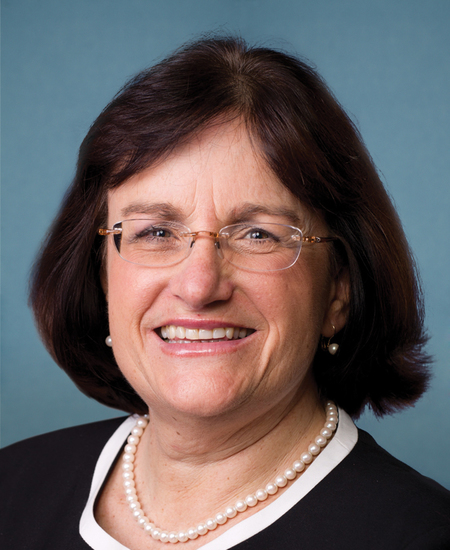
Rep. Ann M. Kuster
Sponsored bills
United States Innovation and Competition Act of 2021 This bill addresses U.S. technology and communications, foreign relations and national security, domestic manufacturing, education, trade, and other matters. Among other provisions, the bill provides funding for FY2022-FY2026 to support U.S. semiconductor manufacturing, research and development, and supply chain security; provides funding for wireless supply chain innovation; establishes a Directorate for Technology and Innovation in the National Science Foundation; extends through 2025 the authority of the National Aeronautics and Space Administration (NASA) to lease its non-excess real property and related personal property; authorizes various programs and policies related to space exploration; authorizes various international affairs programs and activities, including foreign assistance for the Indo-Pacific region; requires federal infrastructure programs to provide for the use of materials produced in the United States; imposes sanctions on China for cybersecurity and human rights abuses; requires the Department of Health and Human Services to consider national security risks associated with sensitive genetic information; includes initiatives related to elementary and secondary education, including those to increase computer science education; contains provisions related to higher education, including those reauthorizing through FY2027 international education programs and addressing China's influence on institutions of higher education; modifies and expands the schedule for graduated merger filing fees; prohibits federal funding for the Wuhan Institute of Virology; requires the U.S. Trade Representative to take certain actions related to digital trade and censorship practices; and extends through 2027 the Generalized System of Preferences.
This resolution urges (1) the President to issue a proclamation recognizing Earth Day; and (2) governments and people to continue building upon the Paris Agreement and other efforts to ensure that future generations inherit a livable, sustainable, and ecologically rich planet. The resolution reaffirms that immediate action is needed to reduce greenhouse gas emissions and ameliorate environmental injustices in order to protect our planet, public health, and overall well-being of all people and wildlife. In addition, it encourages the American people to mark Earth Day by working to address environmental challenges, uplift indigenous environmental knowledge and stewardship practices, educate others about the need for year-round action, and honor the stewardship ethic for which Senator Gaylord Nelson stood.
Childhood Cancer Survivorship, Treatment, Access, and Research Reauthorization Act of 2022 or the Childhood Cancer STAR Reauthorization Act This bill reauthorizes through FY2028 and modifies pediatric cancer research and related programs, including to expand collection of and access to relevant biospecimens and to support the transition of pediatric cancer survivors to primary care.
Maddy summaryHRES 1073 is a symbolic House resolution expressing support for National Child Abuse Prevention Month. It does not create new laws or allocate funding but formally endorses five key areas: raising public awareness about preventing childhood sexual abuse, supporting survivors' healing, advancing justice for victims, increasing education on abuse signs, and recognizing the need for more federal resources in prevention and support efforts. The resolution acknowledges statistics on child abuse prevalence and pandemic-related risks but focuses solely on expressing congressional backing. It directly affects the public and organizations working on child abuse prevention, though it has no binding legal effect.
NIH Implementing a Maternal health and PRegnancy Outcomes Vision for Everyone Act of 2022 or the NIH IMPROVE Act This bill provides statutory authority for an initiative of the National Institutes of Health that supports research on improving maternal health outcomes with a particular emphasis on mitigating maternal health disparities.
Sexual Harassment Independent Investigations and Prosecution Act This bill provides for the inclusion of sexual harassment as an offense subject to the authority of special trial counsel under the Uniform Code of Military Justice (UCMJ) and sets forth requirements related to independent investigations of sexual harassment under the UCMJ.
This resolution recognizes that Black women are experiencing high, disproportionate rates of maternal mortality and morbidity in the United States and that Black Maternal Health Week is an opportunity to deepen the national conversation about Black maternal health.
Congressional Accountability Act Enhancement Act This bill extends the liability of Members of Congress for employment discrimination settlements and awards and expands certain employment protections for congressional employees. Current law requires that a Member who commits an act of harassment in violation of employment-based civil rights protections must reimburse the Treasury for amounts paid as settlements or awards resulting from the act. This bill also requires that Members reimburse the Treasury for amounts paid resulting from any unlawful discrimination and related retaliation. Additionally, the bill grants congressional employees a 10-day period to amend a filing alleging employment discrimination if the hearing officer determines the initial filing failed to state a claim for which relief could be granted. The bill also allows the Office of Employee Advocacy to continue to assist a congressional employee with investigations and proceedings related to a claim of workplace discrimination even after the employee begins federal court proceedings.
Feed Hungry Veterans Act of 2022 This bill expands eligibility for the Supplemental Nutrition Assistance Program (SNAP) for certain disabled veterans, including those determined to be catastrophically disabled.