

National Plan to End Parkinson's Act This bill requires the Department of Health and Human Services (HHS) to carry out a project to prevent and cure Parkinson's disease (a progressive brain disorder that causes unintended or uncontrollable movements) and related conditions. Among other components of the project, HHS must (1) implement and periodically update a national plan to coordinate and guide efforts to prevent and cure the disease; (2) improve diagnosis, treatment, and care of those with the disease; and (3) address health and other disparities related to the disease. HHS must also conduct annual assessments on the preparation for and response to the increased burden of Parkinson's disease. In addition, the bill establishes a council, comprised of federal and nonfederal stakeholders, to advise HHS on and make recommendations concerning the prevention and cure of Parkinson's disease. The bill's provisions terminate at the end of calendar year 2035.
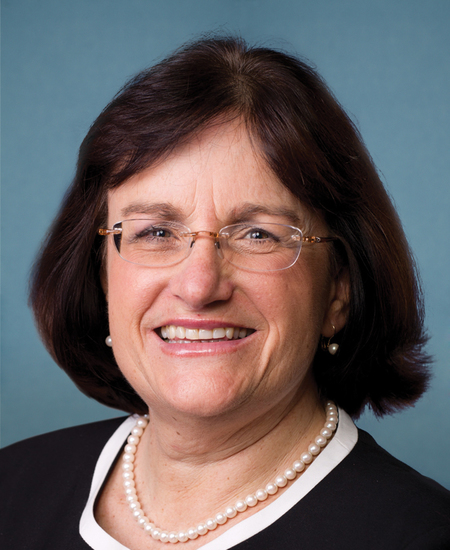
Rep. Ann M. Kuster
Sponsored bills
Spectrum Innovation Act of 2022 This bill addresses auctions of, and other matters related to, portions of the electromagnetic spectrum allocated for federal use. The bill also establishes grants for and otherwise modifies provisions concerning next generation 9-1-1 systems (i.e., interoperable Internet Protocol-based systems for receiving 9-1-1 calls). The bill extends to March 31, 2024, the authority of the Federal Communications Commission (FCC) to auction and license electromagnetic spectrum. (Under current law, the authority expires on September 30, 2022.) Additionally, the bill establishes a process for auctioning specified parts of the spectrum currently allocated for federal use. The Office of Management and Budget must transfer certain funding to federal entities for planning activities related to reallocating and auctioning spectrum while the National Telecommunications and Information Administration (NTIA) and the Executive Office of the President must oversee the planning. The Department of Commerce must, informed by the planning, identify the spectrum to auction. Further, the bill addresses shared use of spectrum bands by federal and nonfederal users. For example, the NTIA must implement an incumbent informing capability system to manage harmful interference when nonfederal users and incumbent federal entities share spectrum. The bill also establishes the Public Safety and Secure Networks Fund and directs a portion of spectrum auction proceeds to the fund for, among other purposes, reimbursing telecommunications providers for replacing equipment that poses risks to national security and safety.
Advancing Telehealth Beyond COVID-19 Act of 2022 This bill modifies the extension of certain Medicare telehealth flexibilities after the end of the COVID-19 public health emergency. Specifically, the bill provides that certain flexibilities continue to apply until December 31, 2024, if the emergency period ends before that date. The bill allows beneficiaries to continue to receive telehealth services at any site, regardless of type or location (e.g., the beneficiary's home); occupational therapists, physical therapists, speech-language pathologists, and audiologists to continue to furnish telehealth services; federally qualified health centers and rural health clinics to continue to serve as the distant site (i.e., the location of the health care practitioner); evaluation and management and behavioral health services to continue to be provided via audio-only technology; and hospice physicians and nurse practitioners to continue to complete certain requirements relating to patient recertifications via telehealth. The bill also delays implementation of certain in-person evaluation requirements for mental health telehealth services until January 1, 2025, or the first day after the end of the emergency period, whichever is later.
Securing and Enabling Commerce Using Remote and Electronic Notarization Act of 2022 or the SECURE Notarization Act of 2022 This bill allows a notary public commissioned under state law to remotely notarize electronic records and perform notarizations for remotely located individuals. The bill provides technical requirements for such notarizations, including the creation and retention of video and audio recordings and the use of communication technologies (i.e., video chat). Additionally, the bill requires U.S. courts and states to recognize notarizations—including remote notarizations of electronic records and notarizations of remotely-located individuals—that occur in or affect interstate commerce and are performed by a notary public commissioned under the laws of other states. The bill also allows a notary public to remotely notarize electronic records involving an individual located outside of the United States, subject to certain requirements.
Original Slavery Remembrance Day Resolution of 2021 This resolution supports the designation of a Slavery Remembrance Day and condemns slavery and its progenies.
Atrocity Crimes, Relief and Accountability Act or the ACRA Act The bill requires the State Department and the U.S. Agency for International Development to provide assistance to suspected victims, survivors, and witnesses of war crimes; establishes a Ukraine victims trust fund; and establishes a Ukraine atrocity crimes rewards fund. The bill also allows the International Criminal Court to conduct limited activities in the United States relating solely to foreign nationals suspected of committing war crimes in Ukraine.
Protect Sexual and Reproductive Health Act of 2022 This bill requires the Department of Health and Human Services (HHS) to undertake activities to promote access to sexual and reproductive health and well-being. The bill renames HHS's Office of Population Affairs as the Office of Sexual and Reproductive Health and modifies its responsibilities. Among other activities, the office must develop and implement a strategy to promote sexual and reproductive health and well-being. This strategy must include recommendations to integrate sexual and reproductive health equity and reproductive justice into federal programs. HHS must also award grants for improving access to sexual and reproductive health care to nonprofit or community-based organizations that assist individuals seeking abortion services through programs that are unbiased and medically and factually accurate. Grant funds may not be used to pay for abortion services. Additionally, HHS and the Director of the White House Gender Policy Council must jointly establish an interagency task force to coordinate and promote federal programs and activities related to sexual and reproductive health and well-being.
Expanding Access to Capital for Rural Job Creators Act This bill requires the Advocate for Small Business Capital Formation within the Securities and Exchange Commission to report on issues encountered by rural-area small businesses.
Overdraft Protection Act of 2021 This bill prohibits a financial institution from engaging in unfair or deceptive acts in connection with overdraft coverage. Each financial institution that offers overdraft coverage for accounts must disclose overdraft coverage fees. It must also disclose that the consumer's transaction may be declined if there are insufficient funds in the related account, and the consumer will not be charged a fee if such transaction is declined. A financial institution must provide certain other disclosures regarding its overdraft protection program, including prompt notification of the account's overdraft status. The bill limits the number of overdraft fees a consumer may be charged each month and year, and provides that such fees must be reasonable. The bill prohibits an overdraft coverage fee if the overdraft results solely from a debit hold amount that exceeds the actual dollar amount of the transaction. The bill also prohibits a financial institution from charging a non-sufficient fund fee for any automated teller machine or debit card transaction, or reporting negative information regarding consumer use of overdraft coverage to any consumer reporting agency when the overdraft amounts and coverage fees are paid under the terms of an overdraft coverage program.
Access to Consumer Energy Information Act or the E-Access Act This bill revises federal guidelines for state energy conservation plans, including by authorizing such plans to include programs that (1) enhance consumer access to, and understanding of, electric energy and natural gas usage and cost information, including consumers' own residential and commercial retail electric energy and natural gas information; and (2) facilitate the development and adoption of innovative products and services to assist consumers in managing energy consumption and expenditures.