

Hold Accountable and Lend Transparency on Campus Sexual Violence Act of 2021 or the HALT Campus Sexual Violence Act of 2021 This bill addresses dating violence, domestic violence, sexual assault, or stalking incidents on college campuses, including by expanding requirements governing the disclosure of such incidents and efforts to prevent them. Specifically, the bill requires the Department of Education (ED) to make available an online survey tool regarding student experiences with domestic violence, dating violence, sexual assault, harassment, and stalking. ED must publish a biennial report that includes campus-level data for each institution of higher education (IHE). The bill permits ED to impose civil penalties on IHEs that have violated a law under the jurisdiction of its Office for Civil Rights. In addition, the bill directs ED, the Department of Health and Human Services, and the Department of Justice to create a task force on sex-based harassment and violence in education.
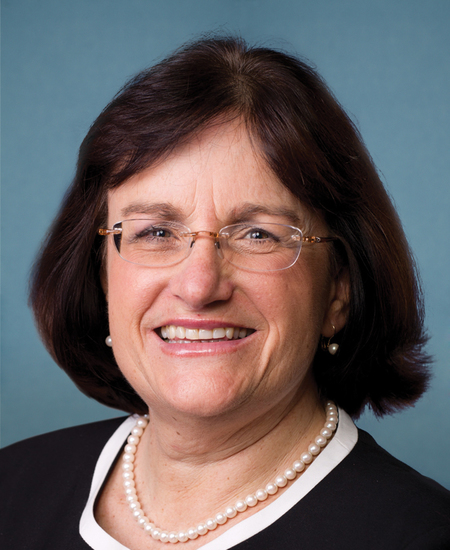
Rep. Ann M. Kuster
Sponsored bills
Supreme Court Ethics Act This bill establishes a new statutory requirement for the Judicial Conference of the United States to issue a judicial code of conduct for judges and justices of U.S. courts, including Justices of the Supreme Court. Currently, the Judicial Conference issues a code of conduct for judges of U.S. courts (but not for Justices of the Supreme Court).
Improving Access for Afghan Refugees Act This bill requires the Department of State to provide priority refugee status to eligible habitual residents of Afghanistan. To be eligible for such priority status, a habitual resident of Afghanistan must also be a national of Afghanistan or stateless. Such an individual shall receive priority refugee status if the individual (1) has suffered persecution or has a well-founded fear of persecution and worked in a specified field that makes the individual a target of persecution on account of race, religion, or other characteristics; (2) was employed for at least one year in Afghanistan by U.S.-based media or nongovernmental entities or an entity that received a contract or grant from the U.S. government; or (3) is the beneficiary of a visa petition sponsored by a relative who is a U.S. citizen or permanent resident. The State Department may also provide priority status to other groups of individuals who are nationals and residents of Afghanistan. Certain annual numerical limits on refugee admissions shall not apply to individuals who receive priority status under this bill. For refugee applications under this bill, the State Department and the Department of Homeland Security shall ensure that all steps in the approval process in the U.S. government's control are completed within six months of an application's submission, with exceptions for cases that need more time to address national security concerns.
Protecting First Responders from Secondary Exposure Act of 2021 This bill expands the allowable uses of grant funds under the Comprehensive Opioid, Stimulant, and Substance Abuse Program administered by the Department of Justice. Specifically, the bill allows grants to be used for purchasing containment devices for first responders and training first responders on the use of containment devices to prevent secondary exposure to fentanyl and other potentially lethal substances.
Daniel Anderl Judicial Security and Privacy Act of 2021 This bill generally prohibits federal agencies and private businesses from publicly posting the personally identifiable information (e.g., home addresses) of federal judges and their immediate family members. It also (1) requires information to be removed upon written request from the federal judge concerned, (2) prohibits data brokers from purchasing or selling such information, and (3) establishes programs to protect such information at the state and local level and to enhance security for judges.
CARA 3.0 Act of 2021 This bill addresses substance use disorders by expanding access to treatment and recovery services, providing for housing protections, and requiring other activities. Specifically, the bill reauthorizes, establishes, and expands support for treatment and recovery services. This includes increasing access to treatment in the criminal justice system and other settings and for particular populations, such as pregnant and postpartum individuals and youth and young adults. Additionally, the bill expands Medicare and Medicaid coverage for treatment, including by expanding telehealth access to medication to treat substance use disorders. The bill also temporarily requires that non-opioid pain treatment options be reimbursed separately, instead of on a packaged basis, under Medicare. As a condition of receiving certain federal funding, states must mandate the use of prescription drug monitoring programs (PDMPs) by prescribers and dispensers and impose additional PDMP requirements. Moreover, prescribers of potentially addictive drugs must complete continuing education requirements. The bill also revises the registration process for providers who prescribe certain medications to treat substance use disorders, including by eliminating the provider's patient limit for such medications. In addition, the Substance Abuse and Mental Health Services Administration must carry out activities to promote access to high-quality recovery housing. The bill also sets out protections for individuals with substance use disorders who live in, or apply to live in, federally assisted housing. Furthermore, the bill requires other activities to address substance use, such as support for workforce education and training; public awareness campaigns and similar outreach; and research on prevention strategies, insurance coverage, and treatment modalities.
Multi-State Worker Tax Fairness Act of 2021 This bill limits the authority of a state to impose its income tax on the compensation of a nonresident individual to the period in which the nonresident individual is physically present in the state.
National Sexual Assault Hotline Grants Reauthorization Act This bill reauthorizes grants for the Rape, Abuse & Incest National Network for FY2022-FY2028.
Amend the Code for Marriage Equality Act of 2021 This bill amends the Internal Revenue Code, the Social Security Act (SSAct), and other federal laws to replace (1) references to wife or husband with references to spouse , and (2) references to husband and wife or husband or wife with references to married couple or married person. For purposes of federal laws or regulations, marriage is defined as a legal union between two people as spouses. The bill eliminates a definition of spouse that refers only to a person of the opposite sex who is a husband or a wife. Requirements concerning compensation to a surviving wife after the disability or death of a person employed at a military, air, or naval base outside the United States are revised to make surviving spouses eligible for such compensation. The bill makes similar revisions to the Family and Medical Leave Act of 1993 and the Federal Mine Safety and Health Act of 1977. The bill revises title II (Old Age, Survivors and Disability Insurance) of the SSAct to consolidate separate provisions for a wife's insurance benefits and a husband's insurance benefits into a single standard for a spouse's insurance benefits. Criminal penalties that currently apply to persons who threaten to kill, kidnap, or inflict bodily harm upon a former President's wife or widow are revised to apply to threats made to a former President's spouse or surviving spouse.
Even Playing Field Act This bill addresses pay equity for amateur athletes and other personnel. It allows recognition, or continued recognition, of a national governing body of an amateur sports organization only if it provides equal investment, promotional support, working conditions (including staff support and facilities and equipment for training and competition), and wages and other compensation to all amateur athletes, without discrimination based on sex. National governing bodies must report periodically to Congress regarding pay equity. Each report shall include (1) the median compensation for amateur athletes, coaches, trainers, managers, administrators, and officials, disaggregated by race, gender, and employment category; and (2) the minimum and maximum compensation paid to such personnel, disaggregated by race, gender, and employment category.