

Maddy summaryThe HERO Act creates a national data system to track suicides among public safety officers (including police, firefighters, and EMTs) and requires annual reports broken down by age, gender, occupation, and status (volunteer, career, etc.). It establishes grants for peer-led mental health support programs within fire departments and EMS agencies, where trained fellow responders provide confidential counseling. The bill also mandates development of educational resources for mental health professionals on first responder-specific stressors and evidence-based PTSD treatment strategies. All data collection and reporting include strict privacy protections to prevent misuse of information for denying survivor benefits.
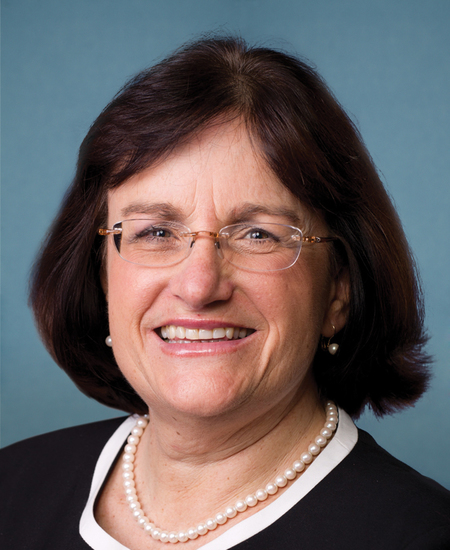
Rep. Ann M. Kuster
Sponsored bills
Maddy summaryHR 3713 creates federal grants to fund comprehensive school-based mental health programs for students in grades K-12, including those in Bureau of Indian Education schools. It requires partnerships between schools and community mental health providers to deliver trauma-informed, culturally appropriate services addressing suicide risk, grief, violence, and trauma exposure. The bill authorizes $300 million annually (2024-2027) for these programs, mandating privacy protections under HIPAA and FERPA, and requires annual reporting on program effectiveness.
Maddy summaryHR 3723, the Medical Device Electronic Labeling Act, allows medical device manufacturers to provide required labeling exclusively through electronic means instead of physical labels. This change directly affects manufacturers of prescription devices and in vitro diagnostic devices, removing the prior requirement for physical labeling at the point of use in healthcare facilities or blood establishments. The bill amends the Federal Food, Drug, and Cosmetic Act to replace outdated language about physical labeling with a general requirement for "devices (including in vitro diagnostic devices)." This simplifies compliance by enabling digital solutions like QR codes or online portals for labeling information. The policy change is a direct regulatory update with no new funding or enforcement mechanisms.
Maddy summaryThis bill establishes a federal registry to track military personnel exposed to PFAS chemicals (specifically from aqueous film-forming foam used on bases) for health monitoring. The VA must create the registry within one year, coordinate with the Defense Department, and run public awareness campaigns to inform eligible service members about registering. The VA must submit two reports to Congress: one within two years assessing data collection efforts and health recommendations, and another within five years evaluating the registry's scientific relevance. The registry specifically covers individuals who served at military sites where AFFF was used, focusing on collecting health data to inform future medical support.
Maddy summaryThis bill makes the adoption tax credit refundable, meaning adoptive parents who claim the credit can receive a cash refund even if they owe no federal income tax. Currently, the credit is non-refundable, so any excess credit beyond taxes owed is lost. The bill redesignates the credit in tax code (from section 23 to 36C), adds new requirements for third-party affidavits to verify adoptions, and applies to tax returns filed for 2024 and later. It directly affects adoptive parents who qualify for the credit but have no tax liability.
Maddy summaryThis bill amends the Older Americans Act to better serve LGBTQI older adults (defined as lesbian, gay, bisexual, transgender, queer, intersex individuals, and those living with HIV) by adding specific definitions and creating new support structures. It establishes an Office of LGBTQI Inclusion within the Administration on Aging, led by a Director and Assistant Director, to coordinate services, advocate for this community, and collect data on their challenges. The bill also creates a National Resource Center on LGBTQI Aging to provide training and resources to organizations serving LGBTQI older adults and requires data collection on discrimination against them in long-term care settings. These changes aim to improve access to culturally competent services and address the unique needs of LGBTQI older adults through concrete policy updates.
Maddy summaryHR 3639, the After Hours Child Care Act, creates a new Child Care and Development Innovation Fund to improve access to child care for parents working nontraditional hours (such as evenings, nights, or weekends). The bill directly affects working parents with young children and eligible child care providers who serve these families. It authorizes competitive grants (ranging from $25,000 to $500,000) to providers or partnerships with businesses/community organizations to expand after-hours care programs, establish workplace child care, or improve existing facilities. Grantees must cover 25% of costs, and the Secretary of Health and Human Services must report biennially on program impact to Congress.
This bill directs the Federal Aviation Administration (FAA) to require that medications and medical equipment for the emergency treatment of a known or suspected opioid overdose be included in an aircraft emergency medical kit; the FAA must, to the maximum extent possible, follow the guidance of the Aerospace Medical Association. In a 2019 guidance document to the FAA, the Aerospace Medical Association recommended including an opioid antagonist (e.g., naloxone or Narcan) in an aircraft emergency medical kit.
Maddy summaryThis bill prohibits corporal punishment (such as spanking or paddling) in all schools receiving federal funding, directly affecting students, school personnel, and school administrators. It requires schools to notify parents within 24 hours if corporal punishment occurs and establishes enforcement through civil lawsuits by students/parents, Attorney General actions, and Office for Civil Rights oversight. The bill mandates states to submit school climate reports and develop training programs on positive behavioral interventions to reduce exclusionary discipline practices that disproportionately affect students of color, students with disabilities, and other marginalized groups. It creates a grant program to help schools implement these approaches, with priority given to schools with high suspension rates and disciplinary actions. The bill does not apply to private schools or home schools that don't receive federal funding.
This resolution encourages the U.S. Holocaust Memorial Museum to continue its work in educating the public about the dangers of antisemitism and the origins of the Holocaust, congratulates those responsible for the creation of the museum, condemns antisemitism, supports educational and community-based programs that counter antisemitism and hate, and supports the designation of a U.S. Holocaust Memorial Museum Day.