

Maddy summaryHRES 720 designates the week of September 24-30, 2023 (and annually thereafter) as "Gold Star Families Remembrance Week" to honor families who have lost loved ones in military service. It specifically recognizes the sacrifices of families of fallen service members and veterans, and encourages Americans to observe the week through community service and celebrating the lives of those who died protecting the nation. This resolution is procedural and symbolic, with no new funding, regulations, or policy changes - only a formal designation to honor these families. It directly affects Gold Star families (those with members who died in military service) and the broader public through its call for observance.
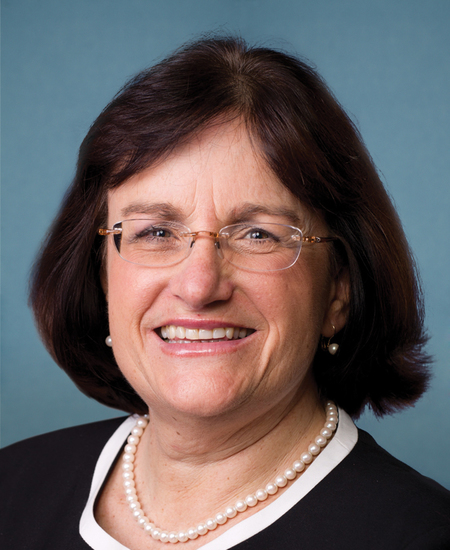
Rep. Ann M. Kuster
Sponsored bills
Maddy summaryThis bill would reduce the pay of all U.S. House and Senate members by one day's salary for each day a government shutdown occurs. Specifically, Congress would withhold that amount during the shutdown and hold it in an escrow account until the end of the current Congress (the 118th). The policy applies to shutdowns starting after the November 2024 election and defines a shutdown as a lapse in funding due to failure to pass appropriations bills. It directly affects all sitting Members of Congress by tying their pay to avoiding shutdowns.
Maddy summaryThe CURE Act prohibits federal agencies from denying security clearances or federal employment based on past or present marijuana use. It requires agencies to review all denials made since 2008 for this reason and reconsider applications within 90 days of a request. Affected individuals can appeal denied reconsiderations to the Merit Systems Protection Board, which must resolve appeals within 120 days. The bill specifically excludes marijuana use from disqualification criteria under existing security clearance rules, applying to all federal job applicants and current employees.
Maddy summaryThis bill establishes a new Office within the Department of Justice to address racial disparities in missing and murdered Black women and girls cases. The Office will collect data on case resolution times, coordinate with law enforcement, and create a public dashboard tracking these cases. It also creates grants for community organizations to provide culturally appropriate services, prevention programs, and training for law enforcement targeting violence against Black women and girls. The bill directly affects Black women and girls who are victims of violence and their communities, focusing on improving data collection and support systems rather than changing criminal laws.
Maddy summaryThe Better CARE for Animals Act of 2023 amends the Animal Welfare Act to strengthen enforcement of animal welfare standards. It gives the Attorney General authority to bring civil cases for violations, including seeking penalties up to $10,000 per day per violation and injunctions to remove or relocate animals. The bill also requires the Secretary of Agriculture and Attorney General to coordinate through a new Memorandum of Understanding, focusing on repeat violators. These changes directly affect dealers, exhibitors, and enforcement agencies by expanding civil enforcement tools and clarifying jurisdiction over rule violations.
Maddy summaryHR 5044, the Timber Innovation for Building Rural Communities Act, creates a federal platform to track carbon emissions and storage from forests and wood products, using data from USDA programs. It establishes grant programs to fund wood-building projects in rural areas with high unemployment, support wood-based construction education at colleges, and pilot innovative wood infrastructure projects like mass timber buildings in rural communities. The bill prioritizes projects that boost local jobs, reduce wildfire risks, and demonstrate economic benefits from wood products, requiring matching funds from non-federal sources. These grants, totaling up to $10 million annually per program, aim to strengthen rural economies tied to forestry while promoting wood as a carbon-friendly building material.
Maddy summaryThis bill extends existing programs that provide payments to counties and states with federal land, primarily to support local schools and communities. It updates key deadlines, extending secure payments through 2026, special project authorities through 2029, and county fund expenditure authority through 2028. A new pilot program allows regional foresters to appoint resource advisory committee members directly, with this authority ending October 1, 2028. These changes directly affect rural counties and states managing federal lands, maintaining current funding mechanisms without altering eligibility or payment amounts.
Maddy summaryHR 4739, the Protecting America’s Orchardists and Nursery Tree Growers Act, amends the Agricultural Act of 2014 to improve assistance for orchardists and nursery tree growers experiencing tree loss. It lowers the mortality threshold from 15% to "normal mortality," requires replacement activities within 12 months (or as needed for tree survival), and allows growers to use assistance for alternative replanting options like different tree varieties, stand densities, or locations - without exceeding the original assistance amount. The bill also excludes growers with 75%+ farming income from gross income limits and mandates the Secretary to notify applicants within 120 days of application status. This directly affects growers facing tree loss due to pests, disease, or other causes, streamlining program access and flexibility.
Maddy summaryThe John R. Lewis Voting Rights Advancement Act of 2023 would strengthen the Voting Rights Act of 1965 by updating the criteria for which states and localities must obtain federal preclearance before changing voting practices. It would establish new standards for proving vote dilution and vote denial by requiring courts to consider historical discrimination, racial polarization in voting, and whether voting practices disproportionately burden minority voters. The bill would also require states and localities to provide public notice of voting changes and share demographic data about polling locations. These changes would primarily affect jurisdictions with a history of voting rights violations, aiming to prevent discriminatory voting practices before they take effect.
Maddy summaryHR 5452, the Honoring National Recovery Month Act, directs the U.S. Department of Health and Human Services to coordinate annual National Recovery Month activities. The bill authorizes $1 million yearly (2024-2028) for the Assistant Secretary for Mental Health and Substance Use to develop toolkits, websites, and public communications that celebrate individuals in recovery, educate the public about treatment options, and combat stigma related to substance use disorders and mental illness. It requires HHS to create and distribute best practices for community engagement and to partner with national organizations to carry out these activities. The bill does not create new laws or alter existing programs but formally supports the observance through designated funding and specific communication mechanisms.