

Maddy summaryHRES 785 is a non-binding resolution introduced by the U.S. House of Representatives that formally recognizes the contributions of Hispanic lawyers and judges while highlighting their underrepresentation in the legal profession and judiciary. It cites specific statistics, noting Hispanic lawyers make up 5.8% of U.S. lawyers and Hispanic judges represent just 7% of federal judicial appointments. The resolution expresses support for increasing Hispanic representation in the legal field to better reflect the Hispanic population, which comprises 18.7% of the U.S. population. As a symbolic measure, it does not enact new laws or policies but serves as a statement of the House's acknowledgment of diversity efforts in the legal sector.
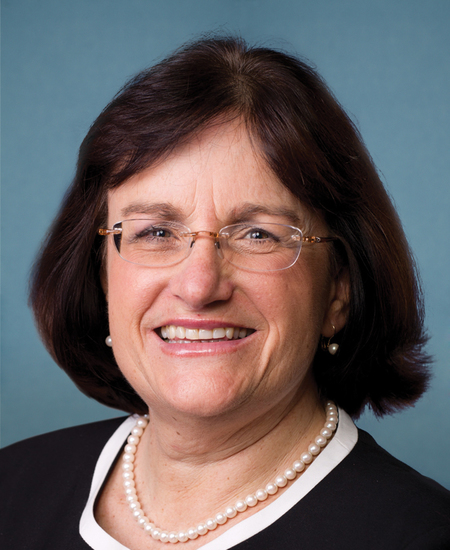
Rep. Ann M. Kuster
Sponsored bills
Maddy summaryHRES 771 is a non-binding resolution expressing the U.S. House of Representatives' support for Israel following Hamas' October 7, 2023, attack. It condemns Hamas' actions, affirms Israel's right to self-defense, and calls for the immediate release of hostages. The resolution also urges enforcement of existing laws restricting aid to terrorists and sanctions against Iran for supporting Hamas. It does not create new policies or allocate funds, as it is a symbolic statement of congressional support.
Maddy summaryHRES 768 is a symbolic House Resolution expressing congressional support for Israel following Hamas' October 7, 2023 attacks. It condemns Hamas' actions, reaffirms Israel's right to self-defense, and calls for the immediate release of hostages. The resolution references the U.S. commitment to Israel's security through existing military aid programs, including the 2016 U.S.-Israel Memorandum of Understanding, and emphasizes enforcement of laws like the Taylor Force Act to prevent U.S. aid from reaching terrorist groups. As a symbolic resolution, it does not create new policy but serves as a statement of congressional support for Israel.
Maddy summaryThe Safe Schools Improvement Act (HR 6031) requires public elementary and secondary schools to implement comprehensive anti-bullying policies that specifically prohibit harassment based on protected characteristics like race, gender identity, disability, religion, and sexual orientation. It mandates schools to collect and publicly report annual data on bullying incidents while establishing clear grievance procedures for students and parents. The bill also requires states to submit biennial reports on school compliance and supports evidence-based interventions, such as restorative practices, to reduce exclusionary discipline. This legislation directly affects all public K-12 schools and students in the U.S., aiming to create safer learning environments through standardized policy requirements and data transparency.
Maddy summaryThis bill removes a previous exclusion that prevented temporary federal employees (including U.S. Postal Service staff and Members of Congress) from counting service after January 1, 1988, toward their retirement benefits. It allows these workers to have their post-1988 temporary service counted toward retirement eligibility if they pay a deposit to the retirement system. The change applies to anyone employed by the federal government on or after the bill's enactment date. The Office of Personnel Management must notify affected employees and create rules to implement this change.
Keeping Drugs Out of Schools Act of 2023 This bill allows the Office of National Drug Control Policy to award grants for eligible entities to implement school-community partnerships for preventing and reducing substance use and misuse among youth. Eligible entity refers to a coalition that (1) is a Drug-Free Communities funded coalition on or before the date on which the coalition submits a grant application, and (2) has a memorandum of understanding in effect with not less than one local school to establish a school-community partnership.
Maddy summaryThis bill prevents health insurance plans from charging extra out-of-pocket costs for prenatal services when a pregnancy ends in miscarriage or stillbirth before delivery. Specifically, if a plan covers prenatal care as part of a bundled childbirth payment and a loss occurs, the plan cannot require additional deductibles, coinsurance, or copayments for those prenatal services beyond what would have been charged for a full birth. It applies to group and individual health plans covering such bundled payments, effective January 1, 2025. The law directly affects pregnant individuals experiencing pregnancy loss and their health insurance providers.
Health Care Practitioner Disaster Protection Act This bill extends certain liability protections available for health care practitioners who provide voluntary health care services in declared emergencies through a community health center other than the one that initially sponsored them. Current law makes the liability protections available to volunteer practitioners that are sponsored by a particular community health center. This bill maintains the liability protections for a volunteer practitioner who provides services through a different community health center if the center (1) seeks the assistance of the volunteer practitioner to respond to a declared emergency, and (2) promptly notifies the Department of Health and Human Services that the volunteer practitioner will be providing services.
Maddy summaryHRES 734 is a House resolution supporting the designation of October 1 as "National Latino and Latina Physician Day." It highlights that Latino and Latina physicians represent only 6% of U.S. doctors and aims to raise awareness about the need for greater diversity in medicine. The resolution emphasizes that increasing representation benefits Latino and Latina communities by improving health outcomes and addressing barriers like language and cultural gaps in care. It does not create new laws but formally expresses congressional support for this symbolic observance.
Maddy summaryThis resolution designates the week of September 25-29, 2023, as "National Clean Energy Week" to recognize the growing role of clean energy in the U.S. economy. It expresses support for clean energy jobs and innovation, noting the sector employed about 8.1 million people in 2022. The resolution encourages federal, state, and local investment in affordable clean energy technologies and promotes "commonsense solutions" for energy needs. As a symbolic gesture, it has no legal force or funding implications - it simply urges recognition of clean energy's economic and environmental contributions.