

Safe And Friendly for the Environment Streets Act or the SAFE Streets Act This bill revises the Highway Safety Improvement Program to create special rules for vulnerable road users. The bill defines vulnerable road user as a nonmotorist such as a pedestrian, pedalcylcist, bicyclist, other cyclist, or person on personal conveyance. Specifically, the bill requires states and metropolitan planning organizations (MPOs) with above the median rate of vulnerable road user fatalities and serious injuries to dedicate at least 75% of funds under the program for projects to improve safety for such users, and states and MPOs to create vulnerable road user safety assessments that include locations and corridors where serious injuries and fatalities occur and strategies to reduce safety risks for such users in the corridors.
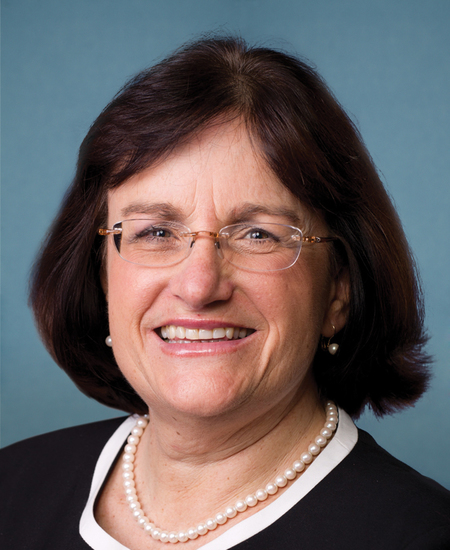
Rep. Ann M. Kuster
Sponsored bills
No Congressional Gun Loophole Act This bill prohibits the Capitol Police Board from allowing Members of Congress or their staff to carry firearms on the grounds of the U.S. Capitol or in its buildings. Members and their staff may store firearms in their cars in Capitol complex garages if their possession complies with the firearms laws of the District of Columbia and the firearms are locked with gun locks while on the complex. Current board regulations allow Members of Congress to keep firearms in their offices; the regulations also allow Members and their staff to transport unloaded and securely wrapped firearms within the Capitol grounds. Firearms are prohibited inside the chambers of the Senate and the House of Representatives, as well as in adjacent lobbies and cloakrooms, the galleries, the Marble Room of the Senate, and the Rayburn Room of the House, unless approved by the Sergeants at Arms for security purposes.
FEMA Empowering Essential Deliveries Act or the FEED Act This bill authorizes the Federal Emergency Management Agency (FEMA) to approve state, local, and Indian tribal government plans to partner with small and mid-size restaurants and nonprofit organizations to provide nutritious meals to individuals in need. Specifically, during the period following the President's emergency declaration of March 13, 2020, and under any subsequent major disaster declaration that supersedes it, FEMA may approve plans from state, local, and Indian tribal governments that (1) establish contracts with small and mid-sized restaurants and nonprofits, including faith-based organizations and soup kitchens, to prepare healthy meals for people in need; and (2) provide for partnerships with nonprofit organizations to purchase directly from food producers and farmers. FEMA shall waive federal matching requirements under the Robert T. Stafford Disaster Relief and Emergency Assistance Act during such period.
Child and Animal Abuse Detection and Reporting Act This bill requires the Children’s Bureau of the Administration for Children and Families to disseminate information through the National Clearinghouse on Child Abuse and Neglect Information about the incidence of cases of child abuse that involve abuse to animals.
Emergency Support for Substance Use Disorders Act This bill requires the Substance Abuse and Mental Health Services Administration to award grants to states, other jurisdictions, and community-based entities for harm reduction activities to address drug misuse during the COVID-19 (i.e., coronavirus disease 2019) pandemic.
Temporary Reciprocity to Ensure Access to Treatment Act or the TREAT Act This bill temporarily authorizes the interstate provision of in-person and telehealth services. This authorization applies during, and for at least 180 days after, the COVID-19 (i.e., coronavirus disease 2019) emergency. Specifically, subject to scope of practice and other requirements, a health care professional may provide health services in any U.S. jurisdiction based on that individual's authorization to practice in any one state or territory. The bill also provides certain related powers to health care professional regulatory bodies, such as medical boards. Specifically, a regulatory body may investigate and take disciplinary actions against a professional who provides services pursuant to this bill to a patient in that body's jurisdiction.
USPS Fairness Act This bill repeals the requirement that the U.S. Postal Service annually prepay future retirement health benefits.
CHampioning Apprenticeships for New Careers and Employees in TECHnology Act or the CHANCE in TECH Act This bill requires the Department of Labor to enter into contracts with industry intermediaries to promote the development of and access to apprenticeships in the technology sector. The Department of Education (ED) may issue CHANCE in TECH Awards for 21st Century Schools to secondary schools or junior or community colleges that demonstrate high achievement in providing students necessary skills to compete in the 21st century workforce. In making an award, ED must consider the availability of science, technology, engineering, and mathematics (STEM), career and technical education, and computer technology courses at the schools.
Energy Debt Relief for American Families Act This bill authorizes supplemental funding to states through the Low Income Home Energy Assistance Program to assist eligible households pay 100% of any utility bills they are unable to pay because of economic distress caused by the COVID-19 (i.e., coronavirus disease 2019) pandemic.
Coronavirus Mental Health and Addiction Assistance Act of 2021 This bill requires the Substance Abuse and Mental Health Services Administration to award grants to establish a network of entities that provide mental health and substance use disorder programs during the COVID-19 (i.e., coronavirus disease 2019) pandemic. Eligible entities include tribal nations, nonprofit organizations, service providers, and partnerships of two or more eligible entities.