

Emmett Till and Mamie Till-Mobley Congressional Gold Medal Act of 2021 This bill provides for the posthumous presentation of a Congressional Gold Medal in commemoration of Emmett Till and Mamie Till-Mobley. After the award the medal shall be given to the National Museum of African American History and Culture.
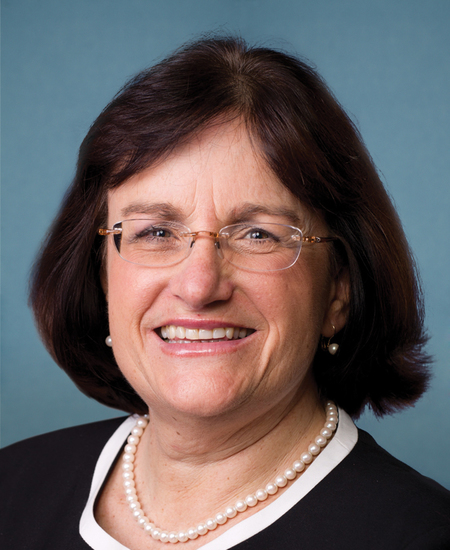
Rep. Ann M. Kuster
Sponsored bills
Survivors' Access to Supportive Care Act or SASCA This bill sets out programs and requirements to address access and quality issues related to sexual-assault examinations. Specifically, the bill establishes training and technical assistance programs for health care providers on conducting sexual-assault examinations and treating survivors of sexual assault, including in rural and tribal settings; grants for states to assess the availability of trained providers to perform sexual-assault examinations; and a task force to assist state-level efforts to improve medical forensic evidence collection related to sexual assault. The bill also requires institutions of higher education to provide information about the availability of sexual-assault examinations to survivors of sexual assault. Additionally, hospitals and specified components of the Department of Health and Human Services (HHS) must report on access and quality issues concerning sexual-assault examinations and related services. Furthermore, HHS must address access to, and the quality of, trained health care providers who conduct sexual-assault examinations in the National Quality Strategy. This is a national effort to align public-sector and private-sector stakeholders to achieve better health and health care.
Access to Genetic Counselor Services Act of 2021 This bill provides for coverage under Medicare of genetic counseling services that are furnished by genetic counselors. Covered services include those services, as well as incidental services and supplies, that would otherwise be covered under Medicare if provided by a physician.
Protecting Americans with Pre-Existing Conditions Act of 2021 This bill nullifies specified guidance and final rule provisions pertaining to Section 1332 waivers (also known as State Innovation Waivers or State Relief and Empowerment Waivers) issued by the Department of the Treasury and the Department of Health and Human Services. The provisions allow states to forego certain requirements of the Patient Protection and Affordable Care Act in order to implement experimental plans for health care coverage, as long as the resulting coverage meets certain statutory criteria. The provisions, which supersede earlier guidance from 2015, alter agency interpretation of how states may satisfy the statutory criteria for waiver approval. For example, the provisions (1) redefine acceptable coverage under such waivers to include short-term, limited-duration insurance and association health plans; (2) allow the comprehensiveness and affordability of coverage under such waivers to be assessed based on projected availability, rather than enrollment; and (3) allow the level of coverage to be assessed based on the effects over the entire course of the waiver, rather than per year.
Children and Media Research Advancement Act or the CAMRA Act This bill requires the National Institutes of Health to fund research regarding the effects of media on infants, children, and adolescents. Such research must examine the impact of media (e.g., social media, television, video games) on cognitive, physical, and social-emotional development.
Quit Because of COVID-19 Act This bill provides for Medicaid and Children's Health Insurance Program (CHIP) coverage of certain tobacco cessation services. Specifically, the bill provides for coverage, without cost-sharing, of diagnostic, therapy, and counseling services and pharmacotherapy, including prescription and nonprescription tobacco cessation agents, that are provided under medical supervision and in accordance with specified guidelines. It also applies a 100% Federal Medical Assistance Percentage (i.e., federal matching rate) for such items and services during the public health emergency relating to COVID-19 and for two years after the emergency period ends.
This resolution recognizes the disparity between wages paid to men and women, and its impact on women, families, and the nation and reaffirms Congress' commitment to supporting equal pay and to narrowing the gender wage gap.
This joint resolution eliminates the deadline for the ratification of the Equal Rights Amendment, which prohibits discrimination based on sex. The amendment was proposed to the states in House Joint Resolution 208 of the 92nd Congress, as agreed to in the Senate on March 22, 1972. The amendment shall be part of the Constitution whenever ratified by the legislatures of three-fourths of the states.
Neighborhood Homes Investment Act This bill establishes a new business-related tax credit to finance home building and rehabilitation in neighborhoods that meet certain eligibility criteria relating to poverty rates, income, and home values. The credit is limited to 35% of the lesser of the qualified development cost (i.e., the cost of construction, substantial rehabilitation, demolition, and environmental remediation of residential properties) or 80% of the national median sale price for new homes. The credit applies to single family homes containing four or fewer residential units, condominiums, or houses or apartments owned by cooperative housing corporations.
Military Family Violence Prevention Act This bill requires the Department of Defense (DOD) to take various actions and implement programs related to the prevention of and response to domestic violence and child abuse and neglect among military families. Specifically, the bill requires DOD to report on current and recommended staffing levels for the Family Advocacy Programs (FAPs) of the Armed Forces at each installation, ensure that appropriate statistical data on incidents report to the FAPs is shared among and across the Armed Forces, establish a pilot program to assess the feasibility and advisability of various mechanisms to inform families about the FAPs and resiliency training of the Armed Forces during their enrollment in the Defense Enrollment Eligibility Reporting System, report on the results of the study conducted by the Defense Department Advisory Committee on Women in the Services that includes information on initial entry points for use by members of military families seeking support for domestic abuse or child abuse and neglect, and modify internal policy related to FAPs to enhance collaboration among the specified DOD programs (e.g., the Defense Suicide Prevention Office). Each military department must improve the information available to military families on the services available in connection with domestic abuse or child abuse and neglect. Finally, the bill requires the Inspector General of DOD to report on best practices among military installations in prevention and response to domestic abuse and child abuse and neglect among military families.