

Flood Level Observation, Operations, and Decision Support Act or the FLOODS Act This bill addresses forecasting and the communication of flood, tornado, and hurricane events by the National Oceanic and Atmospheric Administration (NOAA). Among other provisions, the bill directs NOAA to establish a National Integrated Flood Information System to better inform and provide for more timely decision-making to reduce flood-related effects and costs; establishes partnerships with institutions of higher education and federal agencies to improve total water predictions; designates a service coordination hydrologist at each National Weather Service River Forecast Center to increase impact-based decision support services at the state and local level; requires NOAA to evaluate and improve flood watches and warnings and communication of information to support preparation and responses to floods; ensures that the tornado warning improvement and extension program periodically examines the value of incorporating innovative observations, such as acoustic or infrasonic measurements, observations from phased array radars, and observations from mesonets; requires NOAA to estimate and communicate the frequency of precipitation; establishes an Interagency Coordinating Committee on Water Management to ensure that federal agencies that engage in water-related matters, including water storage and supplies, water quality and restoration activities, water infrastructure, transportation on rivers and inland waterways, and water forecasting, work together where such agencies have joint or overlapping responsibilities; and directs NOAA to conduct an analysis of gaps in the availability of snow-related data to assess and predict floods and flood impacts.
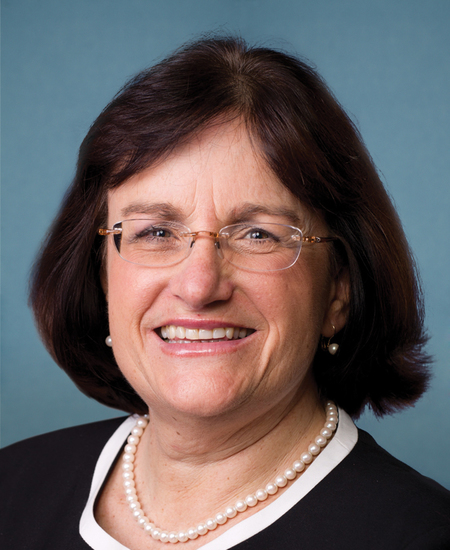
Rep. Ann M. Kuster
Sponsored bills
Excellence in Recovery Housing Act This bill tasks the Substance Abuse and Mental Health Services Administration (SAMHSA) with various activities to promote the availability of high-quality recovery housing for individuals with substance use disorders. Recovery housing refers to shared living environments free from alcohol and illicit drug use and centered on peer support and connection to services that promote sustained recovery from substance use disorders. Specifically, SAMHSA must develop and publish on its website standards and guidelines for recovery housing; award grants to states, tribal nations, territories, and localities to implement such standards and guidelines; convene an interagency working group to coordinate federal activities related to recovery housing; and arrange for research on the supply, quality, and effectiveness of recovery housing.
Better Wound Care at Home Act This bill modifies the Medicare payment methodology for disposable negative pressure wound therapy devices. In particular, the bill specifies that payment must be a national payment rate for the device itself and not for related professional services or visits, and must be made as an add-on payment for the device under the prospective payment system for home health services.
Invasive Species Prevention and Forest Restoration Act This bill directs the Department of Agriculture (USDA) to award competitive grants to certain institutions for research to promote the restoration of tree species affected by non-native plant pests and noxious weeds. USDA may also award competitive grants to implement the research or other solutions to restore forest tree species native to the United States that have suffered severe levels of mortality caused by non-native plant pests and noxious weeds. The bill also expands the authority of USDA to transfer funds to respond to an emergency involving an outbreak of a plant pest or noxious weed. Further, USDA must enter into an agreement with the National Academy of Sciences or another nongovernmental entity to analyze available resources in federal agencies for research of, and solutions to, non-native forest pests and pathogens.
Water Affordability, Transparency, Equity, and Reliability Act of 2021 This bill increases funding for water infrastructure, including funding for several programs related to controlling water pollution or protecting drinking water. Specifically, it establishes a Water Affordability, Transparency, Equity, and Reliability Trust Fund. The fund may be used for specified grant programs. The bill increases the corporate income tax rate to 24.5% to provide revenues for the fund. In addition, the bill revises requirements concerning the clean water state revolving fund (SRF) and the drinking water SRF. It also creates or reauthorizes several grant programs for water infrastructure.
This resolution calls on the government of Azerbaijan to immediately return all Armenian prisoners of war and captured civilians. The resolution also urges the Department of State to engage with Azerbaijani authorities to bring about this result.
This resolution condemns Iranian state-sponsored terrorist attacks against U.S. citizens and officials and Iranian dissidents and expresses support for the people of Iran who are engaged in legitimate and peaceful protests against the Iranian regime.
Infant Formula Protection Act of 2021 This bill prohibits the sale of an infant formula if its use-by date has passed.
Advanced Technology Vehicles Manufacturing Future Act of 2021 or the ATVM Future Act This bill reauthorizes through FY2031 and revises the Advanced Technology Vehicles Manufacturing Loan Program within the Department of Energy (DOE). Under the existing program, DOE provides financial support for the production of advanced technology vehicles. The bill expands the program to include financial support for (1) medium-duty passenger vehicles and heavy-duty vehicles that meet specified emission standards or emit zero-emissions; and (2) components, such as batteries, of ultra-efficient vehicles. The bill also revises the emission standards that light-duty vehicles must meet to be eligible for assistance under the program. In addition, the bill revises requirements governing the evaluation of a loan applicant's prospects of repaying a loan under the program.
Honoring National Recovery Month Act This bill provides statutory authority for the Substance Abuse and Mental Health Services Administration (SAMHSA) to develop communication materials, distribute best practices, and carry out other activities in recognition of National Recovery Month. SAMHSA may undertake these activities or enter into an agreement with a national organization to do so. National Recovery Month is an annual observance to celebrate individuals who are in recovery from a substance use disorder or mental illness, educate the public, and combat stigma.