Helping Ensure Life- and Limb-Saving Access to Podiatric Physicians Act or the HELLPP Act This bill adds podiatrists as covered physicians under the Medicaid program. Additionally, the bill revises certain documentation requirements related to Medicare coverage of therapeutic shoes for individuals with diabetes. Finally, the bill subjects payments made to a Medicaid provider or supplier to a continuing levy for federal taxes owed by the provider or supplier.
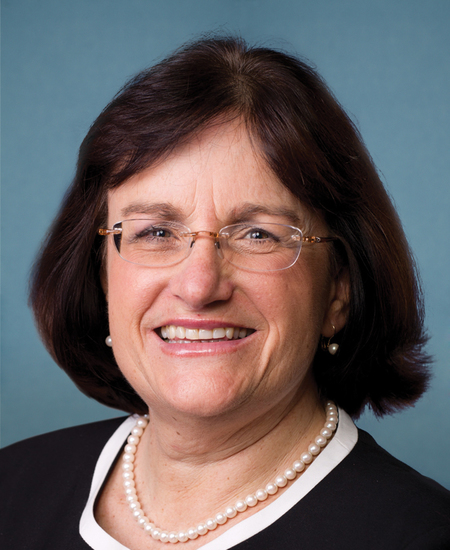
Rep. Ann M. Kuster
Sponsored bills
Connecting America's Active Transportation System Act This bill directs the Department of Transportation (DOT) to carry out an active transportation investment program to provide competitive grants to state, local, and regional government entities, and Indian tribes to construct projects that connect walking and bicycling infrastructure within and between communities, metropolitan regions, or states. The bill sets forth various limitations on the use of funds by DOT, including that it must obligate at least 30% of funds to projects that connect people with public transportation, businesses, workplaces, schools, residences, recreation areas, and other community activity centers; set aside at least $3 million to provide planning grants for eligible entities; and set aside at least $2 million to cover the costs of administration, research, technical assistance, communications, and training activities under the program. The federal share of grants must not exceed 80% of the total project cost. However, DOT may increase the federal share to 100% for disadvantaged communities with a poverty rate of over 40%.

National Guard Cybersecurity Support Act This bill authorizes members of the National Guard to perform, at the request of a state and in connection with training or other duty, cybersecurity operations or missions to protect critical infrastructure.
Affordable Housing for Homeless Veterans Act of 2021 This bill reauthorizes and modifies a program of the Department of Veterans Affairs (VA) that provides housing assistance to homeless veterans. Specifically, the bill authorizes the VA to enter into agreements with specified entities (e.g., nonprofit organizations or tribal entities) through September 30, 2025, to assist homeless veterans and their families in acquiring shelter or permanent housing. Under the bill, the VA may enter into agreements where an entity that is buying, leasing, or receiving property agrees to sell or rent the property directly to homeless veterans or veterans at risk of homelessness.
Virtual Peer Support Act of 2021 This bill appropriates funding for grants to transition behavioral health peer support services that are provided at no cost to participants from in-person to virtual platforms or to otherwise expand these kinds of virtual services. Specifically, the Substance Abuse and Mental Health Services Administration must award competitive grants to certain consumer-controlled or consumer-run organizations and tribal communities. Among other eligibility requirements for these grants, entities must have offered certain behavioral health services at no cost to participants before the declaration of the COVID-19 (i.e., coronavirus disease 2019) public health emergency.
Fairness for Landowners Facing Eminent Domain Act This bill limits the use of eminent domain by the holder of a certificate of public convenience and necessity to acquire land or property for the construction and operation of a natural gas pipeline facility. Specifically, the bill prohibits the use of eminent domain unless the holder (1) obtains all federal and state permits required by law for the construction and operation of pipeline facilities, and (2) complies with all environmental conditions appended to the certificate order. Additionally, the bill suspends eminent domain authority if (1) the holder requests a material amendment to the certificate, or (2) a federal or state permit held by the holder is vacated or remanded. The bill also sets forth a dispute resolution process and related requirements to resolve disagreements about accessing properties prior to acquiring them.
Creating Opportunities Now for Necessary and Effective Care Technologies (CONNECT) for Health Act of 2021 or the CONNECT for Health Act of 2021 This bill expands coverage of telehealth services under Medicare. Among other provisions, the bill allows the Centers for Medicare & Medicaid Services (CMS) to waive certain restrictions, such as restrictions on the types of technology that may be used; permanently removes geographic restrictions on originating sites (i.e., the location of the beneficiary) and allows the home of the beneficiary to serve as the originating site for all services; permanently allows federally qualified health centers and rural health clinics to serve as the distant site (i.e., the location of the health care practitioner); and allows the CMS to generally waive coverage restrictions during any public health emergency. Additionally, the CMS must report on the effects of expanded telehealth services during the COVID-19 public health emergency, including with respect to the utilization, quality, and outcomes of services. The Center for Medicare and Medicaid Innovation may also test alternative payment models relating to expanded telehealth services.
Ban Conflicted Trading Act This bill prohibits a Member of Congress or certain congressional officers or employees from (1) purchasing or selling specified investments, (2) entering into a transaction that creates a net short position in a security, or (3) serving as an officer or member of any board of any for-profit entity.
Mark Takai Atomic Veterans Healthcare Parity Act This bill includes veterans who participated in the cleanup of Enewetak Atoll in the Marshall Islands between January 1, 1977, and December 31, 1980, as radiation-exposed veterans for purposes of the Department of Veterans Affairs presumption of service-connection for specified cancers. Under a presumption of service-connection, specific conditions diagnosed in certain veterans are presumed to have been caused by the circumstances of their military service. Health care benefits and disability compensation may then be awarded.
This concurrent resolution (1) affirms, on the 400th anniversary of the arrival of the first slave ship, that the nation owes a debt of remembrance not only to those who lived through the injustices of slavery but also to their descendants; and (2) urges the establishment of a U.S. Commission on Truth, Racial Healing, and Transformation to properly acknowledge, memorialize, and be a catalyst for progress, including toward permanently eliminating persistent racial inequities.