

Taskforce Recommending Improvements for Unaddressed Mental Perinatal & Postpartum Health for New Moms Act of 2021 or the TRIUMPH for New Moms Act of 2021 This bill temporarily establishes within the Department of Health and Human Services the Task Force on Maternal Mental Health. The task force must develop a national strategy for maternal mental health and report on best practices, policies, and programs to prevent, screen for, diagnose, treat, and reduce disparities in maternal mental health conditions. The report must identify opportunities for state- and local-level partnerships to address maternal mental health, and the task force must share those opportunities with state governors.
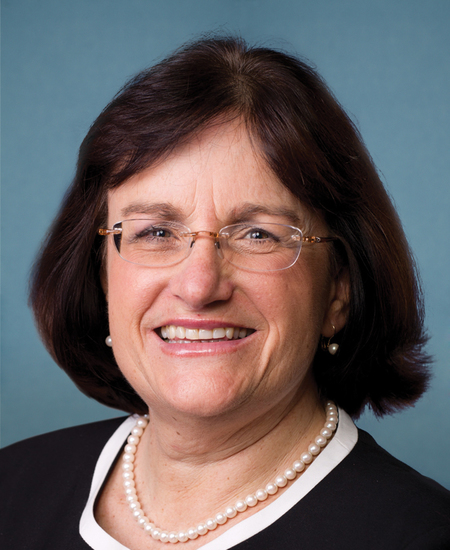
Rep. Ann M. Kuster
Sponsored bills
Improving Medicaid Programs' Response to Overdose Victims and Enhancing Addiction Care Act or the IMPROVE Addiction Care Act This bill establishes additional requirements for state Medicaid drug-use review programs with respect to individuals who experience opioid-related overdoses. Specifically, programs must include protocols that (1) connect individuals who have experienced an opioid-related overdose within the last five years to appropriate treatment; (2) notify providers who prescribe opioids about subsequent fatal overdoses; (3) ensure providers are notified about an individual's history of opioid-use disorder, overdoses, or poisonings; and (4) educate providers about proper prescribing practices for these individuals.
Essential Caregivers Act of 2021 This bill requires skilled nursing facilities, nursing facilities, intermediate care facilities for the intellectually disabled, and nearby inpatient rehabilitation facilities to establish an essential caregivers program during a public health emergency. Under the program, facilities must allow each resident to select up to two essential caregivers to provide daily living assistance, emotional support, or companionship during the emergency. Facilities must afford such caregivers 12 hours of access to residents each day (or unlimited access for end-of-life care), and caregivers must agree to follow facility protocols for staff safety. Facilities may deny access to caregivers who violate protocols, subject to certain notification requirements; the Centers for Medicare & Medicaid Services must establish an appeals process relating to such decisions and may take specified enforcement actions against facilities that violate the bill's requirements.
Disaster Reforestation Act This bill sets forth a special rule for the tax deduction for casualty losses of uncut timber (including pre-merchantable timber). It provides that in losses of any uncut timber from fire, storm, insects, invasive species, drought, or other casualty, or from theft, the basis for determining the amount of the deduction for such loss shall not be less than the excess of the value of such timber determined immediately before such loss was sustained, over the salvage value of such timber. To be eligible for the casualty loss deduction, the uncut timber subject to the loss must be reforested not later than the close of the five-year period beginning on the date of the loss.
Better Care Better Jobs Act This bill establishes programs and provides funds for state Medicaid programs to improve home- and community-based services (HCBS), such as home health care, personal care, case management, and rehabilitative services. Specifically, the bill provides funds for the Centers for Medicare & Medicaid Services to award planning grants, develop quality measures, and provide technical assistance to states regarding specified HCBS improvements, particularly with respect to access, utilization, and the associated workforce. The bill also increases the Federal Medical Assistance Percentage (i.e., federal matching rate) for HCBS in states that develop plans and meet specified benchmarks for improvements. The bill also makes permanent (1) the Money Follows the Person Rebalancing Demonstration Program (a grant program to help states increase the use of HCBS for long-term care and decrease the use of institutional care), and (2) certain provisions regarding Medicaid eligibility that protect against spousal impoverishment for recipients of HCBS.
Allergy Testing Access Act of 2021 This bill requires equal coverage of two types of allergy tests under Medicaid and Medicare. Specifically, in vitro specific IgE tests (blood tests) and percutaneous tests (skin tests) must be treated equally with respect to (1) medical necessity or other coverage requirements, (2) frequency limits, and (3) allergen unit limits.
Therapeutic Fraud Prevention Act of 20 21 This bill prohibits commercial conversion therapy, which is a practice or treatment designed to change a person's sexual orientation or gender identity or otherwise change behaviors, thoughts, or expressions related to gender or sexual attraction. This prohibition does not apply to treatment that assists an individual undergoing a gender transition or facilitates identity exploration and development.
This resolution recognizes the challenges posed by sickle cell trait and sickle cell disease and encourages relevant screening, research, and surveillance. Sickle cell disease is a group of inherited disorders that cause abnormally shaped red blood cells.
Promotion and Expansion of Private Employee Ownership Act of 2021 This bill expands tax incentives and federal assistance for employee stock ownership plans (ESOPs) that are sponsored by S corporations. The bill provides additional tax incentives for ESOPs by (1) extending to all domestic corporations, including S corporations, provisions allowing deferral of tax on gain from the sale of employer securities to an ESOP; and (2) allowing a tax deduction for 50% of the interest received by a bank on loans to S corporation-sponsored ESOPs for the purchase of employer securities. The Department of the Treasury must establish the S Corporation Employee Ownership Assistance Office to foster increased employee ownership of S corporations. The bill defines an ESOP business concern for purposes of the Small Business Act as a business concern that was eligible for a loan, preference, or other program under such Act before more than 49% of the business concern was acquired by an ESOP.
Minor League Baseball Relief Act This bill establishes a program for the relief of certain minor league baseball clubs and independent professional baseball clubs that experienced large business losses. The bill provides funding for the Small Business Administration to make grants to such clubs that experienced decreases in gross revenue in 2020 of at least 75%, as measured against revenues in 2019 (or, if revenues were negatively affected by a natural disaster or weather disruption in 2019, by the average of revenues over the prior three-year period). The source of funding for the grants shall be funds appropriated under enacted COVID-19 relief legislation that have not been obligated and are no longer being used to carry out activities authorized under those laws. Grant amounts provided to any club may not exceed $10 million.