Zero Food Waste Act This bill directs the Environmental Protection Agency to establish a grant program to study and reduce food waste.
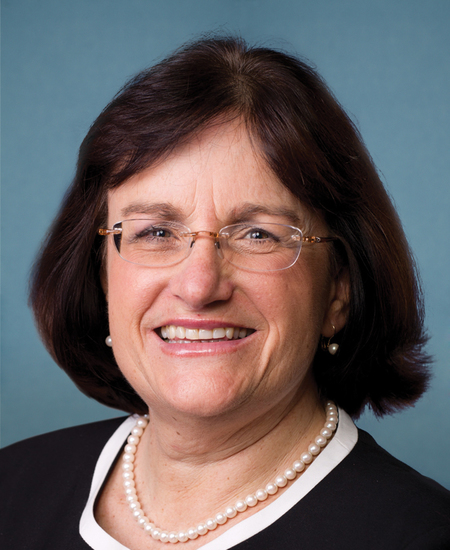
Rep. Ann M. Kuster
Sponsored bills
Helping Ensure Access to Local TeleHealth Act of 2021 or the HEALTH Act of 2021 This bill modifies requirements relating to Medicare coverage of telehealth services, including services that are furnished by federally qualified health centers (FQHCs) and rural health clinics (RHCs). Specifically, the bill expands coverage to include audio-only telehealth services. It also permanently allows FQHCs and RHCs to serve as the distant site (i.e., the location of the health care practitioner) for telehealth services and excludes such services from certain geographic restrictions. Payment must be made in the same manner as for non-telehealth services, rather than in accordance with a separate methodology determined by the Centers for Medicare & Medicaid Services.
Maintaining and Enhancing Hydroelectricity and River Restoration Act of 2021 This bill allows a new tax credit for maintaining and enhancing hydroelectric dams that is equal to 30% of the basis of any qualified dam safety, environmental, and grid resilience enhancement property placed in service in a taxable year. It also allows a 30% credit for qualified obsolete river obstruction removal expenditures for demolishing and removing certain nonpowered or hydroelectric dams.
Rural Forest Markets Act of 202 1 This bill directs the Department of Agriculture (USDA) to establish the Rural Forest Market Investment Program to guarantee investments to finance certain projects that will enable rural private forest landowners to participate in an innovative market for forest carbon or other products. In establishing the program, USDA must consider ways to ensure that the program minimizes disruptions to traditional forest products markets. Eligible projects are projects developed by a private entity or a publicly supported, charitable nonprofit organization engaged in the aggregation of sustainable forestry practices implemented by rural private forest landowners to facilitate the sale of credits in the voluntary carbon market or other environmental market using a methodology approved by a credible, third-party entity. USDA may guarantee up to $150 million with respect to each investment. Authority to carry out the program terminates on September 30, 2023.
Social Determinants Accelerator Act of 2021 This bill establishes the Social Determinants Accelerator Interagency Council to increase coordination among health and social service programs and provide technical assistance to increase the impact of such programs. The council must also assist the Centers for Medicare & Medicaid Services to award up to 25 grants to state, local, or tribal health or human services agencies for social determinants accelerator plans. These plans must address at least one health and one social outcome for a specified target population.
Protecting Seniors Through Immunization Act of 2021 This bill specifies that certain deductible, coinsurance, initial coverage limit, and cost-sharing requirements that apply under the Medicare prescription drug benefit shall not apply with respect to vaccines that are recommended by the Advisory Committee on Immunization Practices of the Centers for Disease Control and Prevention. The Centers for Medicare & Medicaid Services must provide to Medicare beneficiaries specified information regarding (1) coverage of vaccines for seniors, and (2) access to recommended vaccines without cost-sharing.
PFAS Registry Act of 2021 This bill directs the Department of Veterans Affairs (VA) to establish a registry for current or past members of the Armed Forces who may have been exposed to per- and polyfluoroalkyl substances due to the environmental release of aqueous film-forming foam at a military installation or other Department of Defense (DOD) location. Additionally, the VA must consult with DOD and the Environmental Protection Agency to make recommendations for additional chemicals that should be included in the registry.
Fairly Assessing Service-related Toxic Exposure Residuals Presumptions Act or the FASTER Presumptions Act This bill revises policies and procedures of the Department of Veterans Affairs (VA) related to establishing or modifying presumptions of service-connection based on toxic exposure. The bill sets up a procedure by which the VA must determine whether to establish, remove, or modify via regulations presumptions of service-connection based on toxic exposure. Specifically, the bill establishes within the VA the Formal Advisory Committee on Toxic Exposure, the Science Review Board, and the Working Group to assist with the various procedures in establishing or removing presumptions of service-connection. Such procedures include assessing the exposure of veterans to toxic substances during active service, evaluating research on the health effects of exposure, and making recommendations based on the evidence and research. The bill also establishes the Expert Advisory Panel on Constrictive Bronchiolitis within the VA to develop guidelines for VA research on symptomatic veterans who served on active duty in the Southwest Asia theater of operations and have bronchiolitis. The Department of Defense must develop and implement a plan to strengthen data collection with respect to members of the Armed Forces (including the reserve components) who are exposed to toxic substances while serving. The VA must initiate or sponsor various studies related to veterans who served on active duty in certain locations. Finally, the VA must provide annual training to relevant employees to improve the handling of claims for compensation and benefits that relate to toxic exposure.
Veterans Burn Pits Exposure Recognition Act of 2021 This bill requires the Department of Veterans Affairs (VA) to concede, for the purposes of health care benefits and wartime disability compensation, that a veteran was exposed to certain toxic substances, chemicals, and hazards from burn pits if such veteran served on active duty in a covered location during a specified time frame (unless there is affirmative evidence to establish that the veteran was not exposed during such service). A burn pit is an area used for burning solid waste in open air without equipment. Specifically, the bill covers the following locations and corresponding time periods: Iraq between August 2, 1990, and February 28, 1991, as well as from March 19, 2003, until burn pits are no longer used in this location; Somalia and Southwest Asia (including Kuwait, Saudi Arabia, Oman, and Qatar) from August 2, 1990, until burn pits are no longer used in these locations; and Afghanistan, Syria, Jordan, Egypt, Lebanon, Yemen, Uzbekistan, the Philippines, and Djibouti from September 11, 2001, until burn pits are no longer used in these locations. Under the bill, if an exposed veteran submits insufficient evidence to establish a service-connection for purposes of disability compensation, the VA shall provide a medical examination and request a medical opinion regarding a causal link between the disability and a toxin, chemical, or hazard.

Legacy Roads and Trails Act This bill directs the Department of Agriculture (USDA) to establish the Forest Service Legacy Roads and Trails Remediation Program. Specifically, under the program, the Forest Service, taking into account predicted changes in weather and hydrology related to global climate change, shall carry out storm damage risk reduction, including deferred maintenance, repairs, road and trail relocation, and associated activities on roads, trails, tunnels, and bridges under the jurisdiction of the Forest Service; restore waterways and natural migration of fish and other aquatic species by removing or replacing culverts or other infrastructure from such waterways; and decommission unneeded roads. In implementing the program, the Forest Service shall give priority to projects that protect or restore water quality and watershed function; a watershed that supplies a public drinking water system; the habitat of a threatened, endangered, or sensitive fish or wildlife species, or a species of conservation concern; or a watershed for which the Forest Service has completed a watershed protection and restoration action plan. The Forest Service shall identify the minimum road system needed for each unit of the National Forest System. USDA shall review, and may revise, an identification of the minimum road system in accordance with federal regulations relating to the administration of the forest transportation system.