

Maddy summaryHR 3150, the OPIOIDS Act, provides federal grants to states, territories, and localities to improve tracking of opioid overdoses through better data systems, including postmortem testing and linking health and death records. It funds law enforcement training for overdose identification, forensic lab upgrades for timely data reporting to the National Forensic Laboratory Information System, and first responder safety equipment for fentanyl exposure. The bill mandates that grant recipients submit overdose data to this central system and requires the DEA to develop uniform data standards for purity, formulation, and weight reporting. These provisions directly affect state/local health agencies, law enforcement, and forensic labs by enhancing data collection and sharing for opioid overdose response.
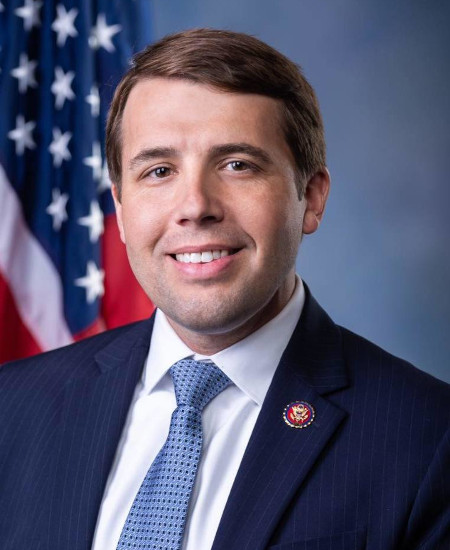
Rep. Chris Pappas
Sponsored bills
Maddy summaryHR 3148, the POWER Act, provides $20 million in federal grants to state, local, and Tribal law enforcement agencies to purchase chemical screening devices and train staff. The devices identify narcotics like fentanyl, methamphetamine, and synthetic opioids, helping officers quickly and safely analyze seized substances. Agencies must use funds to supplement, not replace, existing budgets and submit annual reports on device usage and effectiveness. The bill directly affects law enforcement agencies by enhancing their ability to investigate drug cases and share data with other agencies.
This bill nullifies a requirement for certain foreign travelers to show proof of being fully vaccinated against COVID-19 before being admitted into the United States. Specifically, this bill nullifies a U.S. Customs and Border Protection (CBP) rule that imposed this requirement for each traveler who is neither a U.S. national nor a lawful permanent resident arriving at land port of entry or ferry on the U.S.-Canada border. The bill also nullifies another CBP rule that applied this restriction to the U.S.-Mexico border. The bill also nullifies any subsequent decision by CBP or the Department of Homeland Security that imposes such a requirement.
Helping Our Heroes Act This bill allows a charitable tax deduction for the service of bona fide volunteer firefighters and emergency medical and rescue personnel. The amount of the deduction is $20 for each hour of service provided by such personnel, limited to 300 hours with respect to any individual in a taxable year. The deduction is available to taxpayers who do not otherwise itemize their deductions.
Maddy summaryThe Bring Our Heroes Home Act requires all federal agencies to identify, collect, and transfer records related to missing military personnel to the National Archives for public access. It establishes a special Review Board to oversee the process, determine which records may remain classified for national security reasons, and ensure timely disclosure. Federal agencies must complete the transfer within one year, with any classified records requiring justification and regular review, and all records must be fully disclosed within 10 years unless specific national security concerns prevent it. The bill directly affects families seeking information about missing service members, federal agencies responsible for maintaining records, and the National Archives which will maintain the collection.
Maddy summaryHR 3008, the Drug Shortage Prevention Act of 2023, requires manufacturers of critical essential medicines (like life-saving or emergency drugs) to notify the FDA earlier about potential supply disruptions. Specifically, manufacturers must report permanent production stops, interruptions, or unexpected demand spikes (not seasonal) at least six months in advance for production issues, or within 48 hours for sustained demand increases. The notification must include reasons, ingredient sources, alternative suppliers, and expected duration. The FDA will then share this information with healthcare providers and patient groups to help manage shortages. This law applies to drugs critical for life-sustaining care, excluding certain radio pharmaceuticals.
Maddy summaryThe SAFE Banking Act of 2023 would protect banks and financial institutions that provide services to state-legal marijuana businesses and hemp-related businesses by preventing federal regulators from taking adverse actions against them solely for serving these businesses. It clarifies that income from state-legal marijuana businesses can be considered for mortgage applications, and requires regulators to update guidance on suspicious activity reports related to these businesses. The bill does not require financial institutions to serve these businesses, but ensures they won't face penalties for doing so. It extends similar protections to hemp-related businesses, which have faced banking challenges despite being federally legal under the 2018 Farm Bill.
Maddy summaryThis bill prohibits forced arbitration for race discrimination claims under federal, tribal, state, or local law. It makes pre-existing arbitration agreements unenforceable for disputes involving discrimination based on race, color, or national origin, allowing affected individuals to pursue cases in court instead. The law directly impacts employees, job applicants, and others facing alleged race discrimination who would otherwise be barred from court by mandatory arbitration clauses. It requires courts - not arbitrators - to decide if the law applies to a dispute, ensuring legal clarity for affected parties.
Maddy summaryThis bill establishes a Space National Guard as part of the organized militia in states, territories, Puerto Rico, and D.C. where the Space Force operates, creating two distinct components: state-level "Space National Guard" forces and a federal "Space National Guard of the United States" that serves as the Space Force's reserve component. It defines these terms in federal law, clarifies their structure (including personnel requirements and status when not on active duty), and requires implementation within 18 months, with annual congressional briefings on progress. The bill does not create new missions or funding but formalizes existing National Guard roles within the Space Force framework.
Maddy summary# Summary of EDUCATORS for America Act Provisions This comprehensive legislation makes significant changes to educator preparation, certification, and support systems, with a strong focus on loan forgiveness and retention of educators in high-need settings. ## Key Provisions: 1. **Enhanced Loan Forgiveness Programs**: - Creates new "Educator Loan Forgiveness Programs" under sections 428J and 460 of the Higher Education Act - Provides 100% loan forgiveness for educators who complete 5 years of qualifying service in high-need schools or early childhood education programs - Offers monthly loan forgiveness/cancellation during the service period (in addition to annual forgiveness) 2. **Expanded Eligibility**: - Defines "high need school" as schools where: * Over 30% of students meet poverty measures * School is identified for comprehensive support * School is Bureau of Indian Education funded * School is operated by Tribal educational agencies - Includes Tribal early childhood programs, Native Hawaiian education systems, and Bureau of Indian Education programs as eligible settings - Special rule for educators providing instruction in Native American languages 3. **"Qualifying Educator" Definition**: - Includes elementary/secondary teachers (with full certification) - Includes school leaders (with full certification) - Includes early childhood educators and program directors - Includes educators working in Native American language instruction regardless of certification status 4. **New Support Programs**: - Centers of Excellence for teacher preparation at institutions serving underrepresented populations - Recruitment and completion grants for underrepresented students in education - Resiliency grants for technology integration and educator workforce partnerships - Doctoral fellowships to diversify faculty in high-need education areas 5. **Implementation Details**: - Monthly loan credit program for eligible educators in income-driven repayment plans - Allows counting of partial service years under specific conditions - Prevents double benefits with other service programs - Allows for promotions within qualifying schools without losing eligibility This legislation aims to create a more diverse, stable, and well-prepared educator workforce by reducing financial barriers to entering and remaining in the education profession, particularly in high-need schools and early childhood education settings.