

Child Care Investment Act of 2023 This bill increases the employer-provided child care tax credit, the amount excludable from gross income for dependent care flexible spending accounts, and makes the household and dependent care tax credit refundable. Among other provisions, the bill increases the rate of the employer-provided child care tax credit from 25% to 50% and increases the maximum credit amount from $150,000 to $500,000. It also increases (1) the pre-tax deduction for dependent care flexible spending accounts from $5,000 to $10,000, plus an additional $2,000 for each eligible dependent; and (2) the rate of the household and dependent care tax credit and makes such credit refundable.
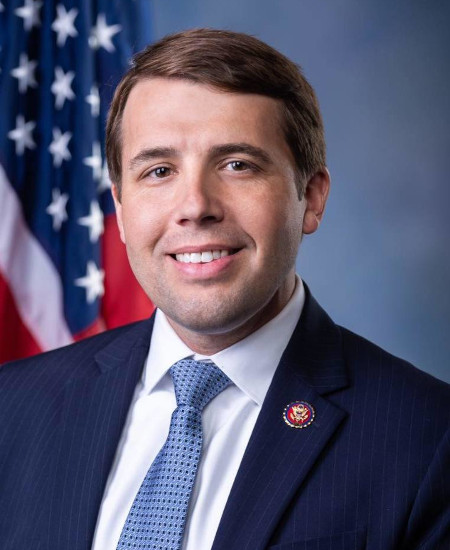
Rep. Chris Pappas
Sponsored bills
Maddy summaryThe IDEA Full Funding Act (HR 4519) mandates specific annual increases in federal funding for special education programs under the Individuals with Disabilities Education Act (IDEA). It requires Congress to appropriate increasing amounts each fiscal year - from $5.87 billion for 2024 up to $55.53 billion for 2033 - to reach 40% of the national average per-pupil expenditure for public schools by 2033. This directly affects all public school districts serving students with disabilities, as federal IDEA funding supports their special education services. The bill sets fixed dollar amounts or percentage targets (whichever is greater) for each fiscal year, aiming to gradually close the long-standing gap between promised and actual federal funding. It does not alter eligibility for services but mandates higher, phased funding levels to meet the 40% target.
Maddy summaryHR 4150 would create a four-year pilot program providing comprehensive dental care to veterans diagnosed with type 1 or type 2 diabetes or ischemic heart disease who are not currently eligible for VA dental services. The program would operate at VA medical centers, community clinics, and test mobile/home-based dental services in rural areas, while also implementing a student loan repayment program to recruit dental staff. It requires the VA to report on costs, health outcomes, and the effectiveness of different service models like tele-dentistry and dental therapists. This bill directly affects veterans with these specific chronic conditions by expanding access to preventative dental care, aiming to improve health outcomes and reduce long-term healthcare costs.
This bill specifies that grants that are awarded under the State and Tribal Opioid Response Grant Program may be used to address health conditions that are associated with opioid misuse and use disorders.
Maddy summaryThis bill prohibits defendants in federal criminal cases from using a victim's LGBTQ+ identity (sexual orientation, gender identity, or expression) as a legal excuse for violence or to reduce sentences - a practice known as the "LGBTQ+ panic defense." It specifically bans arguments that a "nonviolent sexual advance or perception" of the victim's identity justified the crime, while allowing evidence of the defendant's past trauma under standard evidence rules. The law directly affects federal criminal trials where defendants attempt to justify violence against LGBTQ+ victims using prejudice-based excuses. It also requires the Attorney General to report annually on federal prosecutions involving bias-motivated crimes against LGBTQ+ individuals.
Maddy summaryThis bill creates a new pilot program allowing rural law enforcement agencies to apply for federal grants to purchase naloxone (a medication that reverses opioid overdoses) for officers to carry during patrols. It requires that at least 50% of funds under the Comprehensive Opioid Abuse Grant Program be awarded to rural communities, as defined by existing agricultural law. The bill specifically targets opioid overdose response by equipping rural police with life-saving tools during emergency calls. This policy change directly affects rural law enforcement agencies and communities with limited access to overdose reversal resources.
Maddy summaryHR 4422 (Global Respect Act) requires the President to publicly identify foreign officials responsible for violence, torture, or arbitrary detention against LGBTQI individuals and block their entry to the U.S., including revoking visas for them and their immediate families. It mandates annual reporting to Congress on the list of sanctioned individuals, the reasons for additions/removals, and efforts to coordinate with other countries on similar sanctions. The bill also updates U.S. human rights reporting requirements to explicitly include data on violence and discrimination against LGBTQI people worldwide. These measures aim to increase accountability for human rights violations against LGBTQI individuals without advocating for specific policy outcomes.
Maddy summaryHR 4340, the Therapeutic Fraud Prevention Act of 2023, prohibits paid providers from offering conversion therapy - defined as any commercial service attempting to change a person's sexual orientation or gender identity - and bans advertising that claims such therapy is effective or harmless. It directly affects therapists, counselors, or organizations offering paid conversion therapy services, including those advertising such services. Key provisions make it unlawful to provide, advertise, or facilitate paid conversion therapy, with enforcement led by the Federal Trade Commission (FTC) under consumer protection laws and allowing states to pursue civil actions. The bill explicitly excludes supportive care for gender transition or identity exploration from its definition of prohibited therapy.
Maddy summaryHRES 535 is a symbolic resolution designating November 12, 2023, as "National Warrior Call Day" to raise awareness about veterans' mental health and connection to support systems. It does not create new programs or funding but encourages Americans to call veterans or military members for meaningful conversation and to connect them with resources. The resolution cites rising veteran suicide rates (6,261 in 2019) and aims to address isolation through public engagement. It directly affects veterans, active-duty service members, and first responders by promoting community support. This is a non-binding awareness measure with no concrete policy changes.
National Nursing Shortage Task Force Act of 2023 This bill establishes a National Nursing Shortage Task Force to recommend policies for addressing the nursing shortage in the United States, particularly in designated health professional shortage areas. The task force terminates 90 days after it submits its recommendations.