

Maddy summaryThis bill limits states' ability to tax income earned by nonresident workers who telecommute or work across state lines. It prohibits states from taxing compensation when the worker is physically present in another state for work, and specifically bars states from claiming tax authority based on home office convenience or employer convenience tests. The law directly affects remote workers living in one state but working in another, ensuring they are only taxed by the state where they physically perform work. It applies solely to personal service income (wages/salary) and does not change rules for corporate taxes or unearned income like dividends.
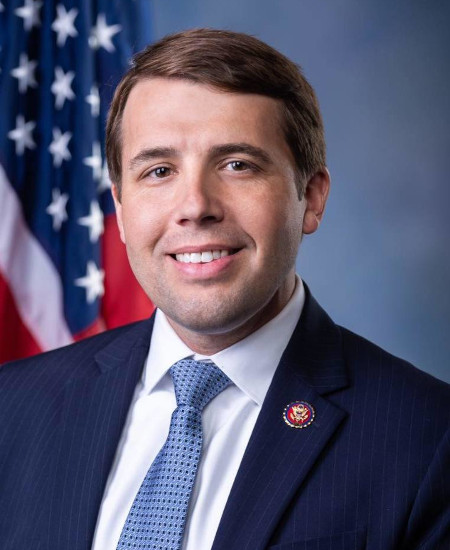
Rep. Chris Pappas
Sponsored bills
Maddy summaryThe VA Employee Fairness Act of 2024 modifies collective bargaining rules for employees of the Veterans Health Administration (VHA). It removes existing subsections (b), (c), and (d) from the law governing VHA employee bargaining and renumbers the remaining provision. This change streamlines the collective bargaining framework but does not alter the Secretary of Veterans Affairs' existing authorities over incentive pay and expedited hiring. The bill directly affects VHA employees by changing how their collective bargaining rights are structured under federal law. The law remains neutral, focusing solely on procedural adjustments to the existing bargaining framework.
Maddy summaryThis bill removes existing legal restrictions on U.S. defense cooperation with Cyprus. It eliminates limitations on defense articles (like weapons or equipment) and requirements for security assistance or sales to Cyprus by amending two laws: the National Defense Authorization Act and the Foreign Assistance Act. Specifically, it deletes provisions that previously prohibited or restricted these types of military support. The change directly affects U.S. foreign policy implementation toward Cyprus, allowing greater flexibility in defense and security partnerships without creating new programs.
Maddy summaryHRES 1537 is a non-binding House resolution condemning Hamas' October 7, 2023, attacks on Israel, which killed over 1,200 people and took 251 hostages, including 7 Americans still held captive. It calls on Hamas to immediately surrender, cease attacks, and release all hostages unconditionally, while reaffirming Israel's right to self-defense. The resolution also urges international organizations to condemn Hamas' actions and address the global surge in antisemitism following the attacks. As a symbolic statement, it does not create new laws or alter policy but expresses congressional position. The bill specifically references the ongoing captivity of seven U.S. citizens: Edan Alexander, Itay Chen, Sagui Dekel-Chen, Gadi Haggai, Judith Weinstein Haggai, Omer Neutra, and Keith Siegel.
Maddy summaryHR 1719, the Honoring Our Fallen Heroes Act of 2023, establishes a presumption that certain cancers diagnosed in public safety officers (like police and firefighters) are work-related if linked to their duties. It defines 22 specific cancers (including lung, mesothelioma, and WTC-related cancers) as "exposure-related," allowing officers or their families to receive benefits without proving direct work connection, provided they were diagnosed within 15 years of leaving active service. The bill also creates a process for adding new cancers to the list based on scientific evidence, requiring the Bureau to review petitions and make decisions within 180 days. This applies to deaths or disabilities occurring on or after January 1, 2023, directly affecting officers who developed covered cancers during service.
Maddy summaryThe STOPP Act (HR 9790) amends the Controlled Substances Act to regulate tableting machines, encapsulating machines, and their critical parts, which can be used to illegally manufacture pills including opioids. It requires these machines to have permanent serial numbers, creates a registration system for manufacturers and distributors, and establishes a National Pill Press Registry maintained by the Attorney General. The law imposes penalties for violations like removing serial numbers, failing to register, or dealing in these machines without proper authorization. This bill directly affects businesses that produce, distribute, import, or export these machines, requiring them to register with the Attorney General and maintain detailed records of transactions. The registration system aims to prevent these machines from being diverted into illegal drug manufacturing operations.
Maddy summaryThe DISPOSE Act authorizes the U.S. government to partner with Colombia, Mexico, and Peru to safely destroy chemicals used in illegal drug production. It requires the State Department, in coordination with Justice and Defense, to create a detailed implementation plan within 90 days - including timelines, budgets, and measurable goals - and provide annual progress reports to Congress on chemical destruction efforts. The initiative aims to prevent these chemicals from re-entering drug manufacturing, free storage space for future seizures, and reduce environmental harm from hazardous waste.
Maddy summaryThis bill clarifies Medicare rules to allow doctors to provide certain critical medications directly in their offices without extra administrative hurdles. It specifically amends a Medicare provision (Section 1877(b)(2) of the Social Security Act) to remove a requirement that drugs furnished in-office must follow specific administrative rules, effective May 11, 2023. The bill also directs the removal of conflicting Medicare guidance published in 2021 and 2023, which had previously restricted this practice. This change directly affects Medicare beneficiaries (seniors) and doctors' offices that supply covered medications during patient visits. It streamlines access to necessary drugs by eliminating an unnecessary barrier to in-office medication administration under Medicare.
Maddy summaryHR 3433, the "Give Kids a Chance Act of 2024," requires pharmaceutical companies developing certain cancer drugs to conduct pediatric studies if the drugs target molecular pathways relevant to childhood cancers. It directly affects drug manufacturers submitting new applications for cancer treatments, particularly those combining previously approved adult cancer drugs or containing a single new active ingredient. The bill amends FDA regulations to mandate these pediatric investigations only when specific conditions are met, such as when a drug's molecular target is relevant to pediatric cancer growth. The FDA must issue implementing guidance within 12 months, and reports to Congress will track implementation and effectiveness starting 2 years after enactment.
Maddy summaryThe SERVE Act expands eligibility for Veterans Affairs benefits to former service members discharged due to sexual orientation or gender identity (including gender dysphoria). It directly affects veterans who received entry-level separations, honorable discharges, or other-than-honorable discharges for these reasons, making them eligible for VA hospital care, mental health counseling at Vet Centers, national cemetery interment, education benefits, and housing loans. The bill amends existing VA benefit statutes to include this group by adding specific language to each relevant provision. It also requires the VA to conduct outreach to inform affected veterans and submit a report tracking benefit usage by demographic categories within 15 months of enactment.