

Protect Our Letter Carriers Act of 2025 This bill requires or authorizes certain actions related to the U.S. Postal Service (USPS). The bill requires the Department of Justice to appoint an assistant U.S. attorney in each judicial district to coordinate and supervise the investigation and prosecution of various crimes related to postal services (for example, assault on a postal service employee, breaking into a post office, or obstruction of mails). The bill also requires the U.S. Sentencing Commission to amend sentencing guidelines to provide that the assault or robbery of a postal employee shall be treated the same as the assault of a law enforcement officer. Additionally, the bill authorizes appropriations for the USPS to install high security collection boxes and replace older versions of the universal mailbox key with electronic versions.
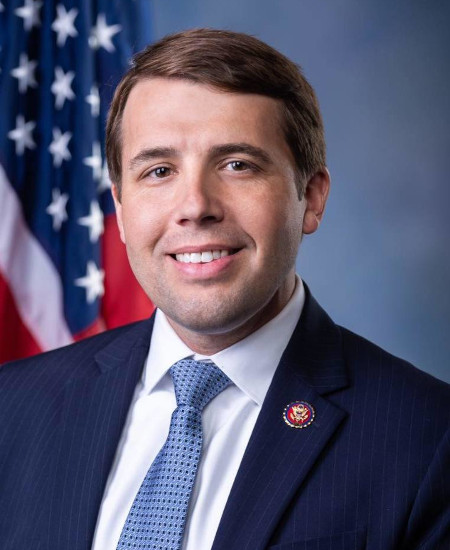
Rep. Chris Pappas
Sponsored bills
Maddy summaryHR 1046, the Marc Fischer Memorial Act, requires the Bureau of Prisons to implement digital mail scanning technology at all federal prisons to detect fentanyl and other synthetic drugs in inmate mail. It mandates a strategy within 90 days of an evaluation, including 100% scanning of all mail, digital copies of mail to inmates within 24 hours, and physical mail delivery within 30 days for non-contaminated items. The bill directly affects federal prison staff, inmates, and the Bureau of Prisons by aiming to reduce drug-related overdoses and alleviate staff workload tied to mail processing. Implementation must be completed within three years, with annual reports tracking detected drugs and strategy efficiency. The legislation focuses on concrete technological and procedural changes to enhance safety, referencing a successful pilot program at two facilities.
Maddy summaryThis bill permanently extends the New Markets Tax Credit (NMTC), a federal tax incentive that encourages private investment in low-income communities. It directly affects community development entities (CDEs) that channel capital into underserved neighborhoods for projects like housing, healthcare, and businesses. Key provisions include permanently extending the credit beyond 2025, adding annual inflation adjustments to the credit amount starting in 2026, and ensuring the credit isn't reduced by the alternative minimum tax for investments made after December 2024. The changes apply to taxable years beginning after December 2024, providing long-term stability for community development financing.
Maddy summaryHR 1102 establishes a commission to study the feasibility of creating a National Museum of Italian American History and Culture in Washington, D.C. The commission, composed of 8 members appointed by congressional leaders, will examine factors like location options, costs, fundraising potential, and impacts on existing museums, and must report back within 18 months. It will not create the museum itself but will develop recommendations for Congress on whether to proceed, with all funding coming from private sources - no federal funds may be used for the commission’s work. The bill focuses solely on the study process, not on building or operating the museum.
Ski Hill Resources for Economic Development Act This bill allows National Forest System (NFS) units to keep the majority of ski area permit rental fees that were generated within their boundaries and outlines how revenues from those fees may be used. Such fees are collected by the Department of Agriculture (USDA) from ski area operators on NFS land. Within the NFS unit where the fees were generated, USDA must expend (1) 60%-48% of the collected fees for activities such as administration of the ski area permit program, visitor information, or reducing the likelihood of wildfire in or adjacent to a recreation site; and (2) 20% of the collected fees for activities such as repair of a Forest Service-owned facility, habitat restoration, or search and rescue activities. The remainder of the collected fees must be expended by USDA at any NFS unit for any of the activities specified in this bill.
Maddy summaryHR 211, the Equal Access to Contraception for Veterans Act, eliminates out-of-pocket costs for specific contraceptives for veterans using VA healthcare. It amends Section 1722A of Title 38 to prohibit the VA from charging veterans copayments for contraceptive items that must be covered without cost-sharing under federal law (as required by Section 2713(a)(4) of the Public Health Service Act). This means veterans will not pay any amount for contraceptives covered by the federal mandate, such as birth control pills or IUDs, when obtained through the VA system. The bill directly affects veterans enrolled in VA healthcare seeking contraceptive services, ensuring no additional costs beyond what is already mandated for these items.
Maddy summaryHR 1007, the Antisemitism Awareness Act of 2025, clarifies how the Department of Education enforces Title VI of the Civil Rights Act of 1964 to address discrimination against Jewish individuals. It requires the Department to consider the International Holocaust Remembrance Alliance (IHRA) definition of antisemitism when investigating complaints involving discrimination based on actual or perceived Jewish ancestry or ethnic characteristics. This affects Jewish students and communities in K-12 schools and colleges receiving federal funding, as it ensures antisemitism is assessed under existing civil rights protections. The bill does not create new laws but specifies that the IHRA definition - already used by the Department since 2018 - must be applied in Title VI enforcement cases.
Maddy summaryThis bill establishes a federal right to access contraception, protecting individuals' ability to obtain contraceptives and health care providers' ability to offer them without government interference. It prohibits states from banning or restricting contraceptive services, products, or information, including laws that force providers to deny care based on personal beliefs or limit access to specific methods. The law immediately overrides conflicting state regulations and ensures that contraception remains available regardless of factors like race, income, disability, or location. It applies to all individuals and providers, building on existing federal protections like the Affordable Care Act's coverage requirements.
Maddy summaryHR 942, the "Banning SPR Oil Exports to Foreign Adversaries Act," prohibits the export of petroleum products drawn from the U.S. Strategic Petroleum Reserve to China, North Korea, Russia, Iran, and any entity owned or controlled by these countries or the Chinese Communist Party. The Secretary of Energy may grant a waiver for such exports if certified as serving U.S. national security interests, but must issue implementing rules within 60 days of enactment. This policy directly affects U.S. energy exports and entities seeking to purchase SPR oil from the listed adversaries.
Maddy summaryHR 920, the *Federal Initiative to Guarantee Health by Targeting Fentanyl Act*, expands the definition of illegal substances under the Controlled Substances Act to include all fentanyl-related substances and their chemical variations, such as structural modifications to the phenyl, piperidine, or aniline rings. This directly affects individuals and entities producing, distributing, or possessing these substances, including many synthetic opioids. The bill removes mandatory minimum prison sentences for offenses involving these newly classified substances. It aims to more broadly criminalize fentanyl variants by defining them through chemical structure rather than specific compounds. The law amends Schedule I of the Controlled Substances Act and Section 401(b)(1)(C) of the Controlled Substances Act.