

Connecting America's Active Transportation System Act This bill directs the Department of Transportation (DOT) to carry out an active transportation investment program to provide competitive grants to state, local, and regional government entities, and Indian tribes to construct projects that connect walking and bicycling infrastructure within and between communities, metropolitan regions, or states. The bill sets forth various limitations on the use of funds by DOT, including that it must obligate at least 30% of funds to projects that connect people with public transportation, businesses, workplaces, schools, residences, recreation areas, and other community activity centers; set aside at least $3 million to provide planning grants for eligible entities; and set aside at least $2 million to cover the costs of administration, research, technical assistance, communications, and training activities under the program. The federal share of grants must not exceed 80% of the total project cost. However, DOT may increase the federal share to 100% for disadvantaged communities with a poverty rate of over 40%.
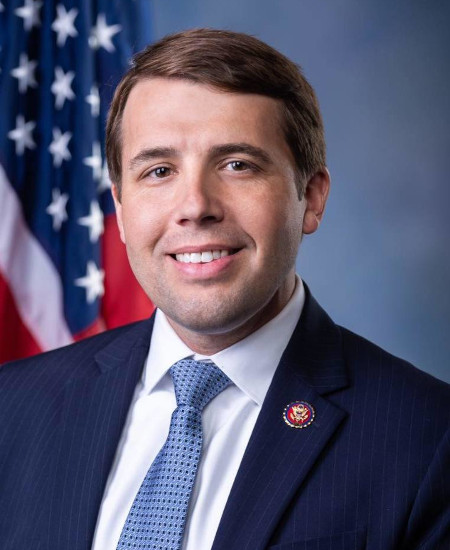
Rep. Chris Pappas
Sponsored bills
VOW to Hire Heroes Extension Act of 2021 This bill (1) makes permanent the work opportunity tax credit with respect to qualified veterans, (2) revises tax credit eligibility requirements for documenting the status of veterans and their receipt of unemployment compensation, and (3) extends the payroll tax offset for such credit to certain for-profit employers. The Internal Revenue Service must make annual reports to Congress on the effectiveness and cost-effectiveness of this bill in increasing the employment of veterans. The bill directs the Department of the Treasury to pay to each U.S. possession (i.e., American Samoa, Guam, the Commonwealth of the Northern Mariana Islands, the Commonwealth of Puerto Rico, and the U.S. Virgin Islands) amounts equal to the losses to such possessions due to this bill.
Military and Veteran Caregiver Student Loan Relief Act of 2021 This bill makes designated primary family caregivers of veterans eligible for student loan forgiveness under the Public Service Loan Forgiveness (PSLF) program. Under the PSLF program, the Department of Education must cancel the balance of interest and principal due on a borrower's Federal Direct Loans after the borrower makes 120 monthly loan payments while employed in a public service job. This bill broadens the definition of public service job to include service as a primary family caregiver of an eligible veteran participating in the Program of Comprehensive Assistance for Family Caregivers.
VA Beneficiary Debt Collection Improvement Act This bill addresses the administration of debt related to Department of Veterans Affairs (VA) programs and benefits. Specifically, the bill prohibits an individual from incurring a debt to the United States that arises from participation in a VA benefits program and is attributable to the failure of the VA to process information according to its timeliness standards. The VA must notify an individual if it has made an overpayment to the individual and include in the notice information on the right to dispute the overpayment or request a waiver of indebtedness. The VA is prohibited from taking action regarding an overpayment until 90 days after the notice is issued, except in specified circumstances. The VA is prohibited from charging interest or administrative costs for debts related to its disability compensation program, pension program, or educational assistance program. The bill extends from 180 days to one year the deadline by which an individual may request a waiver for relief from paying a debt related to VA benefits. Additionally, the VA is prohibited from seeking to recover a debt if it determines the cost to the VA to recover the debt would exceed the amount of the debt itself. The VA must establish an administrative process for the dispute of a debt's existence or the amount of the debt. The VA is prohibited from deducting from an individual's VA benefits to offset a debt if the amount of the debt is being disputed.
Affordable Housing for Homeless Veterans Act of 2021 This bill reauthorizes and modifies a program of the Department of Veterans Affairs (VA) that provides housing assistance to homeless veterans. Specifically, the bill authorizes the VA to enter into agreements with specified entities (e.g., nonprofit organizations or tribal entities) through September 30, 2025, to assist homeless veterans and their families in acquiring shelter or permanent housing. Under the bill, the VA may enter into agreements where an entity that is buying, leasing, or receiving property agrees to sell or rent the property directly to homeless veterans or veterans at risk of homelessness.
VA Supply Chain Resiliency Act This bill addresses the Department of Veterans Affairs (VA) supply chain processes, particularly during emergency periods. The bill requires the VA to submit a report containing a description of the items and quantities of items that are critical with respect to the VA's ongoing response to the COVID-19 (i.e., coronavirus disease 2019) pandemic and future epidemic, pandemic, emergency, national emergency, or natural disaster scenarios. The VA and the Department of Defense (DOD) must enter into an agreement to provide for the participation of the VA in the Warstopper Program of the Defense Logistics Agency (DLA) of DOD. The Warstopper Program was established to satisfy requirements for sudden and sustained increases in production of critical industrial and medical items. Under such an agreement, the DLA must ensure the maintenance and stability of the items the VA identifies as critical in its report (and that the VA and DOD determine are appropriate for the program), establish guidance for the participation of the VA in the program, and use existing and new contracts and agreements to reserve the supply of critical items. Finally, the VA must ensure it does not exclusively rely on holding regional, physical inventories of critical items in order to respond to greater than expected needs during epidemic, pandemic, emergency, national emergency, or natural disaster situations.
Creating Opportunities Now for Necessary and Effective Care Technologies (CONNECT) for Health Act of 2021 or the CONNECT for Health Act of 2021 This bill expands coverage of telehealth services under Medicare. Among other provisions, the bill allows the Centers for Medicare & Medicaid Services (CMS) to waive certain restrictions, such as restrictions on the types of technology that may be used; permanently removes geographic restrictions on originating sites (i.e., the location of the beneficiary) and allows the home of the beneficiary to serve as the originating site for all services; permanently allows federally qualified health centers and rural health clinics to serve as the distant site (i.e., the location of the health care practitioner); and allows the CMS to generally waive coverage restrictions during any public health emergency. Additionally, the CMS must report on the effects of expanded telehealth services during the COVID-19 public health emergency, including with respect to the utilization, quality, and outcomes of services. The Center for Medicare and Medicaid Innovation may also test alternative payment models relating to expanded telehealth services.
Honoring All Veterans Act This bill adds the following as a mission statement for the Department of Veterans Affairs: "To fulfill President Lincoln's promise to care for those 'who shall have borne the battle' and for their families, caregivers, and survivors."
Ban Conflicted Trading Act This bill prohibits a Member of Congress or certain congressional officers or employees from (1) purchasing or selling specified investments, (2) entering into a transaction that creates a net short position in a security, or (3) serving as an officer or member of any board of any for-profit entity.
Mark Takai Atomic Veterans Healthcare Parity Act This bill includes veterans who participated in the cleanup of Enewetak Atoll in the Marshall Islands between January 1, 1977, and December 31, 1980, as radiation-exposed veterans for purposes of the Department of Veterans Affairs presumption of service-connection for specified cancers. Under a presumption of service-connection, specific conditions diagnosed in certain veterans are presumed to have been caused by the circumstances of their military service. Health care benefits and disability compensation may then be awarded.