

Medically Tailored Home-Delivered Meals Demonstration Pilot Act of 2021 This bill requires the Centers for Medicare & Medicaid Services to establish a demonstration program to allow hospitals to provide medically tailored, home-delivered meals to Medicare beneficiaries who have a diet-impacted disease (e.g., kidney disease) and have daily living limitations. Participating hospitals must (1) retain a physician, registered dietitian or nutrition professional, or clinical social worker to screen, monitor, and coordinate services for individuals who receive meals through the program; and (2) contract with experienced organizations for meal delivery. Hospitals may choose to also provide meals to an individual's primary caregiver or to a dependent under the age of 18 who resides in the same household.
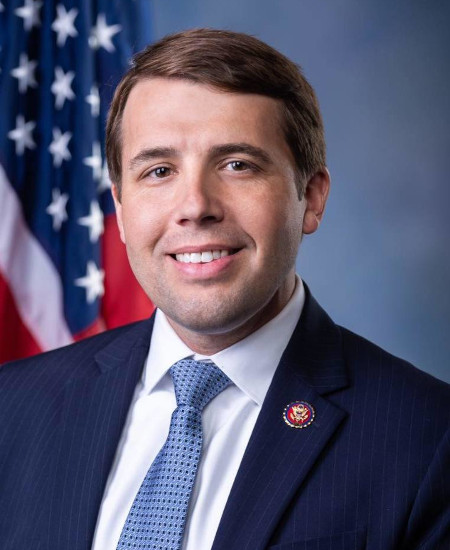
Rep. Chris Pappas
Sponsored bills
Military Suicide Prevention in the 21st Century Act This bill requires the Department of Defense to carry out a two-year pilot program to program suicide prevention resources onto smart devices issued to members of the Armed Forces and to provide training on these resources.
This resolution supports the designation of National Clean Energy Week.
Tyler Clementi Higher Education Anti-Harassment Act of 2021 This bill addresses harassment at institutions of higher education (IHEs). Specifically, the bill requires each IHE to include in its annual security report a statement of policy regarding harassment on the basis of a student's actual or perceived race, color, national origin, sex (including sexual orientation, gender identity, pregnancy, childbirth, a medical condition related to pregnancy or childbirth, and a sex stereotype), disability, or religion. In addition, the Department of Education may award grants to IHEs to initiate, expand, or improve programs to (1) prevent the harassment of students; (2) provide counseling or redress services to students who have been harassed or accused of subjecting other students to harassment; or (3) educate and train students, faculty, or staff to prevent harassment or address harassment if it occurs.
Securing the Rights our Veterans Earned Act or the SERVE Act This bill provides eligibility for specified Department of Veterans Affairs benefits to former members of the Armed Forces who were separated or discharged (honorably or otherwise) by reason of sexual orientation or gender identity.
This resolution recognizes the harm caused to members of the Armed Forces by the Don't Ask, Don't Tell, Don't Pursue policy and commemorates the repeal of the policy as a day in which service members were free to serve openly and be honored for such service without caveat. The resolution also reaffirms the commitment to honor the service of all members and former members of the military, regardless of gender identity or sexual orientation.
This resolution expresses support for the goals of National Physician Suicide Awareness Day.
Supporting Early-childhood Educators' Deductions Act or the SEED Act This bill expands the tax deduction for the expenses of elementary and secondary school teachers to include early childhood educators.
Streamlining Nutrition Assistance Paperwork Act of 2021 or the SNAP Act of 2021 This bill provides statutory authority for a Department of Agriculture (USDA) waiver that allows states to use a written record to document telephonic signatures for Supplemental Nutrition Assistance Program (SNAP) applications. Under current law, states may allow individuals to sign their SNAP applications over the telephone, but states must preserve audio recordings of those telephonic signatures. During the COVID-19 emergency, USDA waived the requirement to preserve the audio recording and allowed states to document the telephonic signatures through written records.
John R. Lewis Voting Rights Advancement Act of 2021 This bill establishes new criteria for determining which states and political subdivisions must obtain preclearance before changes to voting practices may take effect. Preclearance is the process of receiving preapproval from the Department of Justice (DOJ) or the U.S. District Court for the District of Columbia before making legal changes that would affect voting rights. A state and all of its political subdivisions shall be subject to preclearance of voting practice changes for a 10-year period if 15 or more voting rights violations occurred in the state during the previous 25 years; 10 or more violations occurred during the previous 25 years, at least 1 of which was committed by the state itself; or 3 or more violations occurred during the previous 25 years and the state administers the elections. A political subdivision as a separate unit shall also be subject to preclearance for a 10-year period if three or more voting rights violations occurred there during the previous 25 years. States and political subdivisions that meet certain thresholds regarding minority groups must preclear covered practices before implementation, such as changes to methods of election and redistricting. Further, states and political subdivisions must notify the public of changes to voting practices. Next, the bill authorizes DOJ to require states or political subdivisions to provide certain documents or answers to questions for enforcing voting rights. The bill also outlines factors courts must consider when hearing challenges to voting practices, such as the extent of any history of official voting discrimination in the state or political subdivision.