

TSA Security Threat Assessment Application Modernization Act This bill requires the Transportation Security Administration (TSA) to standardize the enrollment and renewal system for individuals applying for or renewing multiple TSA Security Threat Assessment programs, including the Transportation Worker Identification Credential, Hazardous Materials Endorsement, and TSA PreCheck programs. The standardization shall permit an individual to (1) enroll at a TSA-designated universal enrollment center once and use the application for one of such programs to enroll in two or more of such programs,with specified exceptions for those applying for or renewing enrollment in more than one program at different times; (2) apply successful, valid clearance results from a TSA Security Threat Assessment to satisfy vetting requirements for participation in any related program without additional cost; and (3) undergo a streamlined and expeditious renewal process. Additionally, the TSA must publish on its website information relating to the standardization of the enrollment system.
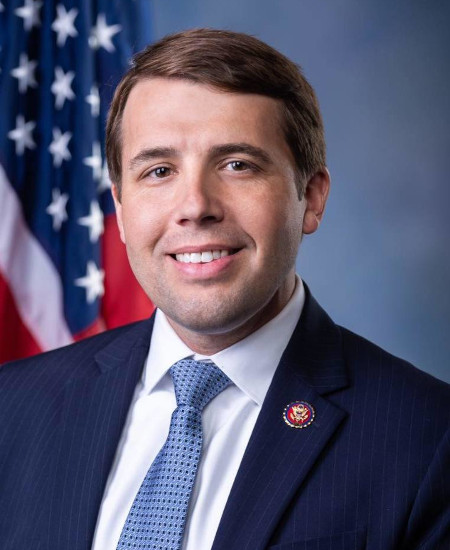
Rep. Chris Pappas
Sponsored bills
Restore Veterans' Compensation Act of 2022 This bill eliminates the recoupment of separation pay, special separation benefits, and voluntary separation incentive payments from members of the Armed Forces who subsequently receive disability compensation from the Department of Veterans Affairs. In addition, the bill limits recoupment of such pay from service members who subsequently receive military retired or retainer pay.
Driving Veterans Success Act This bill requires that at least 10% of the funds under specified infrastructure programs are expended through veteran-owned small businesses.
This resolution recognizes the cultural and historical significance of the Lunar New Year. The resolution expresses, in observance of this Lunar New Year, the Year of the Tiger, the deepest respect of the House of Representatives for Asian Americans and all individuals throughout the world who celebrate this significant occasion. The resolution wishes Asian Americans and all individuals who observe this holiday a happy and prosperous new year.
Maddy summaryHR 6525, the Lunar New Year Day Act, would designate the Lunar New Year as an official federal holiday. The bill amends Section 6103(a) of Title 5 of the U.S. Code to add "Lunar New Year Day" to the list of holidays observed by federal employees. This holiday would be observed on the actual date of the Lunar New Year, which varies annually based on the lunar calendar. As a result, federal employees would receive a paid day off, and federal agencies would adjust operations to accommodate the new holiday.
Guard and Reserve GI Bill Parity Act of 2021 This bill expands eligibility for Post-9/11 GI Bill educational assistance and addresses other Department of Veterans Affairs (VA) programs and benefits. Specifically, the bill expands the type of duty that is eligible for such educational assistance. Beginning on August 1, 2025, types of duty eligible for educational assistance benefits include (1) active duty for training performed by a member of the Armed Forces on or after this date, and (2) active duty for training occurring before this date only if the individual is a member on or after this date. Furthermore, beginning on August 1, 2032, duty eligible for these benefits includes active or inactive duty training performed by a member of the Armed Forces before, on, or after August 1, 2032. Educational assistance eligibility for individuals who performed qualifying types of duty as provided in the bill before August 1, 2025, expires on the latter of (1) August 1, 2040, or (2) the end of the 15-year period after their discharge or release from the Armed Forces. For individuals who performed such duty on or after August 1, 2025, educational assistance eligibility does not expire. Furthermore, the bill provides for the expiration of eligibility applicable to individuals subject to two different periods of eligible duty. The bill also makes adjustments to certain loan fees under the VA home loan program, including the fee for an interest rate reduction refinancing loan. Additionally, the VA must provide information to new veterans that includes a description of the medical care, services, and other benefits they are entitled to through the VA.
PrEP Access and Coverage Act This bill requires private health insurance plans to cover prescription drugs that prevent HIV, including related screenings, diagnostic procedures, administrative fees, and clinical follow-ups, without any cost-sharing obligation for the plan holder. Further, insurance plans must not impose any preauthorization requirement for this coverage. These coverage requirements also apply to public health insurance programs, including Medicare, Medicaid, and the Children's Health Insurance Program. Additionally, the bill prohibits denying, limiting, or qualifying coverage or increasing premiums for disability insurance, long-term care insurance, or life insurance policies based on an individual taking medication for HIV prevention. The bill further requires the Department of Health and Human Services to award grants to states, or directly to eligible local organizations, to provide uninsured individuals and underinsured individuals access to prescription drugs and related services that prevent HIV. The Centers for Disease Control and Prevention also must develop a public awareness campaign that focuses efforts in communities with a high need for HIV prevention treatment.
This bill revises enforcement provisions under the Animal Welfare Act (AWA), including by directing inspectors to confiscate or destroy in a humane manner animals found to be suffering physical or psychological harm as a result of failure to comply with the AWA.
Military Spouse Entrepreneurs Act of 2021 This bill requires the Small Business Administration to conduct a pilot program to award federal contracts to small businesses owned and controlled by military spouses. It also generally authorizes federal contracting officers to limit contract awards to only small businesses owned and controlled by military spouses under certain circumstances.
Accelerating Access to Critical Therapies for ALS Act This bill establishes grant programs to address neurodegenerative diseases, such as amyotrophic lateral sclerosis (also known as ALS or Lou Gehrig's disease), and contains other related provisions. The Department of Health and Human Services (HHS) shall award grants to eligible entities for scientific research utilizing data from expanded access to investigational ALS treatments for individuals who are not otherwise eligible for clinical trials. The Food and Drug Administration (FDA) shall award grants to public and private entities to cover the costs of research and development of drugs that diagnose or treat ALS and other rare neurodegenerative diseases. HHS shall also establish the Public-Private Partnership for Neurodegenerative Diseases between the National Institutes of Health, the FDA, and at least one eligible entity (generally, an institution of higher education or a nonprofit organization). The partnership shall support the development and regulatory review of drugs that address ALS and other rare neurodegenerative diseases. The FDA shall publish on its website a five-year action plan for fostering the development of drugs that improve or extend the lives of people living with rare neurodegenerative diseases. The Government Accountability Office must report to Congress about the grants provided under this bill, including an analysis of the impact of such grants on research and development of treatments for ALS.