Targeting Resources for Equitable Access to Treatment for Long COVID Act or the TREAT Long COVID Act This bill requires the Department of Health and Human Services to award competitive grants to create or expand the capacity of clinics that treat patients with persistent, long-term symptoms following recovery from acute COVID-19 (i.e., Long COVID). Eligible recipients include federally qualified health centers, rural health clinics, urban Indian health centers, and state and local health departments.
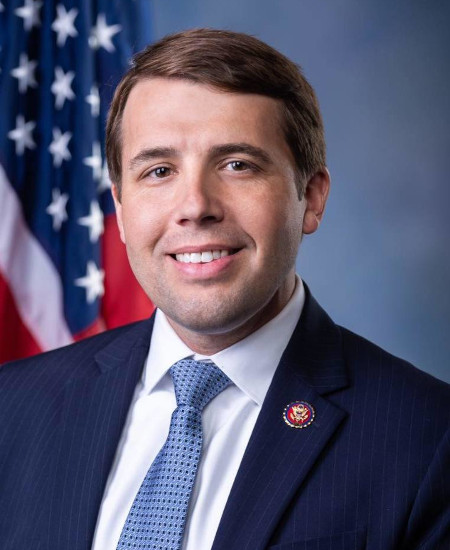
Rep. Chris Pappas
Sponsored bills
Public Health and Border Security Act of 2022 This bill requires the Department of Health and Human Services (HHS) to meet conditions related to notification and planning before terminating certain restrictions on imports and individuals entering the United States. Current law authorizes HHS to restrict entries and imports from foreign countries to prevent the introduction of communicable diseases. HHS exercised this authority as part of its COVID-19 response, including to allow for the expulsion of undocumented migrants at the border without any asylum processing. Under this bill, HHS may not terminate the restrictions for (1) at least 60 days after it notifies Congress of the end of the COVID-19 emergency, and (2) at least 30 days after it submits to Congress a plan for addressing the possible influx of migrants or imports resulting from lifting the restrictions.
Maddy summaryHR 7477, the CERTS Tax Exemption Act, ensures that grants provided under the Coronavirus Economic Relief for Transportation Services Act are tax-free for eligible transportation service providers. The bill directly affects companies and organizations providing transportation services that receive these specific federal grants. Key provisions state that grant amounts cannot be counted as taxable income, deductions related to grant-funded costs cannot be denied, and tax attributes (like basis increases) must be treated as tax-free for partnerships and S corporations. This change simplifies tax treatment for recipients by preventing unintended tax liabilities on relief funds.
Burma Unified through Rigorous Military Accountability Act of 2022 or the BURMA Act of 2022 This bill imposes sanctions pertaining to Burma (Myanmar) and addresses related issues. The President must impose property- and visa-blocking sanctions on certain foreign persons (i.e., an individual or entity), including those that (1) knowingly operate in Burma's defense sector, (2) are responsible for or complicit in undermining Burma's democratic processes, or (3) are senior leaders in Burma's military or government. The Department of the Treasury must prohibit or impose strict conditions on certain accounts used to facilitate transactions for such sanctioned persons. The President may impose sanctions on Myanma Oil and Gas Enterprise if such sanctions would support certain objectives, including reducing the Burmese military's ability to undermine democracy in Burma. Before removing certain foreign persons from a list of specially designated nationals and blocked persons (commonly known as the SDN list), the President must certify to Congress that the person in question has not knowingly engaged in certain activities, such as supporting terrorism. The bill authorizes Department of State and U.S. Agency for International Development activities in Burma and the surrounding region to support democracy activists, humanitarian assistance, and reconciliation efforts. The State Department may (1) continue to assist organizations supporting political prisoners in Burma, and (2) provide assistance to entities investigating crimes against humanity. The President must direct U.S. representatives to the United Nations to vote and advocate for certain actions related to Burma, such as cutting off assistance to Burma's government.

Russian Digital Asset Sanctions Compliance Act of 2022 This bill allows additional sanctions against Russia and creates specified reporting requirements regarding digital assets. Specifically, the President must periodically identify foreign persons who facilitate evasion of Russian sanctions using digital assets. The bill authorizes sanctions against such persons. The bill requires a U.S. taxpayer engaged in offshore digital asset transactions greater than $10,000 to file an annual Report of Foreign Bank and Financial Accounts with the Financial Crimes Enforcement Network. The bill allows the Department of the Treasury to prohibit U.S. digital asset trading platforms and transaction facilitators from transacting with Russian digital asset addresses. Additionally, Treasury must report on its progress in implementing the bill and must annually identify foreign digital asset trading platforms that are a high risk for sanctions evasion, money laundering, and other illicit activities.
Veterans' Cyber Risk Awareness Act This bill requires the Office of Public and Intergovernmental Affairs of the Department of Veterans Affairs (VA) to conduct a communications and outreach campaign to educate veterans about cyber risks . These risks can include disinformation, identity theft, scams, and fraud spread via the internet or social media. Additionally, the VA must seek to enter an agreement with a federally funded research and development corporation to perform a study that assesses (1) the vulnerability of veterans to cyber risks, (2) the availability and efficacy of resources to assist veterans in combatting such risks, and (3) the efficacy of the VA's outreach campaign. The study must also recommend ways the VA can reduce cyber risks to veterans.
Artificial Intelligence Job Opportunities and Background Summary Act of 2022 or the AI JOBS Act of 2022 This bill requires the Department of Labor to prepare and submit to Congress a report on artificial intelligence and its impact on the workforce.
Medical Marijuana Research Act This bill establishes a new, separate registration process to facilitate medical marijuana research. Specifically, it directs the Drug Enforcement Administration to register (1) practitioners to conduct medical marijuana research, and (2) manufacturers and distributors to supply marijuana for such research. Additionally, the Department of Health and Human Services must continue to produce marijuana through the National Institute on Drug Abuse Drug Supply Program and implement a specialized process for supplying marijuana products available through state-authorized marijuana programs to researchers until manufacturers and distributors can provide a sufficient supply of marijuana for medical research.
Ensuring Lasting Smiles Act This bill requires private health insurance plans to cover diagnosis and treatment of congenital anomalies and birth defects, such as reconstructive services and items. Coverage must include services and items that functionally improve, repair, or restore any body part that is medically necessary for normal bodily functions or appearance, as determined by the treating physician. Coverage limits and cost-sharing requirements for such services and items may not be more restrictive than those applicable to all medical and surgical benefits under the plan.
Supply Chain Disruptions Relief Act This bill modifies the treatment of liquidations of new motor vehicle inventory as qualified LIFO (last in first out accounting method) inventory. It allows new motor vehicle dealers to elect to wait until the end of 2025 to replace their inventory for purposes of determining income attributable to the sale of such inventory during 2020 and 2021.