

Maddy summaryHR 7109, the Equal Representation Act, requires the U.S. Census Bureau to add a citizenship status checkbox to the 2030 and future decennial censuses, asking respondents to identify if they are U.S. citizens, U.S. nationals, lawful residents, or unlawful residents. It then mandates excluding noncitizens (both lawful and unlawful residents) from the population count used to determine each state's number of congressional seats and electoral votes starting with the 2030 census. This bill directly affects how states are apportioned representation in Congress and presidential electoral votes, based solely on the citizen population. The key change is shifting the apportionment base from total population to citizen population alone, using the new census data.
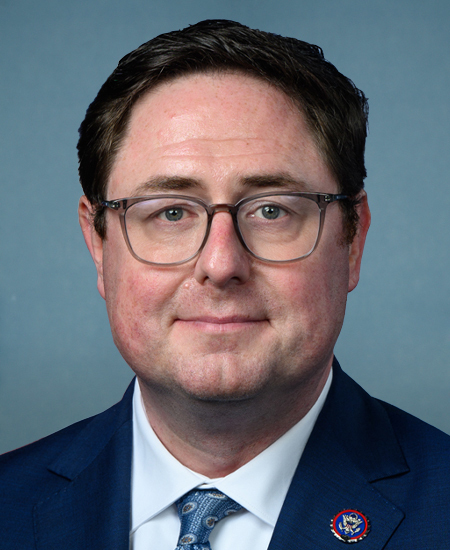
Rep. Mike Flood
Sponsored bills
Maddy summaryHR 3325, the Recruit and Retain Act of 2024, expands how federal COPS grants can be used to help law enforcement agencies hire officers. It allows grants to cover application fees (like background checks) for agencies facing declining recruitment, permits up to 2% of grant funds for administrative costs, and creates a new "Pipeline Partnership Program" requiring law enforcement agencies to partner with schools or colleges to engage students through career events, mentoring, and internships. The bill also adds guidance for agencies operating below budgeted staffing levels and mandates a Comptroller General study on recruitment/attrition trends across all levels of law enforcement. These changes directly affect local, state, and tribal police departments struggling to recruit or retain officers, as well as educational institutions partnering with them.
Maddy summaryHR 8231, the James Earl Jones Congressional Gold Medal Act, authorizes a Congressional Gold Medal to be awarded to actor James Earl Jones in recognition of his distinguished career in theater and film, and his role in advancing inclusion and equal opportunities for people of all backgrounds in the entertainment industry. The Treasury will strike the medal with an image and inscription of Jones, and may produce and sell bronze duplicates to cover costs, with proceeds deposited into the U.S. Mint's public enterprise fund. This bill serves as a ceremonial honor with no new legal requirements or policy changes.
Maddy summaryThis resolution (HRES 1157) is a symbolic gesture recognizing the work of linemen. It does not create new laws or policies; instead, it formally expresses the House's support for designating April 18, 2024, as "National Lineman Appreciation Day." The resolution highlights linemen's critical role in maintaining power infrastructure, their work as first responders during emergencies, and their safety risks. It directly affects no individuals or entities through policy changes - it solely offers ceremonial recognition of linemen's contributions to public safety.
Maddy summaryHR 8114 blocks the U.S. Department of Health and Human Services from finalizing a proposed rule that would have required states to spend at least 80% of Medicaid funds for home and community-based care services (like homemaker, home health aide, and personal care) on direct care worker wages. The bill directly affects Medicaid programs and the states administering them, preventing them from being required to meet this specific spending threshold. It prohibits the finalization, implementation, or enforcement of this rule or any substantially similar rule that would mandate a minimum percentage of payments for these services go toward worker compensation. This is a concrete policy change that maintains current Medicaid funding flexibility for states regarding home care worker wages.
Maddy summaryHR 8066, the Ammunition Supply Chain Act, requires the Secretary of the Army to submit a report to Congress within 180 days of enactment. The report must assess the U.S. supply chain for ammunition components like nitrocellulose and smokeless gunpowder, focusing on improving sourcing, avoiding single points of failure, managing global demand risks, and leveraging private sector capacity. This bill directly affects the Department of Defense and ammunition manufacturers by mandating a review of supply chain vulnerabilities. It is procedural in nature, establishing a reporting requirement without creating new regulations or funding.
Maddy summaryHRES 1148 is a resolution passed by the U.S. House of Representatives that condemns the Iranian government for supporting terrorism, regional proxy conflicts, and internal suppression of dissent - including its crackdown on protests following Mahsa Amini's death in 2022. It specifically calls for maintaining sanctions against Iran, supporting the Iranian Resistance's Ten-Point Plan (which advocates for a democratic, secular, nonnuclear Iran), and protecting Iranian political refugees in Albania. The resolution also affirms the Iranian people's right to self-determination under international law and urges the U.S. to recognize their struggle for freedom. As a non-binding resolution, it does not create new laws but formally expresses congressional stance.
Maddy summaryThis bill establishes a federal grant program to support accredited zoos, aquariums, and wildlife facilities caring for threatened and endangered species. It creates a "Wildlife Confiscations Network" to coordinate federal law enforcement with qualified facilities handling seized animals (like those from illegal trade), and authorizes a new permit under the Endangered Species Act to streamline rescue, rehabilitation, and reintroduction efforts. Facilities must meet standards for animal care, comply with the Animal Welfare Act, and use grants for specific costs like veterinary care, transportation, and reintroduction - capping federal funding at $1 million per facility annually (except during emergencies). The program directly affects accredited wildlife facilities, federal agencies (like USFWS), and law enforcement, aiming to standardize and fund conservation efforts for species under the Endangered Species Act.
Maddy summaryHR 7982 creates a new F-1 visa category specifically for international student athletes at U.S. colleges who want to earn money from commercial endorsements using their name, image, or likeness (NIL). It amends immigration law to add international student athletes as a distinct visa group under the F-1 category, allowing them to legally enter the U.S. for this purpose. The bill also grants these athletes work authorization to engage in NIL endorsement contracts with brands, rather than requiring them to leave the country for such deals. Oversight of these activities is shared between the athlete's school and U.S. Citizenship and Immigration Services (DHS), ensuring compliance with the new rules.
Maddy summaryHR 7900, the EPA Accountability to Farm Country Act, requires the Secretary of Agriculture to review EPA publications (like regulations or guidance) within 30 days if they could significantly impact farm production, food prices, or the agricultural economy. If a major economic impact is found, a review panel - including four farmer representatives from diverse regions - must analyze the rule and produce a report within 60 days, including cost estimates and recommendations. The EPA cannot finalize such rules until it implements the panel's recommendations to reduce negative economic effects on agriculture. This directly affects farmers, agricultural businesses, and food producers by giving them a formal role in shaping EPA regulations that impact their operations.