

Maddy summaryHRES 1315 is a non-binding resolution expressing the House's opinion that the U.S. Supreme Court should use the All Writs Act to intervene in the New York case against former President Donald Trump (The People of the State of New York v. Donald J. Trump). It requests the Court resolve federal and constitutional legal questions raised in that case - such as jurisdictional conflicts, statute-of-limitations concerns, and jury instruction issues - with urgency. The resolution does not create new law or affect any party directly; it merely urges judicial action. It cites specific procedural concerns in Trump’s state criminal trial but remains a symbolic expression of the House’s view, not a policy change.
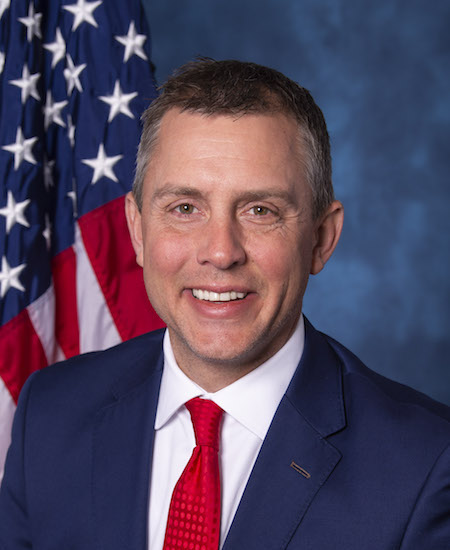
Rep. Kelly Armstrong
Sponsored bills
Maddy summaryHCONRES 114 is a non-binding congressional resolution expressing that the International Olympic Committee (IOC) should allow Taiwan to compete at the 2024 Summer Olympics using its own national name, flag, and anthem instead of the current "Chinese Taipei" designation. It argues that requiring Taiwan to use this term contradicts the Olympic Charter’s principles of non-discrimination and the right of athletes to represent their country. The resolution cites the IOC’s own charter stating that sport access must be free from discrimination based on "national or social origin," and notes that Taiwan athletes have won 36 Olympic medals under the current system. This resolution directly addresses the IOC’s policy toward Taiwan, not U.S. law or Taiwan’s status.
Orbital Sustainability Act of 2024 or the ORBITS Act of 2024 This bill directs specified agencies to take actions to remediate orbital debris (human-made space objects that are no longer in use and can harm orbiting satellites and on-orbit activities). The Department of Commerce must publish and periodically update a list of orbital debris that may be remediated to reduce the risk of harm to orbiting satellites and on-orbit activities. In addition, the National Aeronautics and Space Administration (NASA) must (1) establish a demonstration program to foster the development of technologies to remediate the orbital debris on the list, and (2) carry out other research and development activities to advance technologies for remediating orbital debris. NASA (and other relevant agencies) may also contract for remediation services to support the commercial availability of such services. Additionally, the National Space Council must update the Orbital Debris Mitigation Standard Practices within 90 days of the enactment of the bill and update them periodically thereafter. The updates must address matters including satellite constellations and other planned space systems, collision risks, and disposal of space systems after missions. The updates must inform (1) regulations of other agencies concerning orbital debris, and (2) bilateral and multilateral discussions with other countries concerning certain space activities. Finally, Commerce must facilitate the development of standard practices to coordinate on-orbit space traffic. Upon completion of the practices, Commerce and other federal departments must promote their adoption and use for space missions.
Maddy summaryHRES 1303 is a resolution passed by the U.S. House of Representatives on June 14, 2024, that condemns the Biden administration's suspension of pending approvals for liquefied natural gas (LNG) exports to countries without free trade agreements with the U.S. The resolution argues this action is politically motivated, citing studies showing economic benefits of LNG exports and noting that previous administrations conducted similar environmental reviews without halting permits. It calls for lifting the suspension to restore confidence in the energy sector, prioritize U.S. workers and communities, and align with the administration's stated goals of economic growth. As a non-binding resolution, it does not change policy but formally expresses congressional disapproval of the administration's approach.
Maddy summaryThis bill amends the Northern Border Security Review Act to establish a new annual deadline for threat analysis (September 2, 2025, and each year after) and requires the Department of Homeland Security to update its northern border strategy within 90 days of each analysis. It mandates that the Secretary provide a classified briefing to congressional committees within 30 days of each threat analysis and develop performance measures for U.S. Customs and Border Protection's Air and Marine Operations to secure the northern border in air and maritime areas within six months of enactment. The bill directly affects the Department of Homeland Security and congressional committees by imposing specific reporting deadlines and review requirements. These changes focus on improving the frequency and structure of security assessments without altering existing border security operations.
Maddy summaryHR 537 authorizes a Congressional Gold Medal to honor 60 diplomats who saved Jewish lives during the Holocaust by issuing visas and passports against their governments' orders, risking expulsion and personal danger. The medal will be presented to the next of kin of these diplomats, alongside representatives from their home countries, and permanently displayed at the United States Holocaust Memorial Museum. The bill also permits the sale of bronze duplicates to cover production costs, with proceeds going to the U.S. Mint. This legislation recognizes the diplomats' humanitarian actions without creating new government programs or altering existing laws.
Maddy summaryHR 8693, the "No American Land for Communist China Act," prohibits U.S. citizens or entities from purchasing real estate adjacent to specific federal lands if owned by the Chinese government or businesses with 25%+ Chinese government ownership. It directly affects Chinese government entities and Chinese-owned businesses operating in the U.S., restricting their ability to buy land near protected federal areas. The bill requires the President to take necessary actions to block such purchases, covering lands managed by Interior, Defense, Agriculture (Forest Service), or designated Indian country. This is a policy restriction, not a funding measure, targeting land transactions near sensitive federal properties.
Maddy summaryHR 5403, the CBDC Anti-Surveillance State Act, prohibits the Federal Reserve from issuing or facilitating central bank digital currency (CBDC) directly or indirectly to individuals through financial institutions. It specifically bans Federal Reserve banks from offering digital products to individuals, maintaining individual accounts, or using CBDC for monetary policy implementation. The bill also clarifies that its restrictions do not apply to existing physical cash or private, permissionless digital payment systems. This bill directly affects the Federal Reserve's ability to develop or deploy a government-run digital dollar. The law aims to prevent the Federal Reserve from creating a digital currency that could enable transaction tracking or government oversight of personal financial activity.
Maddy summaryHRES 1267 is a non-binding House resolution supporting the Second Amendment and opposing the Biden administration's gun-related policies. It criticizes executive orders, Bureau of Alcohol, Tobacco, Firearms, and Explosives (ATF) regulations, and export restrictions as efforts to undermine constitutional rights, though the resolution itself has no legal effect. The bill does not change laws or directly affect anyone, as it serves only as a symbolic statement of congressional opinion. It specifically references the administration's actions on firearm regulations and exports, but does not propose new policies or alter existing ones.
Maddy summaryThe SIREN Reauthorization Act (HR 4646) reauthorizes a federal program supporting rural emergency medical services (EMS) from 2024 through 2028. It directly affects rural EMS providers and personnel by requiring training on mental health and substance use disorders in emergency settings and allowing the acquisition of FDA-approved drugs for overdose treatment. Key provisions include updating the program's funding period, mandating new training standards for EMS staff, and expanding equipment access to include overdose-reversal medications. The bill amends Section 330J of the Public Health Service Act to implement these changes.