

Maddy summaryHJRES 168 is a congressional resolution seeking to block a specific environmental regulation by the Council on Environmental Quality (CEQ). It targets the CEQ's "National Environmental Policy Act Implementing Regulations Revisions Phase 2" rule, published in the Federal Register on May 1, 2024 (89 Fed. Reg. 35442). If passed, this resolution would use a statutory process under Title 5, U.S. Code, to nullify the rule, preventing it from taking effect. The bill directly affects the CEQ's regulatory authority over federal environmental reviews under the National Environmental Policy Act (NEPA).
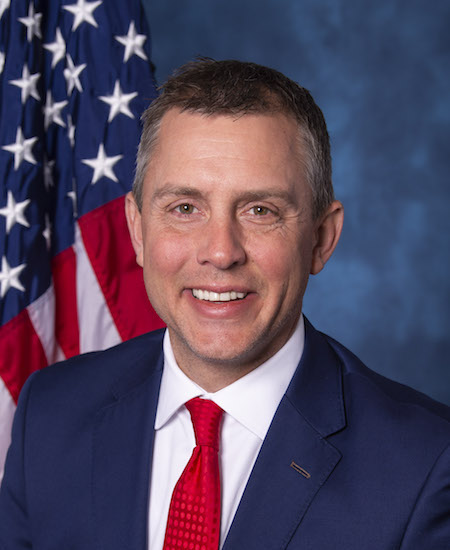
Rep. Kelly Armstrong
Sponsored bills
Maddy summaryHR 9534, the National Constitutional Carry Act, would prohibit states and localities from banning or restricting the public carrying of legally owned firearms by eligible U.S. citizens. It directly affects all gun owners who meet federal and state possession requirements, removing the need for permits or licenses to carry in public spaces. Key provisions state that any state law restricting public carry - such as requiring permits or imposing financial barriers - would be invalidated, with exceptions for privately-owned businesses that clearly prohibit firearms or locations with security screening. The bill bases this on Supreme Court rulings affirming the constitutional right to carry firearms for self-defense outside the home.
Maddy summaryThe context provided for HR 9146 does not include the full text of the amendment or the specific language added to Section 1703(d)(2) of title 38, U.S. Code. Without the actual provisions of the new subparagraph (F) titled "Continuity of care," it is impossible to describe the bill's key mechanisms, who it affects, or its concrete policy changes. The bill's title suggests it relates to veterans' health care continuity under the Veterans Community Care Program, but the details are omitted in the provided excerpt. Therefore, a complete and accurate summary cannot be generated from the available information.
Maddy summaryHR 8282, the "Illegitimate Court Counteraction Act," imposes U.S. sanctions on foreign individuals or entities supporting the International Criminal Court (ICC) in investigating or prosecuting "protected persons." Protected persons include U.S. military personnel, officials, and allied personnel (from non-ICC member countries) who are not under ICC jurisdiction. The bill requires the President to block assets and deny visas to targeted foreign persons and their immediate family members within 60 days of the ICC attempting such actions. It mandates congressional notification of sanctions and allows termination if the ICC ceases all such efforts against protected persons. The law focuses on restricting U.S. economic and travel access to ICC supporters targeting specific U.S. and allied personnel.
Maddy summaryHJRES 167 cancels a U.S. Department of Agriculture rule that would have allowed electronic eartags as official identification for cattle and bison. The resolution directs that the rule published in the Federal Register on May 9, 2024 (89 Fed. Reg. 39540), has no force or effect. This directly affects ranchers and farmers who would have been required to use electronic identification systems for livestock. The bill halts the implementation of this specific regulatory change without creating new requirements.
This resolution supports the designation of National FFA Week. It also (1) recognizes the important role of the National FFA Organization (Future Farmers of America) in developing the next generation of globally conscious leaders who will change the world; and (2) celebrates the 10th anniversary of the Give the Gift of Blue program, which has donated more than 17,000 FFA blue jackets to FFA members in need.
Maddy summaryHR 9388, the Modern Firearm Safety Act, prohibits federal, state, and local governments from requiring certain safety features on handguns sold in interstate commerce. The bill specifically bans mandates for: loaded indicators, magazine insertion mechanisms, microstamping (microscopic markings on shell casings), or attachment points for such features. This directly affects handgun manufacturers and state/local governments that might have proposed or implemented such requirements. The law prevents new regulations requiring these features on handguns commonly used by the public, focusing on removing specific technical mandates rather than broader safety measures.
Maddy summaryHR 9374, the Stand with Israel Act, prohibits U.S. federal funds from being used to support the United Nations or its entities if they restrict Israel's full participation as a member state. The bill specifically blocks funding for any UN body that expels, downgrades, or suspends Israel's membership or limits its ability to participate equally with other nations. This affects U.S. government contributions to the UN, requiring the Department of State and other agencies to halt funding for such UN actions. The key mechanism is a new provision in the UN Participation Act that mandates this funding restriction whenever Israel's UN participation is impaired.
Maddy summaryHR 9277, the REG Act, prohibits federal agencies from considering "environmental justice" when creating rules or enforcing laws, unless required by existing law. It directly affects agencies like the EPA by restricting how they evaluate policies' impacts on minority and low-income communities during rulemaking. The bill repeals three key executive orders: E.O. 12898 (addressing environmental justice in vulnerable communities), E.O. 14008 (climate action), and E.O. 14096 (environmental justice commitments). This changes how agencies develop regulations by removing mandatory consideration of environmental justice in their processes.
Maddy summaryThis resolution aims to block a rule issued by the National Highway Traffic Safety Administration (NHTSA) that sets new fuel efficiency standards for passenger cars, light trucks (starting in 2027), and heavy-duty pickup trucks/vans (starting in 2030). If passed, it would prevent this specific rule from taking effect by disapproving it under a congressional review process. The rule directly affects vehicle manufacturers by requiring them to meet these updated fuel economy targets for future model years. This is a procedural resolution, not a new law, focused solely on halting the implementation of the existing NHTSA rule.