

Maddy summaryHJRES 136 is a resolution seeking to block an Environmental Protection Agency (EPA) rule that would have set new emissions standards for light and medium-duty vehicles sold in 2027 and later model years. The EPA rule, published in April 2024, aimed to require vehicle manufacturers to meet stricter pollution limits for these vehicles. If passed, this resolution would cancel the rule, preventing the EPA from enforcing the new standards. It uses a congressional process that allows Congress to reject agency rules with a simple majority vote.
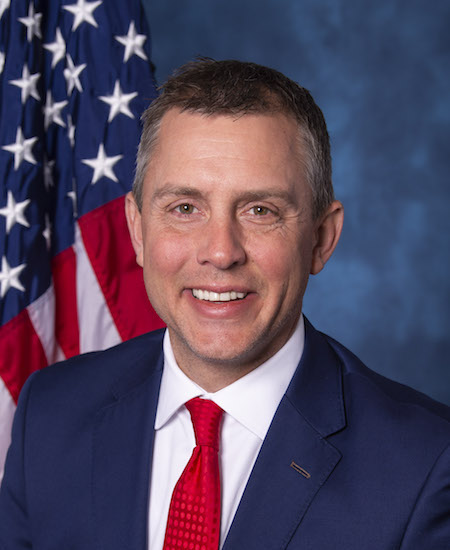
Rep. Kelly Armstrong
Sponsored bills
Maddy summaryThis bill restricts federal funding for jurisdictions that limit cooperation with federal immigration enforcement. It defines a "sanctuary jurisdiction" as any state or local government that prohibits sharing immigration status information or complying with federal detainer requests (except for crime victims/witnesses). Starting after enactment, such jurisdictions lose eligibility for federal funds intended to provide food, shelter, healthcare, legal services, or transportation to undocumented immigrants. The law directly affects cities and states with specific immigration policies, not the immigrants themselves.
Maddy summaryHJRES 144 is a congressional disapproval resolution targeting a specific rule issued by the Bureau of Alcohol, Tobacco, Firearms, and Explosives (ATF) on April 19, 2024. The resolution seeks to block the ATF's rule that redefined the term "engaged in the business" for firearm dealers, which would have affected how federal licensing requirements apply to certain sellers. If enacted, this resolution would nullify the rule, preventing it from taking effect under procedures in Title 5 of the U.S. Code. The bill directly impacts firearm dealers operating under the current regulatory framework and the ATF's enforcement authority.
Maddy summaryHR 9675, the Homeward Bound Act, delays and revises federal rules governing dog imports for specific groups. It postpones the application of a 2024 HHS rule for 18 months, directly affecting military personnel stationed abroad, U.S. diplomats/consular staff, their families, and individuals with service animals seeking to import dogs from rabies-low-risk countries. The bill requires the HHS Secretary to revise regulations within 10 days to allow all-age dog imports at any U.S. port of entry from these countries and waive microchipping requirements for dogs born before the law's enactment. These changes aim to simplify import processes for covered individuals while maintaining rabies risk standards.
Maddy summaryThis bill (HJRES 163) is a congressional disapproval resolution targeting an Environmental Protection Agency (EPA) rule finalized on May 9, 2024. The EPA rule established new emissions standards for greenhouse gases from fossil fuel power plants (both new and existing) and repealed a previous rule called the Affordable Clean Energy Rule. The resolution would block this EPA rule from taking effect by invoking the Congressional Review Act (Chapter 8 of Title 5, U.S. Code). If passed, it would prevent the EPA rule from being enforced, directly affecting fossil fuel power plant operators and the EPA’s regulatory authority over emissions.
Maddy summaryH.J. Res. 139 is a congressional resolution seeking to disapprove a rule issued by the Centers for Medicare & Medicaid Services (CMS) on May 10, 2024. The rule would have established minimum staffing requirements for long-term care facilities and required transparency in Medicaid payment reporting. If passed, this resolution would block the rule from taking effect, preventing these new staffing and reporting requirements from being implemented. The bill directly affects long-term care facilities and Medicaid programs by halting the enforcement of these specific standards.
Maddy summaryHJRES 133 is a congressional resolution seeking to block an Environmental Protection Agency (EPA) rule titled "Greenhouse Gas Emissions Standards for Heavy-Duty Vehicles-Phase 3." This rule, published in the Federal Register on April 22, 2024, established new emissions requirements for large trucks and commercial vehicles. The resolution, if passed, would prevent the EPA rule from taking effect by formally disapproving it under standard congressional review procedures. The measure directly affects the EPA’s regulatory authority and vehicle manufacturers who would have been required to comply with the proposed standards.
Maddy summaryH.J. Res. 117 is a joint resolution that would disapprove an Environmental Protection Agency (EPA) rule concerning the reconsideration of National Ambient Air Quality Standards for particulate matter. The EPA rule, published on March 6, 2024, was part of the agency’s process to review these standards, which set limits for harmful air pollutants. This resolution invokes a congressional disapproval procedure under federal law to block the rule from taking effect. If enacted, the rule would have no force or effect, preserving the existing air quality standards for particulate matter.
Maddy summaryThis bill (HR 8516) renames a specific U.S. Postal Service facility in Casselton, North Dakota (located at 840 Front Street) to the "Commander Delbert Austin Olson Post Office." It directly affects the Casselton post office by changing its official name and requires all federal references to the location to use the new name. The bill has no policy changes or funding provisions - it is purely a commemorative naming designation. The change applies only to official federal documents and records, not to postal services or operations.
Maddy summaryThis bill authorizes specific funding to complete water infrastructure projects in North Dakota, primarily benefiting tribal communities and rural water districts. It allocates $120 million for the Northwest Area Water Treatment Plant, $454 million for the McClusky Canal project, $50 million for the Southwest Pipeline, and $63 million for rural distribution upgrades, plus $743 million for tribal water systems (including $275 million for the Three Affiliated Tribes and $118 million for Spirit Lake). Funding is indexed to adjust for construction cost changes, and transfers between projects are permitted within 50% limits. The bill directly affects North Dakota’s tribal reservations and rural communities by advancing long-planned water supply projects.