

Accelerating Access to Critical Therapies for ALS Act This bill establishes grant programs to address neurodegenerative diseases, such as amyotrophic lateral sclerosis (also known as ALS or Lou Gehrig's disease), and contains other related provisions. The Department of Health and Human Services (HHS) shall award grants to eligible entities for scientific research utilizing data from expanded access to investigational ALS treatments for individuals who are not otherwise eligible for clinical trials. The Food and Drug Administration (FDA) shall award grants to public and private entities to cover the costs of research and development of drugs that diagnose or treat ALS and other rare neurodegenerative diseases. HHS shall also establish the Public-Private Partnership for Neurodegenerative Diseases between the National Institutes of Health, the FDA, and at least one eligible entity (generally, an institution of higher education or a nonprofit organization). The partnership shall support the development and regulatory review of drugs that address ALS and other rare neurodegenerative diseases. The FDA shall publish on its website a five-year action plan for fostering the development of drugs that improve or extend the lives of people living with rare neurodegenerative diseases. The Government Accountability Office must report to Congress about the grants provided under this bill, including an analysis of the impact of such grants on research and development of treatments for ALS.
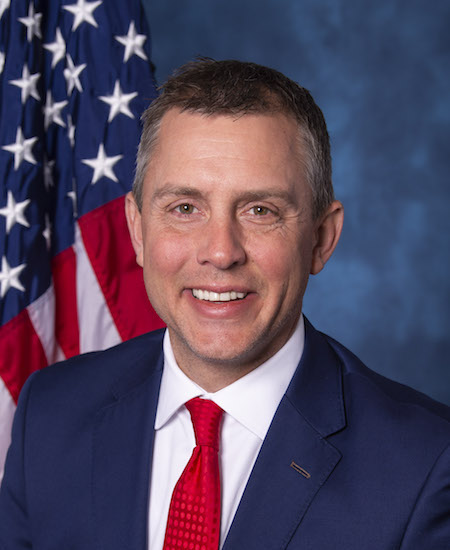
Rep. Kelly Armstrong
Sponsored bills
This concurrent resolution expresses the sense of Congress that tax-exempt fraternal benefit societies provide critical benefits to the people and communities of the United States and their work should continue to be promoted.
This bill posthumously provides for the award of a Congressional Gold Medal in commemoration of the 13 service members who died on August 26, 2021, while stationed at Hamid Karzai International Airport in Afghanistan.
Strategic Production Response Act This bill limits the drawdown of petroleum in the Strategic Petroleum Reserve until the Department of Energy develops a plan to increase the percentage of federal lands leased for oil and gas production.
Coal Council Certainty Act of 2021 This bill requires the Department of Energy (DOE) to maintain the National Coal Council under the charter that was in effect on November 19, 2021. Historically, this council provided DOE with advice and guidance about policies concerning coal. However, the council ceased operations in November 2021 when its charter was not renewed by DOE.
Chronic Wasting Disease Research and Management Act This bill directs the Department of Agriculture (USDA) to address chronic wasting disease afflicting deer, elk, and moose populations. Specifically, the bill directs USDA to establish a program to research and manage the disease. Under the program, USDA must offer to enter into agreements with state or tribal wildlife agencies and departments of agriculture, institutions of higher education, and research centers to support research on the transmission of, resistance to, and diagnosis of the disease. In addition, USDA must offer to enter into agreements with such agencies and departments to support state and tribal efforts to develop and implement management strategies that address the disease. USDA must also develop and maintain materials to inform the public on chronic wasting disease and techniques to help prevent the spread of the disease. In addition, USDA must solicit public feedback on potential updates and improvements to standards of the chronic wasting disease herd certification program.
Cattle Contract Library Act of 2021 This bill directs the Department of Agriculture (USDA) to establish and maintain a library or catalog of each type of contract offered by packers to producers for the purchase of all or part of the production of fed cattle (including cattle that are purchased or committed for delivery), including any schedules of premiums or discounts associated with the contract. USDA must make the library or catalog publicly available in a user-friendly format and provide weekly or monthly reports as applicable. The bill makes it unlawful for any packer to willfully fail or refuse to provide USDA with accurate contractual information or to comply with any other requirements under the bill. The Agricultural Marketing Service must provide competitive grants to state agricultural experiment stations, universities, national laboratories, and other entities for producer outreach and education efforts on best uses of cattle market information, including information made available through the livestock mandatory reporting program and the library or catalog.
Community Bank Relief Act of 2021 This bill requires banking agencies to set the community bank leverage ratio between 8% and 8.5% for calendar years 2022, 2023, and 2024 for community banks seeking to satisfy simplified capital adequacy requirements. Currently, banking agencies are statutorily required to set the rate between 8% and 10% through rulemaking. Under current regulations, the rate will increase from 8.5% to 9% on January 1, 2022.
This joint resolution nullifies a Department of Labor emergency temporary standard for preventing the transmission of COVID-19 in employment settings. Under the standard issued on November 5, 2021, employers with 100 or more employees must require their onsite employees to either be fully vaccinated against COVID-19 or undergo weekly COVID-19 testing.
Maddy summaryHRES 386 is a symbolic resolution introduced in the U.S. House of Representatives that expresses support for recognizing "National Police Week" each year. The resolution acknowledges law enforcement officers' sacrifices, particularly during the pandemic, and encourages the public to honor their service. As a non-binding statement, this resolution does not create new law or change policy but serves as a formal expression of support for law enforcement officers across the United States.