

Repealing Illegal Freedom and Liberty Excises Act or the RIFLE Act This bill repeals the excise tax on the transfer of firearms. The bill shall not be construed as placing any regulated firearms under the jurisdiction of the U.S. Consumer Product Safety Commission.
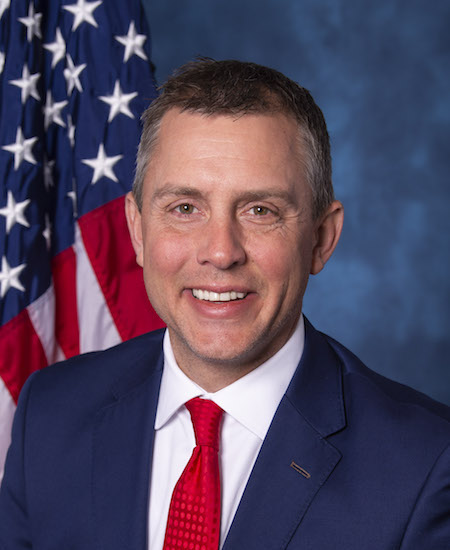
Rep. Kelly Armstrong
Sponsored bills
Prohibition of Agricultural Land for the People's Republic of China Act This bill requires the President to prohibit nonresident aliens, foreign businesses, and agents associated with China's government from (1) purchasing agricultural (including ranching) real estate located in the United States, or (2) participating in Department of Agriculture programs that are unrelated to food and safety regulatory requirements.
Maddy summaryHR 139, the SHOW UP Act of 2023, requires U.S. federal executive agencies to revert to their pre-pandemic telework policies and levels by January 30, 2024 (30 days after enactment). Agencies must conduct a study on pandemic-era telework impacts - including effects on mission performance, costs from underused offices or incorrect pay classifications, and employee productivity - and submit a new plan to Congress if they seek to expand telework beyond 2019 levels. This plan requires certification from the Office of Personnel Management (OPM) Director confirming it will improve mission performance, reduce real property costs, lower locality pay expenses, and ensure secure remote work tools without increasing overall costs. The bill directly affects all federal executive agencies and their telework policies, mandating a return to pre-2020 practices while creating a formal process for any future telework expansion.
Maddy summaryHR 709, the Muhammad Ali Congressional Gold Medal Act, authorizes Congress to award Muhammad Ali a gold medal in recognition of his life and achievements. The bill directs the Secretary of the Treasury to strike a gold medal for presentation by congressional leaders, which will then be given to Ali's widow, Lonnie Ali. Duplicate bronze medals may be sold to cover production costs, with proceeds deposited into the U.S. Mint fund. This is a commemorative measure, not a policy change affecting laws or programs.
Maddy summaryThe Strategic Production Response Act (HR 21) requires the Secretary of Energy to develop a plan increasing oil and gas leasing on federal lands (managed by Interior, Agriculture, Energy, and Defense) by the same percentage as any initial drawdown of petroleum from the Strategic Petroleum Reserve. This plan must be created before the first sale, exchange, or loan of reserve oil, and cannot increase leasing on federal lands by more than 10% overall. The bill mandates consultation with the Secretaries of Agriculture, Interior, and Defense during plan development. It directly affects federal land management agencies and future oil/gas leasing decisions on public lands.
Maddy summaryThis bill requires healthcare providers to give the same medical care to infants born alive during abortions as they would to any newborn, and to immediately admit such infants to a hospital. It mandates reporting of non-compliance to law enforcement and imposes penalties including up to 5 years in prison for violations. Women who undergo abortions can file civil lawsuits seeking money damages for injuries, three times the abortion cost, and punitive damages if care standards are not met. The bill also clarifies that abortion includes intentionally killing an unborn child or terminating pregnancy without specific exceptions (e.g., after viability to preserve life or removing a dead fetus).
Maddy summaryHR 472, the Fighting Post-Traumatic Stress Disorder Act of 2023, requires the Attorney General to develop a report within 150 days of enactment on programs to provide specialized mental health services for public safety officers (including police, firefighters, EMTs, and 911 dispatchers) and telecommunicators. The report must propose evidence-based trauma care, peer support, and family services to address job-related PTSD and acute stress disorder, while ensuring confidentiality for those seeking help. It will also outline efficient implementation plans using in-person and telehealth options across state, tribal, territorial, and local levels, plus draft legislative language and funding estimates. The bill directly targets public safety workers facing significantly higher PTSD rates (30% vs. 20% general population) and elevated suicide risks, including an estimated 125-300 annual police suicides.
Maddy summaryThe Putting Investors First Act of 2023 requires proxy advisory firms (companies that provide voting recommendations to investors) to register with the Securities and Exchange Commission and disclose potential conflicts of interest. It mandates these firms to establish procedures ensuring recommendations are based on accurate information, provide public companies with reasonable time to review data used in recommendations, and maintain an ombudsman for complaint resolution. The bill also requires investment advisors and asset managers with over $100 million in assets to report how they use proxy advice and provide economic analysis for votes not aligned with board recommendations. Additionally, it prohibits "robovoting" (automatically voting based on proxy advice) and mandates ESG funds to disclose performance comparisons with standard index funds. The legislation aims to increase transparency and accountability in the proxy advisory industry to better protect investor interests.
Close the Double Subsidy Loophole for Electric Vehicles Act This bill reduces the allowable amount of the tax credit for a new qualified plug-in electric drive motor vehicle by any subsidy made available by the state in which the vehicle is registered and was placed in service.
Maddy summaryThis bill establishes nationwide recognition for valid concealed carry permits. It allows permit holders from any state to carry concealed handguns in states that either issue such permits or don't ban concealed carry, provided they carry a photo ID and their valid permit. Key provisions include making presentation of a valid permit and ID prima facie evidence of compliance, shifting the burden of proof to prosecutors if challenged, and requiring courts to award attorney fees to successful defendants. It does not override state laws prohibiting concealed carry on private property or government lands, nor does it affect restrictions on federal lands like national parks.