

Maddy summaryThe EQUAL Act (HR 1062) eliminates the unequal sentencing disparity between crack cocaine (cocaine base) and powder cocaine offenses under federal law. It repeals specific provisions in the Controlled Substances Act and Import/Export Act that previously imposed harsher penalties for cocaine base, directly affecting individuals convicted of federal cocaine offenses involving cocaine base. The bill applies to all future cases and allows courts to reduce sentences for people already convicted of such offenses before the law's enactment. This change removes a key legal distinction that historically led to significantly longer sentences for crack cocaine offenses compared to powder cocaine.
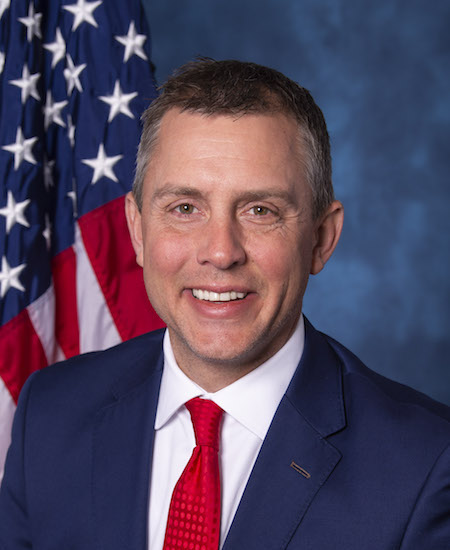
Rep. Kelly Armstrong
Sponsored bills
Maddy summaryHR 150, the Protecting American Energy Production Act, gives states primary authority to regulate hydraulic fracturing (fracking) for oil and gas on state and private lands, directly affecting state governments and energy producers. The bill requires states to maintain this regulatory role and blocks the President from imposing a fracking moratorium without explicit congressional approval. Key provisions include a Congressional "sense" statement affirming state primacy and a direct prohibition on presidential moratoriums unless authorized by a new law. This bill focuses on shifting regulatory power to states and limiting federal executive action on fracking, without specifying financial impacts or environmental standards.
Maddy summaryHR 1088, the Shirley Chisholm Congressional Gold Medal Act, authorizes a posthumous Congressional Gold Medal to honor Congresswoman Shirley Chisholm, the first African-American woman elected to Congress (1968) and the first Black candidate for a major party's presidential nomination (1972). The bill directs the Treasury Secretary to design and strike a gold medal featuring Chisholm's image, which will be presented by Congress and then permanently displayed at the Smithsonian Institution. Duplicate bronze medals may be sold to the public to cover production costs, with proceeds deposited into the U.S. Mint fund. This bill commemorates Chisholm's legacy and achievements without creating new laws or affecting any current policies.
Maddy summaryHR 185 ends a Centers for Disease Control and Prevention (CDC) rule requiring foreign travelers entering the U.S. by air to show proof of a COVID-19 vaccination. The bill takes effect immediately upon enactment, terminating the specific requirement outlined in the CDC’s April 2022 order (and any similar future orders). It also prohibits federal funding from being used to enforce this rule. This change directly affects foreign air travelers entering the United States, removing a vaccination proof requirement for their entry. The bill does not impact domestic travel, other entry methods, or vaccination requirements for U.S. citizens.
Recruit and Retain Act of 2023 This bill allows funds under the Community Oriented Policing Services grant program to be used to recruit and retain law enforcement officers for community-oriented policing.
Maddy summaryHR 889, the Broadband Grant Tax Treatment Act, excludes certain federal broadband grants from recipients' taxable income. It specifically applies to grants received under programs like the Infrastructure Investment and Jobs Act's Broadband Equity, Access, and Deployment Program and state digital equity grants. The bill prevents double tax benefits by disallowing deductions or credits for expenses covered by these excluded grants and reduces the adjusted basis of related property. This policy change directly affects broadband providers, local governments, and tribal entities receiving qualifying grants from federal or state sources for broadband infrastructure deployment.
TBI and PTSD Treatment Act This bill requires the Department of Veterans Affairs to furnish hyperbaric oxygen therapy through a provider authorized by the Veterans Community Care Program to veterans who have a traumatic brain injury or post-traumatic stress disorder.
This resolution condemns Iranian state-sponsored terrorist attacks against U.S. citizens and officials and Iranian dissidents. The resolution also expresses support for the people of Iran who are legitimately defending their rights for freedom against repression and condemns the killing of Iranian protesters by the Iranian regime.
Maddy summaryThis bill creates a new federal crime for assaulting law enforcement officers causing serious injury or death, with penalties up to 10 years in prison for serious injury and up to life for aggravated cases involving death, kidnapping, or attempted killing. It applies when offenses involve interstate travel, commerce, or target officers engaged in law enforcement duties. Federal prosecution requires Attorney General certification that state authorities cannot or will not handle the case, or that federal action is necessary for public safety. The law covers all law enforcement officers (state, local, and federal) who enforce criminal laws or detain individuals.
Maddy summaryHR 795 amends the 1968 Crime Control Act to require federal funding for training first responders on using containment devices that prevent secondary exposure to fentanyl and other dangerous substances. It directs the Department of Justice to provide both training resources and purchase these devices for emergency personnel. The law specifically targets risks faced when handling drugs like fentanyl during arrests or medical emergencies. First responders, including police and EMTs, would directly benefit from this provision. The bill mandates these measures through existing federal programs without creating new standalone requirements.