

Maddy summaryHR 3238, the Affordable Housing Credit Improvement Act of 2023, updates the Low-Income Housing Tax Credit (LIHTC) program to increase the availability of affordable housing across the United States. The bill makes several key changes including increasing state funding formulas, modifying tenant eligibility rules to better serve vulnerable populations (such as domestic violence victims and students), and expanding credit eligibility for projects in rural and Native American communities. Specific provisions raise the credit for properties serving extremely low-income households, clarify rules around tenant income increases, and require housing providers to protect victims of domestic violence. The bill also updates terminology from "low-income" to "affordable" throughout the tax code and enhances program transparency through data sharing requirements. These changes aim to make the LIHTC program more effective at creating and preserving affordable housing units for low-income households nationwide.
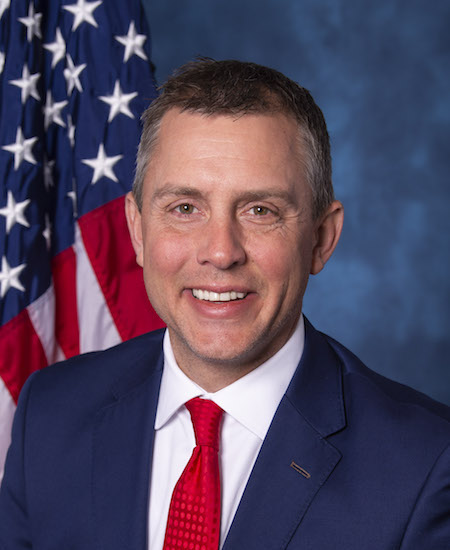
Rep. Kelly Armstrong
Sponsored bills
Maddy summaryThe HELPER Act of 2023 creates a new FHA mortgage insurance program specifically for first responders and K-12 teachers. It allows eligible first-time homebuyers in these professions to secure mortgages with 100% financing (no down payment required) for purchasing or repairing a primary residence. To qualify, applicants must be employed as law enforcement, firefighters, paramedics, or K-12 teachers, have completed housing counseling, and meet specific employment history requirements (e.g., 4 years in the role or disability-related release). The program authorizes $660,000 for fiscal year 2024 and $160,000 annually through 2030, with authority expiring after 5 years.
Maddy summaryHR 3128, the American Aviator Act, creates a federal pilot program to help veterans transition to commercial aviation careers. It provides $5 million annually (2024-2029) in grants to FAA-certified pilot schools with established airline partnerships, covering training costs like tuition, flight fees, and materials for veterans pursuing pilot licenses. Eligible schools must be accredited and have agreements with major airlines, and grants cannot cover more than 10% in administrative costs. The program specifically targets veterans whose existing VA education benefits don’t cover full training costs, using grant funds to fill those gaps.
Maddy summaryThe ACRE Act of 2023 amends the tax code to exclude interest income from certain rural and agricultural loans from taxable income for eligible lenders. It directly affects banks, savings associations, and their wholly-owned entities that provide qualified loans secured by rural or agricultural real estate, including single-family homes in designated rural areas (with a $750,000 loan balance cap) or aquaculture facilities. The key provision allows these lenders to exclude interest earned on qualifying loans from their gross income, effectively reducing their tax liability on such lending activity. The bill applies to loans made after its enactment date and aligns with existing definitions of rural property from the Agricultural Credit Act of 1987.
Maddy summaryHR 3150, the OPIOIDS Act, provides federal grants to states, territories, and localities to improve tracking of opioid overdoses through better data systems, including postmortem testing and linking health and death records. It funds law enforcement training for overdose identification, forensic lab upgrades for timely data reporting to the National Forensic Laboratory Information System, and first responder safety equipment for fentanyl exposure. The bill mandates that grant recipients submit overdose data to this central system and requires the DEA to develop uniform data standards for purity, formulation, and weight reporting. These provisions directly affect state/local health agencies, law enforcement, and forensic labs by enhancing data collection and sharing for opioid overdose response.
Maddy summaryHR 3039, the DRIVE Act, prohibits the Federal Motor Carrier Safety Administration (FMCSA) from requiring speed limiting devices on trucks weighing over 26,000 pounds operating in interstate commerce. This directly affects commercial trucking companies and drivers transporting goods across state lines. The bill's key provision explicitly bans the FMCSA from issuing any rule mandating such devices, which are typically set to limit vehicle speed. The law applies specifically to interstate trucking operations and does not affect state-level regulations.
Maddy summaryThe SAFE Banking Act of 2023 would protect banks and financial institutions that provide services to state-legal marijuana businesses and hemp-related businesses by preventing federal regulators from taking adverse actions against them solely for serving these businesses. It clarifies that income from state-legal marijuana businesses can be considered for mortgage applications, and requires regulators to update guidance on suspicious activity reports related to these businesses. The bill does not require financial institutions to serve these businesses, but ensures they won't face penalties for doing so. It extends similar protections to hemp-related businesses, which have faced banking challenges despite being federally legal under the 2018 Farm Bill.
No Sanctions Relief for Terrorists Act This bill prohibits granting a waiver or license to conduct transactions with certain Iranian individuals and entities unless the President certifies to Congress that the individual or entity has ceased involvement in terrorism. The bill's prohibition applies to Iranian individuals and entities included on the January 20, 2021, list of specially designated nationals and blocked persons pursuant to Executive Order 13224 . (U.S. persons are usually prohibited from transacting with individuals or entities on this list, also called the SDN list, although a license or waiver can allow transactions that would otherwise be prohibited.)
This resolution expresses U.S. support for Israel and its efforts to defend its right to existence. The resolution also declares that the United States and international community must prevent Iran from acquiring or building nuclear weapons.
Maddy summaryThis bill blocks the Federal Housing Finance Agency (FHFA) and mortgage enterprises (Fannie Mae and Freddie Mac) from implementing new single-family mortgage credit fee changes announced on January 19, 2023. It specifically cancels the fee framework updates detailed in FHFA's January 19 announcement and related lender letters (LL-2023-01 and Bulletin 2023-1). The bill does not stop mortgage enterprises from using risk-based pricing for credit fees, which remains permitted. It directly affects the FHFA's authority and the mortgage pricing structure for Fannie Mae and Freddie Mac.