

Maddy summaryThe TRACE Act requires the National Missing and Unidentified Persons System (NamUs) to add a data field tracking whether a missing person’s last known location was on federal land (e.g., national parks, military bases). It mandates an annual report to Congress starting in 2025, detailing how many cases involved federal land locations. The bill specifically defines "federal land" as areas under the jurisdiction of the Agriculture, Interior, or Defense departments (excluding tribal trust land), focusing on locations like national forests or Army Corps projects. This policy change directly affects cases involving missing persons near federal properties by improving data collection and transparency for federal agencies.
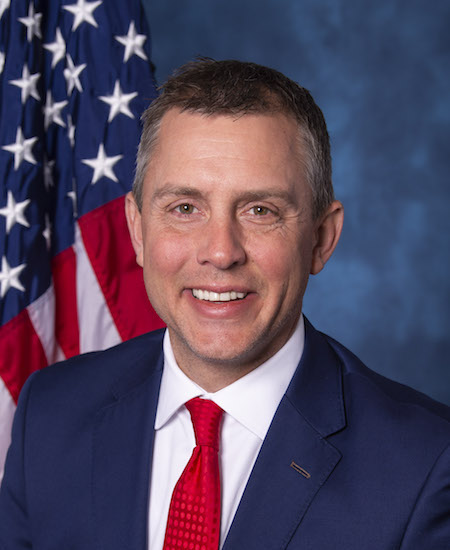
Rep. Kelly Armstrong
Sponsored bills
Maddy summaryHR 3792 extends U.S. security funding for Israel through 2028 (Section 3) and expands energy cooperation to include advanced nuclear technologies and carbon capture (Section 5). It requires annual reports on regional security partnerships involving Israel (Section 6) and ensures countries in the Abraham Accords can access U.S. development programs (Section 8). The bill also mandates reports on diplomatic efforts against ICC investigations targeting the U.S. and Israel (Section 10) and encourages people-to-people programs to strengthen the Abraham Accords (Sections 7, 9). These provisions directly affect Israel’s diplomatic engagement, security partnerships, and economic cooperation in the Middle East.
Enhancing Administrative Reviews for Broadband Deployment Act This bill requires the Department of the Interior and the Forest Service to study and report on barriers to and staffing needs for completing timely reviews of requests for communications use authorizations. (These are requests for easements, rights-of-way, leases, licenses, or other authorizations to locate or modify a transmitting device, support structure, or other communications facility on public lands or National Forest System land.)
Ensuring Quality Access to Legal Defense Act of 2023 or the EQUAL Defense Act of 2023 This bill establishes and modifies certain programs that support the delivery of public defense services (i.e., legal services for criminal defendants who cannot afford counsel). Specifically, the bill directs the Department of Justice (DOJ) to award grants to state and local governments, tribal organizations, and public defender offices for public defense. A grant recipient must use the grant to establish a data collection process, develop workload limits, and satisfy specified compensation requirements (e.g., pay parity between public defenders and prosecutors). The bill also directs DOJ to award grants to nonprofits and government organizations to train public defenders, court-appointed attorneys, and contract attorneys. Additionally, a state that receives Edward Byrne Memorial Justice Assistance Grant program funds must annually submit to DOJ information related to the legal representation of defendants in criminal cases. Finally, it reauthorizes through FY2027 the student loan repayment program for prosecutors and public defenders and otherwise revises the program, including by increasing the maximum benefit amount.
Maddy summaryThe HALT Fentanyl Act expands the definition of fentanyl-related substances in the Controlled Substances Act to include many structurally similar compounds, making it easier to regulate new fentanyl analogs without individual listing. It defines these substances based on specific chemical modifications to fentanyl, with limited exceptions for substances already controlled or listed elsewhere. The bill also streamlines research procedures for schedule I substances by creating expedited registration processes and allowing multiple studies under one registration, while requiring the Attorney General to publish a list of substances meeting the new definition.
Maddy summaryHR 3736, the "Extending Access to Addiction Treatment Act," extends the deadline for states to include medication-assisted treatment (MAT) in Medicaid plans. It amends the Social Security Act to change the requirement from ending in 2025 to 2035, giving states an additional decade to implement this coverage. This directly affects Medicaid programs nationwide and the millions of people with substance use disorders who rely on MAT for treatment. The bill makes no new coverage requirements but simply delays the existing deadline for states to provide this specific benefit.
Maddy summaryThis bill requires that AM radio receivers be included as standard equipment in all new motor vehicles (such as cars and trucks) sold in the United States, with a rule to be issued by the Department of Transportation within one year. The rule must ensure AM radio is easily accessible on the dashboard and allows manufacturers to use digital AM radio technology instead of traditional AM. During the one-year period between the bill's enactment and the rule's effective date, manufacturers must clearly label vehicles without AM radio. The bill also directs a study to evaluate whether an alternative system could deliver emergency alerts as reliably as AM radio across the country, especially during crises.
Maddy summaryHR 3497, the Uranium Miners and Workers Act of 2023, expands eligibility for compensation under the Radiation Exposure Compensation Act (RECA) to include uranium miners, millers, ore transporters, and core drillers who worked in specified states between 1942 and 1978 and later developed certain cancers or kidney diseases. The bill redirects $475 million from unobligated coronavirus relief funds (from acts like the CARES Act and American Rescue Plan) to the RECA trust fund to pay claims. It also extends the RECA program's funding period by 4 years and adjusts the deadline for submitting claims to 4 years after the bill's enactment. This law directly affects former uranium industry workers who developed radiation-related illnesses.
Maddy summaryThe FEND Off Fentanyl Act (HR 3333) establishes new sanctions targeting foreign persons and transnational criminal organizations involved in fentanyl trafficking, specifically naming Mexican cartels like the Sinaloa Cartel and Jalisco New Generation Cartel. It authorizes the President to block transactions with individuals facilitating fentanyl trafficking and requires annual reports to Congress on enforcement actions. The bill also designates fentanyl-related transactions as a primary money laundering concern for financial institutions and extends the statute of limitations for sanctions violations to eight years. These measures aim to disrupt fentanyl trafficking networks by targeting both the drug flow and the financial mechanisms supporting them.
Maddy summaryHRES 375 is a ceremonial resolution supporting National Nurses Week (May 6-12, 2023), recognizing nurses' contributions to healthcare. It does not create new laws or policies but formally acknowledges nurses' roles as frontline caregivers, patient advocates, and key contributors to public health. The resolution encourages the public to observe the week through recognition and activities, highlighting nurses' impact across all healthcare settings. It directly affects the nursing profession by affirming their value, though it has no binding effect on legislation or funding.