

Maddy summaryThe Cost Estimates Improvement Act (HR 8341) requires the Congressional Budget Office (CBO) and Joint Committee on Taxation (JCT) to include, to the extent practicable, the costs of servicing the national debt - such as interest payments - in their budget estimates. This change makes cost analyses more comprehensive by reflecting the full financial burden of government borrowing. The bill amends the Congressional Budget and Impoundment Control Act of 1974 to add this requirement, directly affecting how the CBO and JCT produce their budget reports. It does not alter spending or tax laws but ensures estimates better account for long-term debt costs when Congress reviews legislation.
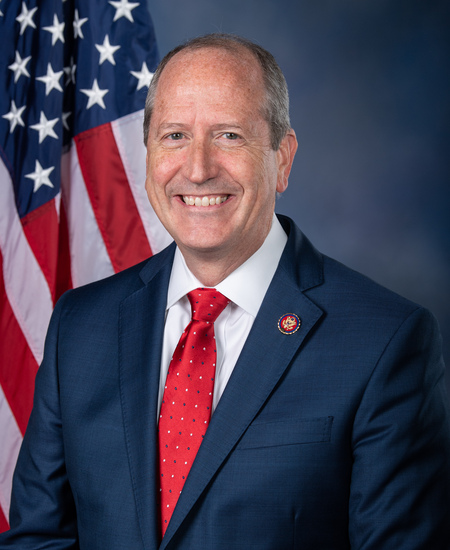
Rep. Dan Bishop
Sponsored bills
Maddy summaryHR 7581 requires the Attorney General to submit three new reports within 270 days of enactment, focusing on data gaps affecting law enforcement safety. The bill mandates a detailed analysis of violent attacks against officers (including ambushes), non-criminal aggressive incidents not currently reported, and mental health impacts from such events. These reports will assess current data collection systems, training effectiveness, resource availability, and disparities in reporting across federal, state, and local law enforcement. The goal is to inform better prevention strategies and resource allocation for officer safety and wellness, without creating new funding or programs.
Maddy summaryHJRES 143 is a congressional resolution seeking to block a Department of Labor rule that would amend specific exemptions for retirement investment transactions. The bill targets a rule (published April 25, 2024) that would change how retirement funds can invest, particularly affecting retirement plan providers and fiduciaries managing employee savings. It directs Congress to disapprove the rule under a specific federal law, meaning the rule would not take effect if passed. This is a procedural step to halt the rule's implementation, not a new policy change.
Maddy summaryHJRES 140 is a resolution requesting Congress to disapprove a Department of Labor rule that amended Prohibited Transaction Exemption 2020-02. The rule, published in the Federal Register on April 25, 2024, would have changed how retirement plan fiduciaries can engage in certain investment transactions, specifically affecting retirement account providers and administrators. If approved, this resolution would block the rule from taking effect, directly impacting entities managing retirement funds that rely on the exemption framework. The bill uses the statutory disapproval process under Chapter 8 of Title 5, U.S. Code, to halt the rule’s implementation.
Maddy summaryH.J.Res. 141 is a congressional resolution disapproving a Department of Labor rule (89 Fed. Reg. 32302, April 25, 2024) that amended Prohibited Transaction Exemption 84-24. This rule would have changed regulations governing retirement investment transactions, specifically affecting how financial institutions and retirement plan administrators handle certain transactions. The resolution, if passed, would block the rule from taking effect by invoking the disapproval process under Title 5 of the U.S. Code. It directly impacts retirement plan providers and financial firms that rely on this exemption for investment activities. The bill does not create new policy but seeks to prevent the implementation of the specific Department of Labor rule.
Maddy summaryHR 7109, the Equal Representation Act, requires the U.S. Census Bureau to add a citizenship status checkbox to the 2030 and future decennial censuses, asking respondents to identify if they are U.S. citizens, U.S. nationals, lawful residents, or unlawful residents. It then mandates excluding noncitizens (both lawful and unlawful residents) from the population count used to determine each state's number of congressional seats and electoral votes starting with the 2030 census. This bill directly affects how states are apportioned representation in Congress and presidential electoral votes, based solely on the citizen population. The key change is shifting the apportionment base from total population to citizen population alone, using the new census data.
Maddy summaryHRES 1211 is a symbolic House resolution condemning violent protests on college campuses that organizers describe as "anti-American and anti-Israel," referencing specific incidents like flag desecration and arrests. It specifically cites events such as protests replacing American flags with Palestinian flags at institutions like City College of New York and the University of North Carolina, where law enforcement and campus officials restored the American flag. The resolution has no legal effect or policy changes - it solely expresses condemnation and thanks for law enforcement and campus leaders' actions. As a procedural resolution (not a bill), it does not alter laws, funding, or campus policies. It is a statement of position, not a legislative action.
Maddy summaryThis resolution (HRES 1188) asks the President to issue an annual proclamation designating the month of May as "Fallen Heroes Memorial Month" to honor U.S. military members who died in service. It does not create new laws or benefits but requests the President to formally recognize this designation each year. The resolution urges Americans to reflect on the sacrifices of over 1.3 million fallen service members and their families, and to support veteran organizations. It is a symbolic gesture focused on commemoration, not policy change.
Maddy summaryThe FAUCI Act (HR 8211) prohibits former top officials from the National Institutes of Health (NIH), Food and Drug Administration (FDA), or Centers for Disease Control and Prevention (CDC) from serving on boards of companies developing drugs, vaccines, or medical devices for eight years after leaving federal service. It also penalizes former officials who profit from drug or device approvals they previously helped determine, with fines up to $250,000 and potential prison time. The bill requires current and future top officials (GS-13 level or higher, or those involved in approvals) to disclose ownership of related patents within 90-180 days. These rules aim to prevent conflicts of interest between federal health regulators and the industries they oversee.
Maddy summaryHR 8208, the Stop the BIS Rule Act, blocks federal funding for the Bureau of Industry and Security (BIS) to finalize, implement, or enforce a proposed rule on firearms export controls. The rule, issued April 26, 2024 (89 Fed. Reg. 34680), aimed to enhance controls for firearms and related items. By prohibiting funds for this specific rule, the bill prevents the government from moving forward with the proposed regulations, which would have affected firearms exporters. The bill directly targets the BIS's ability to act on the rule, not the rule's content.