

Maddy summaryHR 7651, the Methane Emissions Mitigation Research and Development Act, establishes a federal program to fund research and development for better methane leak detection and mitigation technologies in the natural gas infrastructure. The bill directs the Secretary of Energy to create a Methane Emissions Measurement and Mitigation Research Consortium (including oil/gas operators, researchers, and community groups) to share data, prioritize research, and develop best practices for pipelines, wells, and storage facilities. It authorizes $36 million to $44 million annually (2025-2029) for this program and $15 million to $23 million annually for National Institute of Standards and Technology facilities to test methane measurement technologies. The effort directly affects oil and gas operators through improved leak detection tools and aims to protect public health by addressing methane emissions from infrastructure. The bill focuses solely on research, not regulatory requirements, with annual congressional reporting on progress.
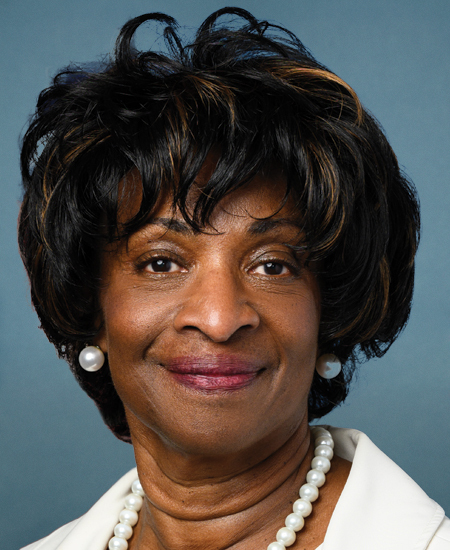
Rep. Valerie P. Foushee
Sponsored bills
Maddy summaryThis resolution honors the Greensboro Four (Joseph McNeil, Jibreel Khazan, Franklin McCain, and David Richmond) for their 1960 sit-in at a Greensboro, North Carolina Woolworth's store, which sparked the civil rights movement. It formally recognizes their role in challenging racial segregation and inspiring nationwide protests during Black History Month. The resolution encourages schools to include the Greensboro Four's story in their educational curriculum to highlight their contributions to civil rights. As a commemorative resolution, it has no binding effect but aims to promote historical awareness.
Maddy summaryThe Empower Act of 2024 would establish a "Freedom From Influence Fund" to finance public campaign financing for presidential candidates starting in 2028. It would increase matching payments for small contributions (up to $1,000 per person) and repeal previous expenditure limits for presidential campaigns. The fund would be financed by assessments of 4.75% on fines and penalties collected from criminal convictions and civil penalties. This would affect presidential candidates who choose to participate in the public financing system and their donors who make contributions under the new $1,000 limit.
Maddy summaryHR 7473, the *Funding Small Businesses During Shutdown Act*, ensures small business loan programs continue during government shutdowns by appropriating specific funds from the Treasury. It allocates $500,000 for Section 7(m) loans, $2.917 billion for Section 7(a) loans, $1.25 billion for SBA investment programs, and $13.775 million for administrative costs during any 30-day lapse in SBA funding. This directly affects small businesses relying on these SBA loans, preventing program disruptions during shutdowns. The bill provides concrete, immediate funding to maintain loan servicing without creating new programs.
Maddy summaryThis symbolic resolution (HRES 1026) recognizes Black History Month and honors the 94 African-American recipients of the Congressional Medal of Honor for their military bravery, heroism, and valor. It does not create new laws or policies but formally acknowledges their contributions, referencing historical context like Sergeant William Harvey Carney’s 1863 actions and the 1993 study revealing racial discrimination in Medal of Honor awards during WWII. The resolution specifically calls for the House to recognize Black History Month and honor these 94 service members. It is a non-binding expression of support with no concrete policy changes.
Maddy summaryThis bill establishes an Interagency Task Force on Black Women and Girls, requiring the Attorney General and Health Secretary to create a group within 180 days of enactment. The Task Force will examine systemic issues affecting Black women and girls - including school discipline, economic opportunities, healthcare access, justice system involvement, and housing - and make policy recommendations across these areas. It mandates the U.S. Commission on Civil Rights to annually study specific disparities like maternal mortality rates, the school-to-prison pipeline, and housing barriers, then report findings to Congress. The bill directly targets policies impacting Black women and girls as defined in the legislation, with recommendations due within two years.
Maddy summaryHR 7378, the Frederick Douglass Congressional Gold Medal Act, authorizes Congress to posthumously award a gold medal to honor Frederick Douglass's legacy as a pivotal abolitionist, writer, and advocate for civil rights. The medal, designed by the Treasury Secretary, will be presented to the National Museum of African American History and Culture for display, with bronze duplicates available for sale to cover costs. This ceremonial bill does not create new laws or affect current policies - it solely commemorates Douglass's historical contributions to ending slavery and advancing equality.
Maddy summaryThis resolution (HRES 1012) is a symbolic statement by the U.S. House of Representatives condemning Azerbaijan's detention of Dr. Gubad Ibadoghlu, an imprisoned academic and economist. It specifically addresses Azerbaijan's alleged wrongful arrest, beatings in custody, denial of medical care and legal access, and poor prison conditions. The resolution calls for Dr. Ibadoghlu's immediate release and urges the U.S. Secretary of State to prioritize his case in diplomatic engagements with Azerbaijan. As a non-binding resolution, it expresses congressional concern but does not enact new laws or impose sanctions.
Maddy summaryHRES 1002 is a symbolic House resolution recognizing the cultural and historical significance of Lunar New Year (celebrated as the Year of the Dragon in 2024). It acknowledges the holiday's 4,000-year history in China, its celebration across Asia (including Seollal and Tết), and its significance to Asian Americans and others in the U.S. The resolution expresses respect for those observing the holiday and wishes them a happy new year, but it does not create new laws, policies, or funding. As a ceremonial resolution, it has no direct effect on legislation or constituents.
Maddy summaryHR 7272, the Shining a Spotlight on Safer Communities Act, requires the Attorney General to submit annual reports to Congress starting in 2024, detailing how the Bipartisan Safer Communities Act's provisions (specifically sections 932 and 933 of title 18) are being implemented. These reports must include data on investigations, prosecutions, demographic information of defendants, and seized firearms or assets related to gun trafficking and straw purchasing. The bill mandates these reports for fiscal years 2024 through 2027, with a funding limit of $2 million annually for this reporting. It is a procedural bill focused solely on transparency and accountability for existing gun safety measures, not creating new policies.