Maddy summaryThis bill directs the U.S. President to identify Pakistani officials responsible for undermining democracy and human rights within 180 days of enactment, then impose Global Magnitsky sanctions on them. It targets senior government, military, or security officials found to have committed gross human rights violations or interfered with democratic processes, such as during Pakistan’s 2024 elections or through constitutional changes. Sanctions would include asset freezes and travel bans, with exceptions for humanitarian aid, UN obligations, and national security activities. The bill expires on September 30, 2030, and aims to pressure Pakistan to uphold democratic norms, human rights, and judicial independence.
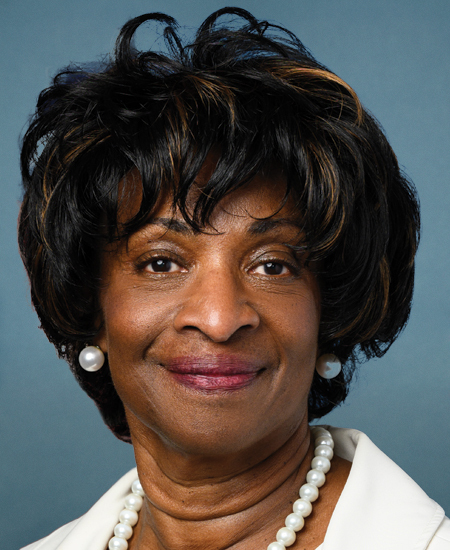
Rep. Valerie P. Foushee
Sponsored bills
Maddy summary# Summary of the Weather Act Reauthorization Act of 2025 This comprehensive legislation reauthorizes and modernizes the National Oceanic and Atmospheric Administration's (NOAA) weather and climate programs through 2030, with several key focuses: ## Core Program Reauthorizations - **Commercial Data Program** ($100M annually): Establishes a formal program to acquire weather/environmental data from private sector entities, including standards, prioritization, and data assimilation practices - **Commercial Data Pilot Program** (15% of Commercial Data Program funds): Tests and evaluates private sector data for use in NOAA operations - **Advanced Weather Interactive Processing System**: Requires transition to cloud-based operations by 2030 to enable more flexible workforce ## Hazard Communication Improvements - **Hazardous Weather Risk Communication Program**: Focuses on simplifying and improving communication of weather hazards through social, behavioral, and risk science research - **Post-Storm Surveys**: Requires systematic surveys after significant weather events, with emphasis on vulnerable populations - **NOAA Weather Radio Modernization**: Expands coverage, enhances reliability, and transitions to internet protocol-based communications ## Operational Modernization - **National Weather Service Workforce**: Includes hiring assessments, health/morale evaluations, and designation of service hydrologists - **Aviation Weather Program**: Enhances turbulence forecasting, data acquisition, and coordination with the Federal Aviation Administration - **Data Management**: Establishes consistent data standards, infrastructure, and sharing practices across NOAA ## Specialized Programs - **Atmospheric Rivers Forecast Improvement Program**: Focuses on improving forecasts of atmospheric rivers that impact the western U.S. - **Coastal Flooding and Storm Surge Program**: Improves coastal inundation forecasting and warning systems - **National Integrated Drought Information System**: Enhances drought monitoring and forecasting capabilities - **National Mesonet Program**: Expands environmental observation networks across the U.S., with 15% of funds for financial assistance to state/local entities - **National Coordinated Soil Moisture Monitoring Network**: Supports soil moisture monitoring for agricultural and drought management - **Precipitation Forecast Improvement Program**: Aims to improve precipitation forecasting across all timescales ## Funding The bill authorizes significant funding across these programs, with annual appropriations ranging from $10M to $70M depending on the program, for fiscal years 2026-2030. The legislation represents a major effort to modernize NOAA's infrastructure, improve weather communication to the public, and better integrate commercial data sources while maintaining NOAA's leadership in weather and climate science.

Maddy summaryThe Stop Super PAC-Candidate Coordination Act clarifies when payments to political groups count as contributions to candidates. It defines "coordinated expenditures" as payments made in cooperation with a candidate or their committee, including cases where the group was formed by the candidate, the candidate helped raise funds for the group, or the group was managed by someone who worked for the candidate. The bill establishes penalties for violations, including fines equal to 300% of the amount exceeding contribution limits. It repeals current Federal Election Commission regulations on coordination and requires new regulations within 90 days, with the law taking effect for payments made after a 120-day period following enactment.
Maddy summaryThis resolution (HRES 680) recognizes suicide as a serious public health issue and designates September 8, 2025, as "988 Day" to highlight the national three-digit crisis hotline (988 Suicide and Crisis Lifeline). It does not create new laws or funding but formally supports existing efforts to raise awareness about the 988 hotline, which connects people in mental health crisis to 24/7 support services. The resolution emphasizes the hotline's role in suicide prevention, citing data showing it handled nearly 18 million contacts since 2022 and was reported as helpful by 98% of users. It urges continued public education about the hotline, particularly for high-risk groups like LGBTQI+ youth, and encourages broader access to mental health services.
Sickle Cell Disease Comprehensive Care Act This bill allows state Medicaid programs to establish health homes to provide coordinated care for individuals with sickle-cell disease. (Under current law, state Medicaid programs may establish health homes to provide coordinated care for individuals with specified chronic conditions.) States must ensure that such care includes dental and vision services. The Centers for Medicare & Medicaid Services must issue best practices for states on how to design and implement such health homes.
Maddy summaryThis bill extends preferential U.S. trade benefits for Haitian exports until 2037 (previously ending in 2025) under the Caribbean Basin Economic Recovery Act. It requires Haitian producers to comply with core labor standards and Haitian labor laws related to minimum wages, working hours, and safe conditions to maintain these benefits. The bill also creates a new technical assistance program where the U.S. Trade Representative will work with Haitian government agencies, businesses, labor groups, and trade support institutions to boost exports - focusing on agricultural processing, apparel sector competitiveness, and export strategy development. These changes directly affect Haitian exporters seeking U.S. trade preferences and U.S. agencies administering trade programs.
Maddy summaryThe Empowering Striking Workers Act of 2025 would expand unemployment insurance eligibility to workers unable to work due to labor disputes, including strikes or lockouts. It sets a 14-day waiting period (or earlier if replacements are hired, a lockout starts, or the dispute ends) before benefits begin, treating these workers as "unemployed" under federal law. The bill also removes the standard requirement for these workers to actively seek other employment to qualify for benefits. This directly affects workers involved in labor disputes, such as those on strike or unable to work due to employer lockouts.
Maddy summaryThis bill prohibits Members of Congress, their spouses, and dependent children from owning or trading certain investments, including stocks, commodities, and derivatives (referred to as "covered investments"). It requires affected individuals to divest these investments within 90-180 days, with specific exemptions for Treasury bonds, diversified mutual funds, small business interests, and family trusts meeting strict conditions. Violations incur penalties of 10% of the investment's value plus disgorgement of profits, paid directly to the U.S. Treasury. The law applies to all covered individuals during federal service, with exceptions for investments acquired through inheritance or occupational trading (e.g., a spouse’s finance job).
Maddy summary# Summary of Proposed FEMA Reform Legislation (FEMA Act of 2025) This comprehensive legislative document proposes significant reforms to the Robert T. Stafford Disaster Relief and Emergency Assistance Act, with four main sections addressing: ## 1. Disaster Assistance Reforms - **Expanded eligibility** for assistance, including clarifying that absence of a fixed address doesn't disqualify individuals from sheltering assistance - **Improved rental assistance** with consideration of local post-disaster rent increases - **Direct assistance** for those unable to use financial assistance, with no requirement to show other assistance can cover costs (except insurance) - **Enhanced notices** for applicants, including documentation of denial decisions - **Clarification of displacement assistance** eligibility, stating insurance shouldn't be considered a duplication of benefits ## 2. Mitigation Program Enhancements - **Preapproved project mitigation plans** requiring states to develop plans with peer review processes - **Improved allocation of funds** with formulas prioritizing vulnerable communities, high-risk areas, and rural/economically distressed communities - **Resilient buildings** requirements for housing retrofits using the latest building codes - **Streamlined application processes** for hazard mitigation funds across multiple programs - **Study on mitigation benefits** to evaluate cost savings and effectiveness ## 3. Transparency and Accountability Measures - **Public dashboards** for both individual assistance (431) and public assistance (432) showing application status, approvals, denials, and funding - **Transparency requirements** for disaster declarations with detailed justifications for approvals/denials - **GAO studies** on numerous topics including: - Identity theft in disaster assistance (409) - Insurance utilization for public assistance facilities (410) - Wildfire management plans (411) - Effectiveness of alerting systems (412) - Cost savings of repair/rebuilding reforms (415) - **Prohibition on political discrimination** in assistance distribution ## 4. Workforce and Operational Improvements - **Study on workforce retention** in noncontiguous communities - **Pilot program** for preliminary damage assessments in remote communities - **Fast-moving disasters working group** to develop best practices for rapid response The legislation focuses on improving efficiency, transparency, and effectiveness of disaster relief programs while prioritizing vulnerable populations and communities with higher risk of disasters. It also emphasizes data-driven decision making through required studies and reports to continuously improve disaster management policies.
Maddy summaryHR 4994, the Safe Air on Airplanes Act, requires the Federal Aviation Administration to update regulations to phase out bleed air systems in aircraft. It prohibits new aircraft designs from using these systems, mandates filters to remove oil fumes in new aircraft by 2031 (7 years after enactment), and sets a 30-year phase-out schedule for existing aircraft designs (25% without bleed air by 2031, 50% by 2041, 100% by 2051). The bill directly affects aircraft manufacturers and airlines, as it changes requirements for cabin air systems that pull engine air for ventilation. These changes focus on modifying manufacturing standards and air quality systems in turbine and turbo-prop aircraft.