

Rights for the Transportation Security Administration Workforce Act of 2022 or the Rights for the TSA Workforce Act of 2022 This bill modifies the workplace rights, protections, and benefits applicable to Transportation Security Administration (TSA) personnel. Specifically, the bill by December 31, 2022, eliminates personnel authorities of the Department of Homeland Security (DHS) and the Department of Transportation governing the conditions of employment for TSA employees, thus making TSA employees subject to the personnel management system applicable to other federal employees; sets forth transition rules that protect the pay rates, leave rights, and other rights of TSA employees; and requires DHS to consult with the exclusive representative of TSA screening employees to carry out the conversion of those positions. The bill also permits the TSA to consult with organizations representing federal air marshals to address concerns, including mental health and suicide rates; directs the TSA to ensure its employees are provided proper guidance regarding prevention and protections against COVID-19; requires the TSA to provide a one-time bonus payment of $3,000 to each TSA employee carrying out duties that require substantial contact with the public during the COVID-19 national emergency; and requires the Government Accountability Office to report on implementation of the bill, TSA recruitment efforts, and specified TSA personnel policies.
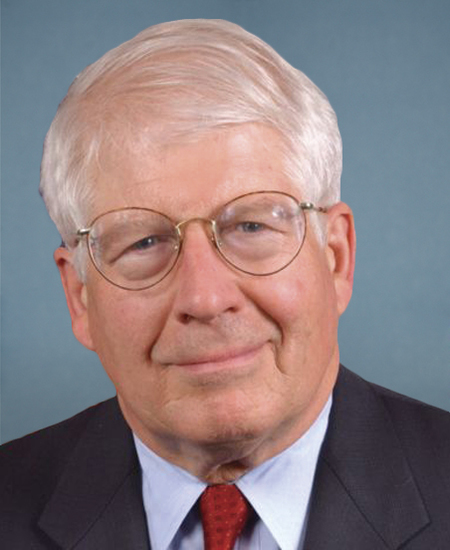
Rep. David E. Price
Sponsored bills
Supreme Court Ethics, Recusal, and Transparency Act of 2022 This bill provides for the establishment of a code of conduct for Supreme Court Justices, judges of the courts of appeals, judges of the district courts, and judges of the Court of International Trade.
Benjamin Berell Ferencz Congressional Gold Medal Act This bill provides for the award of a Congressional Gold Medal to Benjamin Berell Ferencz in recognition of his service to the United States and the international community during the post-World War II Nuremberg trials and his lifelong advocacy for international criminal justice and the rule of law.
This resolution extends collective bargaining rights prescribed in the Congressional Accountability Act of 1995 to employees of the House of Representatives.
This resolution condemns threats to freedom of the press around the world. It also remembers the bravery of journalists and media workers around the world and those who have died carrying out their work. It calls on the President and the Department of State to build upon U.S. leadership on press freedom issues.
This resolution urges the U.S. government, European Union, and other transatlantic partners to increase cooperation and support for Moldova's democratic development, economic and energy independence, and efforts to root out corruption. The resolution reaffirms that it is U.S. policy to support the sovereignty, independence, and territorial integrity of Moldova. The resolution affirms Moldova's right to determine its own partnerships and its right to associate with the European Union or any regional organization. The resolution commends Moldova's efforts to take in Ukrainian refugees and urges increased assistance by the United States and other allies and partners to Moldova to assist with those efforts. The resolution reaffirms the importance of free, fair, and transparent elections in Moldova. The resolution calls upon the government of Russia to fulfill its commitments made at the Istanbul summit of the Organization for Security and Cooperation in Europe in 1999, withdraw its military forces and munitions from Moldova, refrain from issuing military and economic threats or exerting pressure against Moldova, and cease any and all actions that support separatists in the region of Transnistria. The resolution supports efforts to resolve the Transnistria conflict through a comprehensive settlement that secures Moldova's sovereignty and territorial integrity. Finally, this resolution affirms that lasting stability and security in Moldova is in the strategic interest of the United States and can only be achieved if the territorial integrity and sovereignty of Moldova and all other European countries are respected.
This resolution recognizes that Black women are experiencing high, disproportionate rates of maternal mortality and morbidity in the United States and that Black Maternal Health Week is an opportunity to deepen the national conversation about Black maternal health.
This resolution reaffirms unequivocal support for the North Atlantic Treaty Organization (NATO) as an alliance founded on democratic principles. The resolution urges NATO to continue to provide unwavering support to the people of Ukraine as they fight for their sovereignty, territorial integrity, and a democratic future. The resolution calls on the President to use the voice and vote of the United States to adopt a new Strategic Concept for NATO that is clear about its support for shared democratic values and committed to enhancing NATO's capacity to strengthen democratic institutions within NATO member, partner, and aspirant countries. Finally, the resolution calls on the President to use the voice and vote of the United States to establish a Center for Democratic Resilience within NATO headquarters.
Ensuring Lasting Smiles Act This bill requires private health insurance plans to cover diagnosis and treatment of congenital anomalies and birth defects, such as reconstructive services and items. Coverage must include services and items that functionally improve, repair, or restore any body part that is medically necessary for normal bodily functions or appearance, as determined by the treating physician. Coverage limits and cost-sharing requirements for such services and items may not be more restrictive than those applicable to all medical and surgical benefits under the plan.
Marijuana Opportunity Reinvestment and Expungement Act or the MORE Act This bill decriminalizes marijuana. Specifically, it removes marijuana from the list of scheduled substances under the Controlled Substances Act and eliminates criminal penalties for an individual who manufactures, distributes, or possesses marijuana. The bill also makes other changes, including the following: replaces statutory references to marijuana and marihuana with cannabis , requires the Bureau of Labor Statistics to regularly publish demographic data on cannabis business owners and employees, establishes a trust fund to support various programs and services for individuals and businesses in communities impacted by the war on drugs, imposes an excise tax on cannabis products produced in or imported into the United States and an occupational tax on cannabis production facilities and export warehouses, makes Small Business Administration loans and services available to entities that are cannabis-related legitimate businesses or service providers, prohibits the denial of federal public benefits to a person on the basis of certain cannabis-related conduct or convictions, prohibits the denial of benefits and protections under immigration laws on the basis of a cannabis-related event (e.g., conduct or a conviction), establishes a process to expunge convictions and conduct sentencing review hearings related to federal cannabis offenses, directs the Government Accountability Office to study the societal impact of state legalization of recreational cannabis, directs the National Highway Traffic Safety Administration to study methods for determining whether a driver is impaired by marijuana, directs the National Institute for Occupational Safety and Health to study the impact of state legalization of recreational cannabis on the workplace, and directs the Department of Education to study the impact of state legalization of recreational cannabis on schools and school-aged children.