

Maddy summaryHR 3974, the Protect Black Women and Girls Act, creates a federal task force to examine systemic challenges faced by Black women and girls (defined as individuals identifying as women, female, or femme). The task force, composed of agency representatives and community experts, will identify effective policies and programs across education, economic opportunity, healthcare, justice, and housing, then recommend improvements to federal, state, and local governments. Key mechanisms include studying issues like school discipline disparities, maternal health outcomes, economic barriers, and over-incarceration, and proposing solutions such as restorative justice programs, career training, and expanded healthcare access. The task force must report annually to Congress and submit final recommendations within two years, focusing on concrete policy changes to improve outcomes.
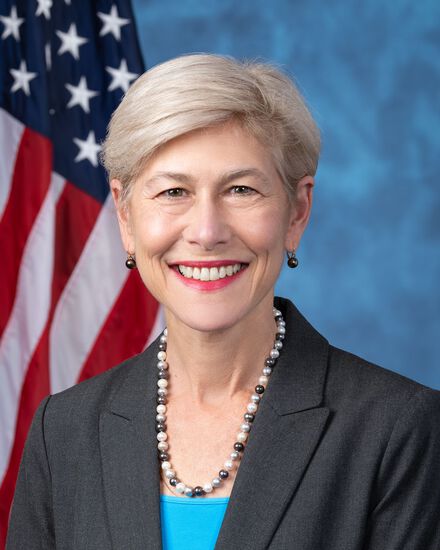
Rep. Deborah K. Ross
Sponsored bills
Improving Access to Medicare Coverage Act of 2025 This bill deems an individual receiving outpatient observation services in a hospital as an inpatient for purposes of satisfying the three-day inpatient hospital-stay requirement with respect to Medicare coverage of skilled nursing facility (SNF) services. (Generally, individuals must have been an inpatient at a hospital for at least three days in order to qualify for SNF services. An individual's time spent under observation at a hospital for purposes of determining whether the individual should be admitted does not count towards this requirement.)
Maddy summaryHR 3981 would grant a federal charter to the Veterans Association of Real Estate Professionals (VAREP), a California-based nonprofit already recognized as a veterans service organization under IRS rules. This charter would formalize VAREP's status as a federally chartered entity under Title 36 of the U.S. Code, requiring it to maintain its tax-exempt status under the IRS Code to keep the charter. The bill outlines VAREP's purposes, including advocating for veterans' homeownership, providing financial literacy education, offering housing counseling, and connecting real estate professionals with veterans' needs, while prohibiting political activities, stock issuance, or profit distribution. This is a procedural bill focused on organizational structure, not policy changes.
Maddy summaryThe Domestic Workers Bill of Rights Act (HR 3971) would establish key labor protections for domestic workers, including nannies, housekeepers, and caregivers who work in private homes. The bill requires written agreements for workers employed 8+ hours per week, provides earned sick days (1 hour for every 30 hours worked), mandates fair scheduling practices with 72-hour notice for schedule changes, and extends overtime protections to live-in domestic employees. It also prohibits unfair wage deductions, guarantees meal and rest breaks, and ensures privacy protections including no monitoring in private living spaces. The bill directly affects approximately 2.2 million domestic workers across the U.S., who are disproportionately women of color and immigrants. Enforcement would be handled by the Department of Labor through new complaint resolution mechanisms and oversight.
Maddy summaryHR 3994, the Understanding Student Parent Outcomes Act of 2025, requires U.S. colleges and universities to collect standardized data on students who are parents or caregivers of dependent children. The bill mandates that the Education Commissioner establish a common definition for "parenting students" and develop specific data elements - including enrollment rates, financial aid usage, childcare access, and demographic breakdowns - to be gathered through federal surveys starting in 2026-2027. It also directs the Secretary of Education to conduct a study on institutional best practices for supporting student parents, focusing on childcare access, enrollment trends, and integration with services like SNAP or Head Start. This data and study aim to inform policies improving educational outcomes for this student group, directly affecting institutions of higher education and their student parents/caregivers.
Maddy summaryThis bill codifies existing protections for designated roadless areas within the National Forest System by prohibiting new road construction, road reconstruction, and logging in these areas. It directly affects National Forest lands already identified as "inventoried roadless areas" under the current Roadless Rule, which covers roughly 58 million acres. The key mechanism requires the Secretary of Agriculture to enforce these prohibitions, maintaining current protections without expanding restrictions to other lands or altering existing multiple-use management. The bill does not create new protected areas but legally solidifies the existing regulatory framework to preserve ecological and recreational values.
Maddy summaryThis bill, HR 3916 (My Body, My Data Act of 2025), requires businesses and other "regulated entities" to minimize collection and sharing of personal reproductive or sexual health data - such as pregnancy status, contraceptive use, or abortion-related information - and gives individuals specific rights. It mandates that entities provide individuals with easy access to their data, the ability to correct inaccuracies, and the right to request deletion of such information within 15 days. The law also requires clear privacy policies detailing data practices and prohibits retaliation against individuals who exercise these rights, such as charging higher prices or denying services. It applies broadly to most businesses (excluding HIPAA-covered healthcare providers) and is enforced by the FTC with private lawsuits allowed for violations.
Maddy summaryHR 3906, the Medical Research for Our Troops Act, restores funding levels for military medical research by increasing the Defense Health Agency's research budget from $40.395 billion to $41.576 billion in the 2025 appropriations act. It ensures Congressionally Directed Medical Research Programs funds are used consistently with the Consolidated Appropriations Act, 2024, requiring the Defense Secretary to support all previously identified research programs and maintain existing funding allocations. The bill directly affects military medical research initiatives and the Defense Health Agency's budget implementation. This is a procedural funding adjustment, not a new policy, maintaining continuity for ongoing research projects.
Maddy summaryThis bill requires private firearm transfers between individuals to go through a licensed dealer who must conduct a background check. It applies to most private sales but includes exceptions for transfers between family members (like parents and children), law enforcement, emergencies preventing harm, and temporary loans at shooting ranges or for hunting. Dealers must provide background check notices in both English and Spanish. The law aims to prevent prohibited individuals from obtaining firearms through private transactions while maintaining existing state authority on firearm laws.
Maddy summary# Summary of the Proposed Legislative Document This document outlines a comprehensive legislative proposal that amends and reauthorizes various environmental, weather, climate, and health-related programs. Key elements include: 1. **National Integrated Heat Health Information System (NIHHIS)**: Establishes a new system within NOAA to reduce heat-related health risks, with a 5-year strategic plan and $5 million annual funding (2026-2030) for implementation. 2. **National Landslide Preparedness Act Reauthorization**: - Updates definitions to include "atmospheric river" and "extreme precipitation event" - Increases funding from $25 million to $35 million annually (with at least $10 million for landslide early warning systems) - Establishes regional partnerships with eligible organizations and institutions of higher education - Requires assessment of risks from atmospheric river flooding and extreme precipitation events 3. **Harmful Algal Bloom and Hypoxia Program**: - Creates a National-Level Incubator Program to develop new strategies for preventing, mitigating, and controlling harmful algal blooms - Increases funding for NOAA ($19.5 million annually) and EPA ($8 million annually) - Establishes an Action Strategy for harmful algal blooms to be updated every five years 4. **Other Key Provisions**: - Amends the Flood Level Observation, Operations, and Decision Support Act - Establishes an interagency committee to coordinate heat health activities across multiple federal departments - Creates an "unfunded priorities list" for Congress to identify critical needs not included in the budget - Includes provisions for meteorological observations in the Arctic region - Authorizes technical assistance for Pacific Island nations The legislation represents a significant expansion of NOAA's role in climate and weather-related research, public health protection, and disaster preparedness, with emphasis on cross-agency coordination, updated terminology reflecting current scientific understanding, and increased funding for critical programs.